

Sign Up
Thank you for Submitting!
Enterprise software ecosystems have fundamentally transformed in 2026. Nearly every critical application now features embedded intelligence by default. This convenience introduces significant productivity benefits but simultaneously creates a critical compliance vulnerability known as the AI governance blind spot. For IT leadership, managing authorized software simply is no longer sufficient when internal components of that software operate autonomously without central oversight.
Shadow AI governance has rapidly become an urgent board-level priority. IT leaders face escalating demands to secure corporate data, maintain strict compliance standards, and optimize technology expenditures across complex environments. When embedded artificial intelligence operates outside of official IT controls, organizations step into dangerous territory involving data privacy violations, unexpected operational costs, and third-party risk exposure.
Developing a governance-first architecture requires organizations to eliminate invisible AI usage risk. Achieving complete visibility across SaaS, cloud infrastructures, and artificial intelligence environments separates reactive IT departments from financially disciplined technology leaders.
The fundamental definition of shadow IT has evolved. It is no longer just about employees registering for unauthorized file-sharing accounts using a corporate email address. Today, shadow AI in SaaS applications represents a much stealthier challenge. Generative algorithms and autonomous agents are automatically activated inside pre-approved corporate software suites, operating quietly behind standard user permissions.
Market intelligence data from 2026 indicates that nearly 75 percent of SaaS applications integrated into enterprise environments now contain at least one generative AI agent activated by default, operating outside direct IT oversight. Because the parent application is already sanctioned, standard procurement reviews miss the subsequent introduction of these intelligent features entirely.
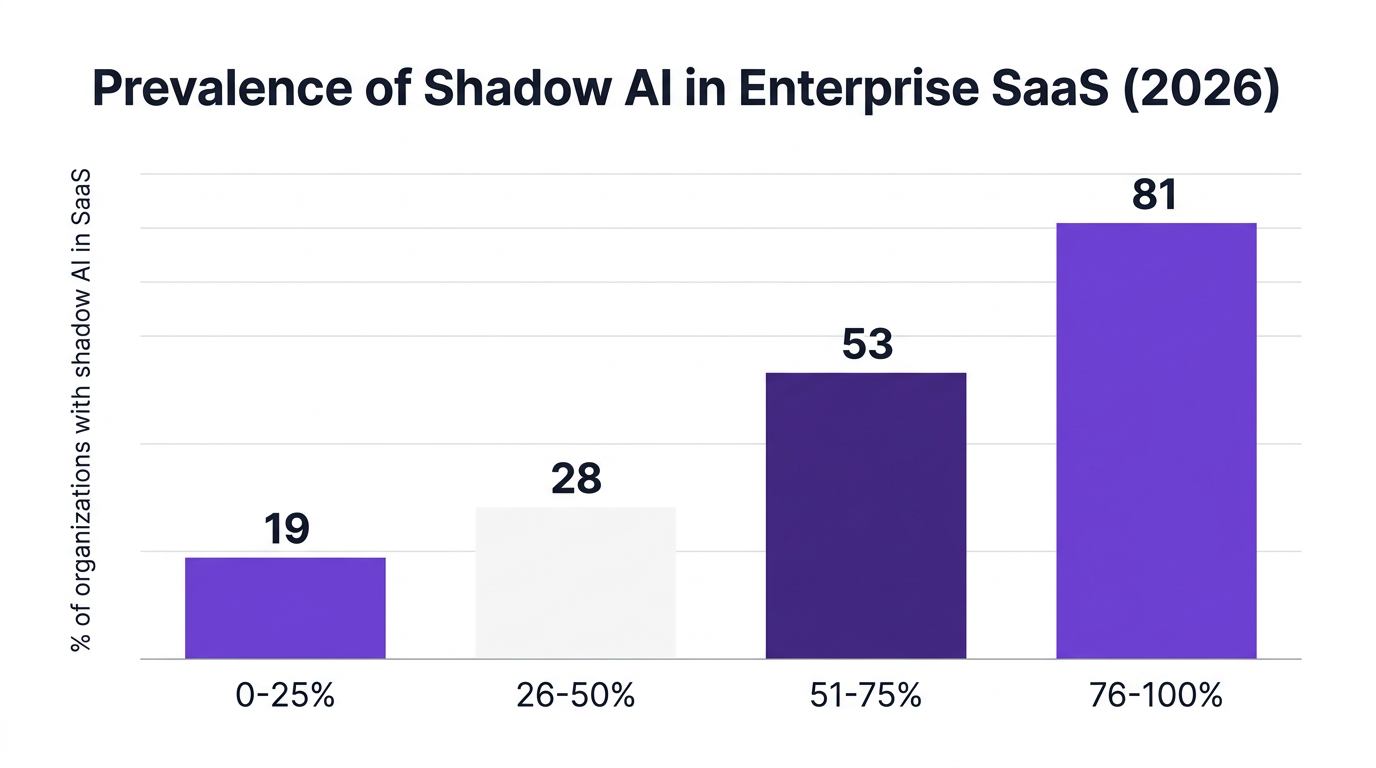
Leading industry analysts report that 81 percent of enterprises confirm shadow AI now operates in at least one approved platform, with 53 percent acknowledging material governance gaps. IT departments assume their central identity structures protect them, but these internal mechanisms fail to track the specific data passing into third-party language models.
A leading researcher at a top technology policy institute notes an alarming reality for technical leaders: "Invisible AI agents embedded in SaaS represent the single largest governance blind spot for CIOs in 2026, requiring a proactive, continuous discovery process."
Many organizations attempt to manage AI third-party risk management using legacy single sign-on tools and access brokers. These outdated tools address user credentials but fail to capture granular AI interactions. When a user authenticates into a human resources platform, the perimeter security registers a standard login. However, if that user then asks an embedded AI assistant to analyze confidential employee data, the legacy system lacks the capability to audit the algorithmic query.
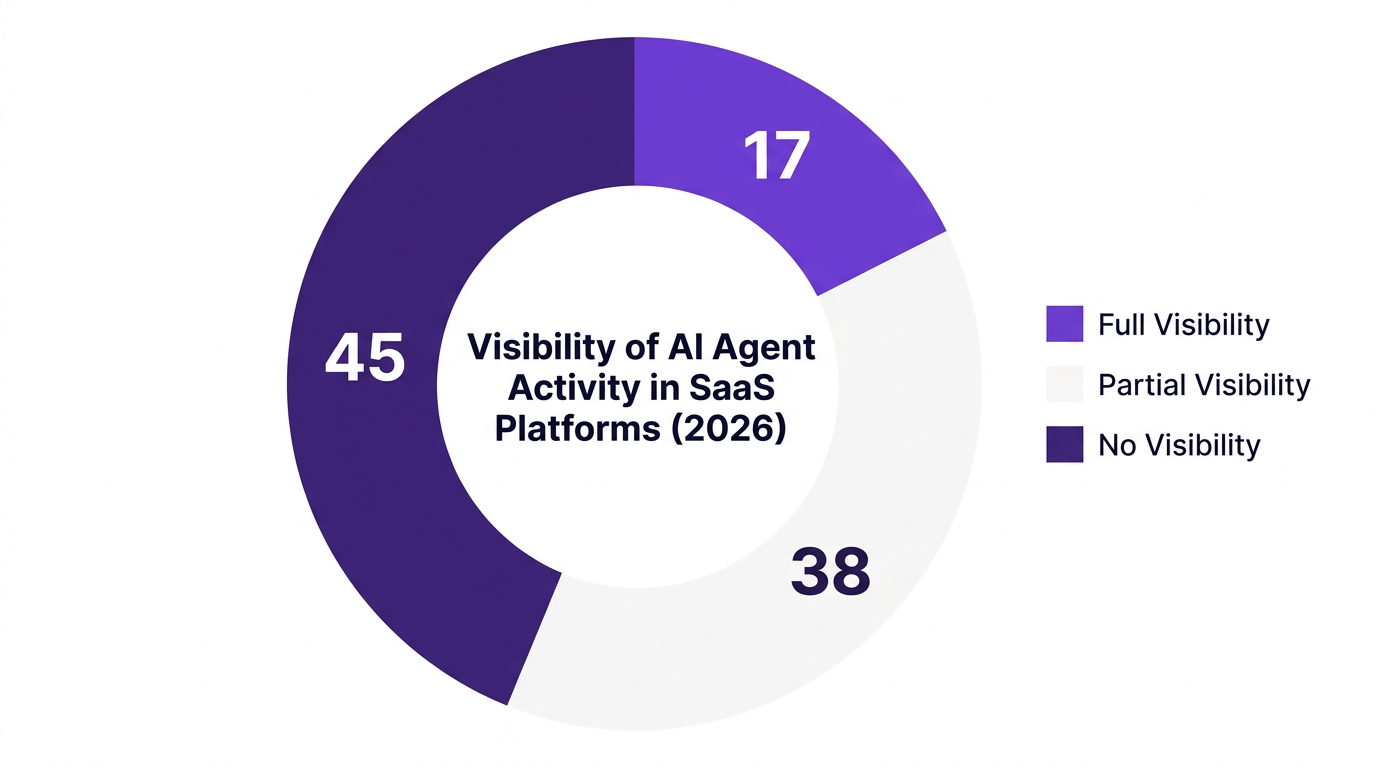
Recent independent enterprise research reveals that only 17 percent of CIOs state they maintain complete visibility of AI agent activity embedded in SaaS environments. This stark reality indicates a profound lack of AI observability for CIOs across the corporate landscape.
Without specialized SaaS management controls, an AI agent operating within a marketing application might ingest proprietary customer data while sharing that information back to an external vendor for model training. This creates an unregulated AI walled garden where corporate administrators lose all sovereignty over sensitive information. Solving AI identity governance requires a platform built specifically to target and catalog these exact autonomous behaviors.
Failing to establish continuous oversight generates disastrous consequences across multiple departments. Security market researchers report that 92 percent of enterprise security leaders identify the lack of AI observability as the top risk to SaaS data privacy and system integrity.
Operating AI usage without governance opens organizations to severe regulatory and financial penalties. When embedded tools process personally identifiable information without an authorized compliance structure, businesses risk critical infractions. IT strategy researchers highlight that 46 percent of organizations within regulated industries found AI functionality auto-enabled inside sanctioned applications actively violating internal, highly restricted risk protocols.
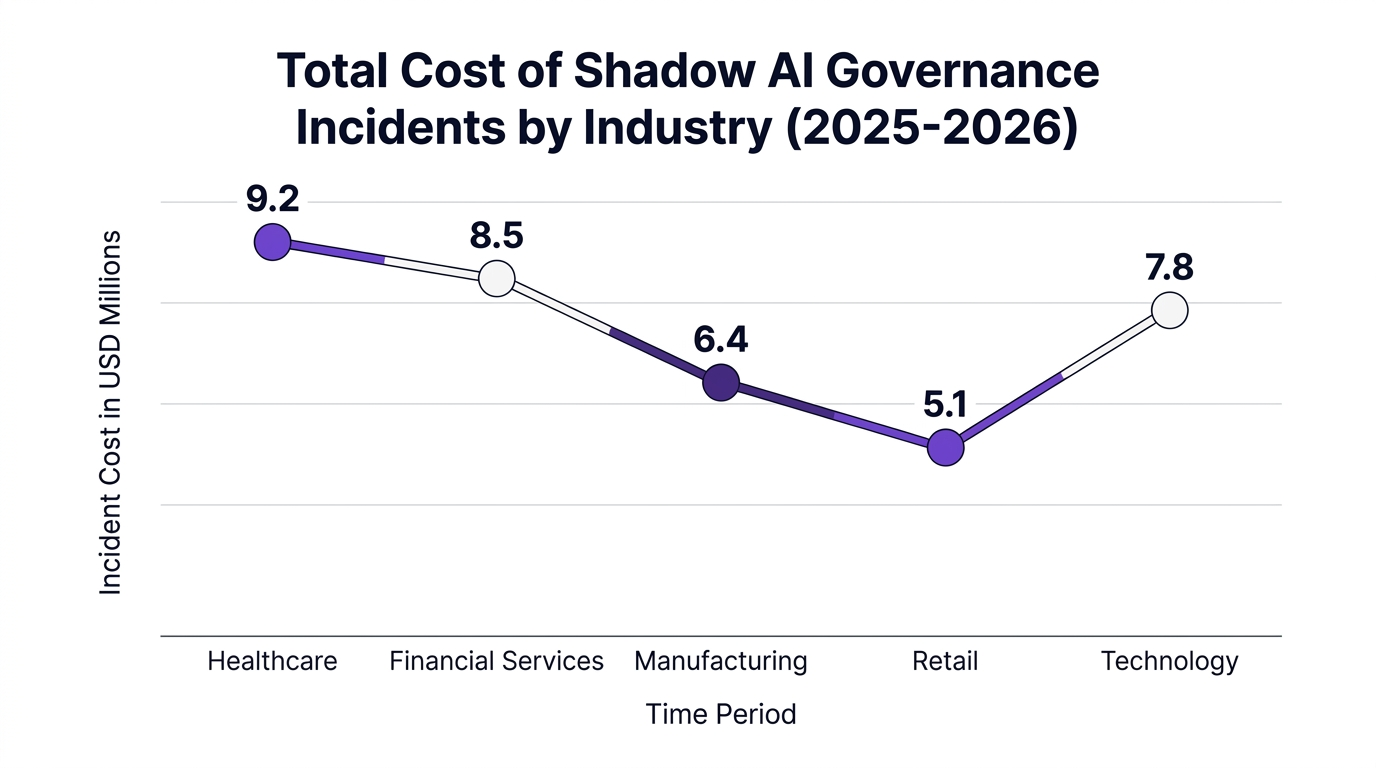
The cost of these oversights is compounding rapidly. Global financial consultants report that the average cost of a governance incident involving shadow AI in SaaS reached $7.8 million in 2025 and is projected to rise an additional 15 percent by the end of 2026. Forward-thinking IT leadership must immediately align strategic technology initiatives with internal IT security practices to stem these growing financial vulnerabilities before they materialize.
Addressing the AI governance in enterprise SaaS requires absolute documentation. A core pillar of this effort involves generating a comprehensive AI Bill of Materials (AI BOM). Much like a software bill of materials tracks open-source components, an AI BOM catalogs every algorithmic agent, language model, and autonomous script active across the enterprise network.
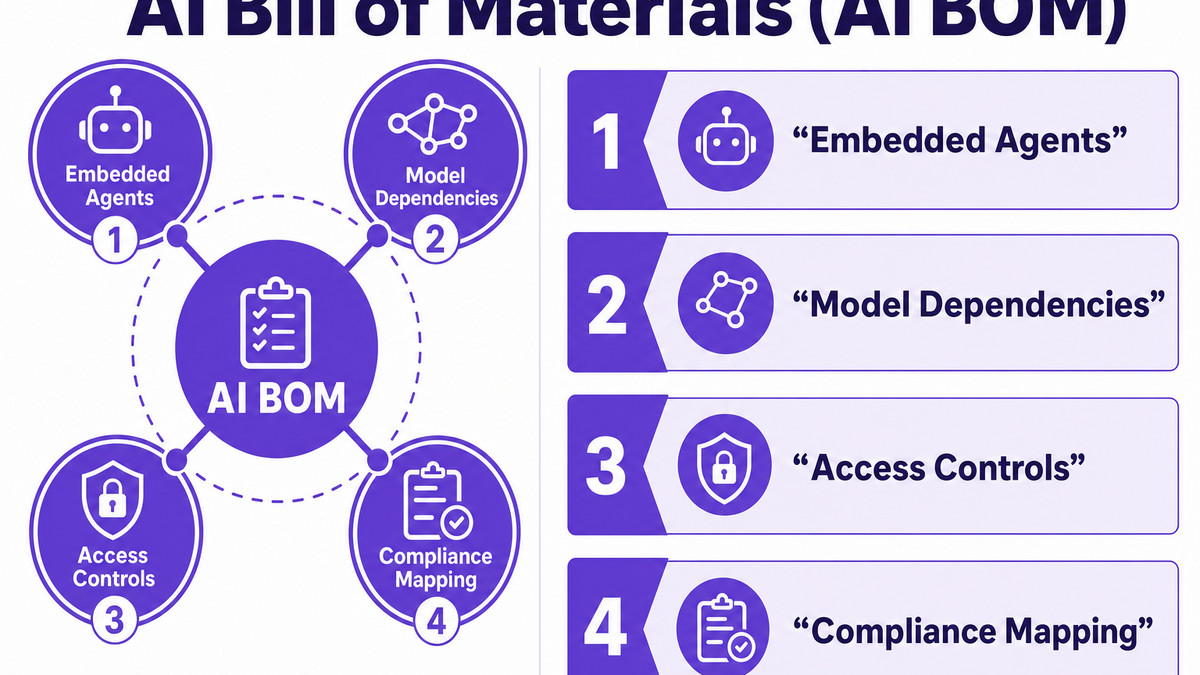
Enterprise boards and external auditors now demand these artifacts during quarterly compliance reporting. A distinguished industry analyst emphasizes that this documentation sets a new fiduciary expectation, establishing basic AI supply chain transparency for public and private organizations alike.
A comprehensive AI BOM includes distinct tracking for model providers, data handling behaviors, permission levels, and financial usage metrics. Creating this ledger manually is technically impossible given the rapid pace of software updates. Centralized administration platforms present the only viable mechanism for continuous, autonomous tracking.
Modern CIOs require automated tools designed specifically to combat shadow AI risk. CloudNuro provides unmatched visibility, governance, and cost optimization to enterprises navigating this exact challenge. Through deep, frictionless integration with over 400 applications, organizations successfully transition from reactive auditing to intelligent, proactive governance.
The CloudNuro AI Custodian platform delivers continuous discovery, autonomous inventory mapping, and absolute governance over all intelligent agents. The system detects invisible and embedded functionalities across all connected environments, automatically centralizing the AI BOM for instant compliance verification and executive board reporting.
Consider the operational impact experienced by a multinational insurance provider. By implementing AI Custodian, the organization successfully reduced shadow AI incidents by 68 percent and achieved total AI BOM compliance within eight months. This proactive stance effectively avoided a projected $10 million governance penalty.
Similarly, a regional healthcare organization integrated the Unified Cloud Custodian, revealing 39 previously undetected artificial intelligence agents active but hidden within sanctioned tools. The deployment resulted in a 100 percent reduction in unauthorized data access events related to these algorithms.

Beyond basic security, optimizing the extensive costs associated with premium embedded features ensures financial discipline. CloudNuro allows businesses to connect chargeback models to individual algorithms, translating opaque software expenses into clear, department-level accountability. Leveraging expert FinOps services alongside automated workflow modules ensures that employee access to advanced models is strictly managed during onboarding and promptly revoked during offboarding, maximizing IT operations efficiency and permanently eliminating orphaned accounts.
Shadow AI refers to the undocumented, unauthorized, or invisible use of artificial intelligence within an organization. In modern SaaS environments, it frequently takes the form of autonomous agents, natural language processors, or generative tools turned on automatically by external vendors inside already-approved software suites, wholly bypassing official IT procurement and risk review protocols.
CIOs must deploy continuous discovery platforms directly integrated into corporate environments rather than relying on standard identity tools. Utilizing platforms like CloudNuro AI Custodian enables automated scanning for embedded AI agents, capturing algorithmic data flows, cataloging vendor permissions, and exposing activity completely missed by conventional SSO solutions.
Unmanaged agents bypass corporate firewalls and compliance protocols, directly extracting and processing proprietary or regulated user data without authorization. This exposes the enterprise to severe data privacy violations, intellectual property leakage, sudden spikes in cloud consumption costs, and massive non-compliance penalties.
An effective enterprise AI BOM must include a centralized inventory of every active intelligent agent, the specific SaaS parent application hosting it, third-party model dependency paths, data ingestion parameters, user access privileges, active human-in-the-loop controls, and clear governance flags identifying deviations from corporate security policies.
Invisible AI usage is no longer an emerging threat. It is an active vulnerability operating inside corporate networks today. Relying on outdated compliance checklists and basic network observation guarantees exposure to massive data leaks and runaway vendor costs. The Chief Compliance Officer at a major financial institution notes that specialized SaaS management solutions incorporating embedded AI observability tools are now essential for enforcing ethical, compliant, and auditable usage across federated business units.
Transforming this massive governance blind spot into a highly controlled, transparent asset requires specialized infrastructure. Intelligent, governance-first oversight unifies cloud ecosystems and intelligent models under one strategic roof. By embracing proactive discovery frameworks, technology leaders ensure constant compliance, strictly optimize their costs, and secure operations for the complex technological years ahead.
CloudNuro is a leader in Enterprise SaaS Management Platforms, providing enterprises with unmatched visibility, governance, and cost optimization. Recognized twice in a row in the SaaS Management Platforms category and named a Leader in the SoftwareReviews Data Quadrant, CloudNuro is trusted by global enterprises and government agencies to bring financial discipline to SaaS, cloud, and AI. Trusted by enterprises such as Konica Minolta and Federal Signal, CloudNuro provides centralized SaaS inventory, license optimization, and renewal management along with advanced cost allocation and chargeback, giving IT and Finance leaders the visibility, control, and cost-conscious culture needed to drive financial discipline.
Request a no cost, no obligation free assessment —just 15 minutes to savings!
Get StartedEnterprise software ecosystems have fundamentally transformed in 2026. Nearly every critical application now features embedded intelligence by default. This convenience introduces significant productivity benefits but simultaneously creates a critical compliance vulnerability known as the AI governance blind spot. For IT leadership, managing authorized software simply is no longer sufficient when internal components of that software operate autonomously without central oversight.
Shadow AI governance has rapidly become an urgent board-level priority. IT leaders face escalating demands to secure corporate data, maintain strict compliance standards, and optimize technology expenditures across complex environments. When embedded artificial intelligence operates outside of official IT controls, organizations step into dangerous territory involving data privacy violations, unexpected operational costs, and third-party risk exposure.
Developing a governance-first architecture requires organizations to eliminate invisible AI usage risk. Achieving complete visibility across SaaS, cloud infrastructures, and artificial intelligence environments separates reactive IT departments from financially disciplined technology leaders.
The fundamental definition of shadow IT has evolved. It is no longer just about employees registering for unauthorized file-sharing accounts using a corporate email address. Today, shadow AI in SaaS applications represents a much stealthier challenge. Generative algorithms and autonomous agents are automatically activated inside pre-approved corporate software suites, operating quietly behind standard user permissions.
Market intelligence data from 2026 indicates that nearly 75 percent of SaaS applications integrated into enterprise environments now contain at least one generative AI agent activated by default, operating outside direct IT oversight. Because the parent application is already sanctioned, standard procurement reviews miss the subsequent introduction of these intelligent features entirely.
Leading industry analysts report that 81 percent of enterprises confirm shadow AI now operates in at least one approved platform, with 53 percent acknowledging material governance gaps. IT departments assume their central identity structures protect them, but these internal mechanisms fail to track the specific data passing into third-party language models.
A leading researcher at a top technology policy institute notes an alarming reality for technical leaders: "Invisible AI agents embedded in SaaS represent the single largest governance blind spot for CIOs in 2026, requiring a proactive, continuous discovery process."
Many organizations attempt to manage AI third-party risk management using legacy single sign-on tools and access brokers. These outdated tools address user credentials but fail to capture granular AI interactions. When a user authenticates into a human resources platform, the perimeter security registers a standard login. However, if that user then asks an embedded AI assistant to analyze confidential employee data, the legacy system lacks the capability to audit the algorithmic query.
Recent independent enterprise research reveals that only 17 percent of CIOs state they maintain complete visibility of AI agent activity embedded in SaaS environments. This stark reality indicates a profound lack of AI observability for CIOs across the corporate landscape.
Without specialized SaaS management controls, an AI agent operating within a marketing application might ingest proprietary customer data while sharing that information back to an external vendor for model training. This creates an unregulated AI walled garden where corporate administrators lose all sovereignty over sensitive information. Solving AI identity governance requires a platform built specifically to target and catalog these exact autonomous behaviors.
Failing to establish continuous oversight generates disastrous consequences across multiple departments. Security market researchers report that 92 percent of enterprise security leaders identify the lack of AI observability as the top risk to SaaS data privacy and system integrity.
Operating AI usage without governance opens organizations to severe regulatory and financial penalties. When embedded tools process personally identifiable information without an authorized compliance structure, businesses risk critical infractions. IT strategy researchers highlight that 46 percent of organizations within regulated industries found AI functionality auto-enabled inside sanctioned applications actively violating internal, highly restricted risk protocols.
The cost of these oversights is compounding rapidly. Global financial consultants report that the average cost of a governance incident involving shadow AI in SaaS reached $7.8 million in 2025 and is projected to rise an additional 15 percent by the end of 2026. Forward-thinking IT leadership must immediately align strategic technology initiatives with internal IT security practices to stem these growing financial vulnerabilities before they materialize.
Addressing the AI governance in enterprise SaaS requires absolute documentation. A core pillar of this effort involves generating a comprehensive AI Bill of Materials (AI BOM). Much like a software bill of materials tracks open-source components, an AI BOM catalogs every algorithmic agent, language model, and autonomous script active across the enterprise network.
Enterprise boards and external auditors now demand these artifacts during quarterly compliance reporting. A distinguished industry analyst emphasizes that this documentation sets a new fiduciary expectation, establishing basic AI supply chain transparency for public and private organizations alike.
A comprehensive AI BOM includes distinct tracking for model providers, data handling behaviors, permission levels, and financial usage metrics. Creating this ledger manually is technically impossible given the rapid pace of software updates. Centralized administration platforms present the only viable mechanism for continuous, autonomous tracking.
Modern CIOs require automated tools designed specifically to combat shadow AI risk. CloudNuro provides unmatched visibility, governance, and cost optimization to enterprises navigating this exact challenge. Through deep, frictionless integration with over 400 applications, organizations successfully transition from reactive auditing to intelligent, proactive governance.
The CloudNuro AI Custodian platform delivers continuous discovery, autonomous inventory mapping, and absolute governance over all intelligent agents. The system detects invisible and embedded functionalities across all connected environments, automatically centralizing the AI BOM for instant compliance verification and executive board reporting.
Consider the operational impact experienced by a multinational insurance provider. By implementing AI Custodian, the organization successfully reduced shadow AI incidents by 68 percent and achieved total AI BOM compliance within eight months. This proactive stance effectively avoided a projected $10 million governance penalty.
Similarly, a regional healthcare organization integrated the Unified Cloud Custodian, revealing 39 previously undetected artificial intelligence agents active but hidden within sanctioned tools. The deployment resulted in a 100 percent reduction in unauthorized data access events related to these algorithms.
Beyond basic security, optimizing the extensive costs associated with premium embedded features ensures financial discipline. CloudNuro allows businesses to connect chargeback models to individual algorithms, translating opaque software expenses into clear, department-level accountability. Leveraging expert FinOps services alongside automated workflow modules ensures that employee access to advanced models is strictly managed during onboarding and promptly revoked during offboarding, maximizing IT operations efficiency and permanently eliminating orphaned accounts.
Shadow AI refers to the undocumented, unauthorized, or invisible use of artificial intelligence within an organization. In modern SaaS environments, it frequently takes the form of autonomous agents, natural language processors, or generative tools turned on automatically by external vendors inside already-approved software suites, wholly bypassing official IT procurement and risk review protocols.
CIOs must deploy continuous discovery platforms directly integrated into corporate environments rather than relying on standard identity tools. Utilizing platforms like CloudNuro AI Custodian enables automated scanning for embedded AI agents, capturing algorithmic data flows, cataloging vendor permissions, and exposing activity completely missed by conventional SSO solutions.
Unmanaged agents bypass corporate firewalls and compliance protocols, directly extracting and processing proprietary or regulated user data without authorization. This exposes the enterprise to severe data privacy violations, intellectual property leakage, sudden spikes in cloud consumption costs, and massive non-compliance penalties.
An effective enterprise AI BOM must include a centralized inventory of every active intelligent agent, the specific SaaS parent application hosting it, third-party model dependency paths, data ingestion parameters, user access privileges, active human-in-the-loop controls, and clear governance flags identifying deviations from corporate security policies.
Invisible AI usage is no longer an emerging threat. It is an active vulnerability operating inside corporate networks today. Relying on outdated compliance checklists and basic network observation guarantees exposure to massive data leaks and runaway vendor costs. The Chief Compliance Officer at a major financial institution notes that specialized SaaS management solutions incorporating embedded AI observability tools are now essential for enforcing ethical, compliant, and auditable usage across federated business units.
Transforming this massive governance blind spot into a highly controlled, transparent asset requires specialized infrastructure. Intelligent, governance-first oversight unifies cloud ecosystems and intelligent models under one strategic roof. By embracing proactive discovery frameworks, technology leaders ensure constant compliance, strictly optimize their costs, and secure operations for the complex technological years ahead.
CloudNuro is a leader in Enterprise SaaS Management Platforms, providing enterprises with unmatched visibility, governance, and cost optimization. Recognized twice in a row in the SaaS Management Platforms category and named a Leader in the SoftwareReviews Data Quadrant, CloudNuro is trusted by global enterprises and government agencies to bring financial discipline to SaaS, cloud, and AI. Trusted by enterprises such as Konica Minolta and Federal Signal, CloudNuro provides centralized SaaS inventory, license optimization, and renewal management along with advanced cost allocation and chargeback, giving IT and Finance leaders the visibility, control, and cost-conscious culture needed to drive financial discipline.
Request a no cost, no obligation free assessment - just 15 minutes to savings!
Get StartedWe're offering complimentary ServiceNow license assessments to only 25 enterprises this quarter who want to unlock immediate savings without disrupting operations.
Get Free AssessmentGet Started




CloudNuro Corp
1755 Park St. Suite 207
Naperville, IL 60563
Phone : +1-630-277-9470
Email: info@cloudnuro.com





.webp)

Recognized Leader in SaaS Management Platforms by Info-Tech SoftwareReviews


.svg)