

Sign Up
Thank you for Submitting!

Conducting a comprehensive SOX user access review is an absolute mandate for any public enterprise maintaining financial data. As organizations transition core financial operations into interconnected cloud applications, verifying exact permission levels across hundreds of different systems has become exceedingly difficult. Security teams must ensure that employees have access only to what they need, at the exact time they need it, and provide absolute proof of this governance to external auditors. Failing to execute these reviews properly can lead to severe regulatory penalties, loss of corporate trust, and costly audit remediations.
Historically, IT compliance managers relied on manual spreadsheets to cross-reference identity systems with application access logs. That methodology faces irreconcilable breakdowns when applied to modern corporate infrastructure. An explosion of shadow software purchasing and decentralized cloud commitments has made the typical enterprise footprint too large to audit manually. Establishing an intelligent, automated framework is critical for leaders seeking to manage risk, consolidate operational expenditures, and guarantee compliance across their digital ecosystems.
Sarbanes-Oxley Act (SOX) Section 404 requires corporate management to assess the effectiveness of the company's internal controls over financial reporting. A critical component of this requirement involves an Information Technology General Control (ITGC) review. The purpose of these logical access controls is to enforce the principle of least privilege: users must possess only the exact system privileges necessary to perform their stated job functions. When employees change roles or depart the firm, their access must be adjusted or revoked immediately to preserve the segregation of duties.

According to 2026 research from KPMG, 82% of public companies identified access review as a top challenge for regulatory compliance in the cloud era. The primary driver of this challenge is data sprawl. An organization may authorize a user strictly within a central identity provider, but that user may still possess broad administrative privileges locally within individual operational applications. An effective SOX access management program cannot merely audit the central directory; it must audit the exact permissions assigned in every connected service.
While some may argue that manual audits build a deeper, more hands-on understanding of company data models, manual interventions are structurally incapable of matching enterprise scale. According to Forrester's 2026 analysis, less than 12% of large enterprises report full automation of access reviews across all major platforms, leaving the vast majority vulnerable to human error and data mismatch.
The most persistent vulnerability in SOX access control testing does not necessarily involve malicious activity. Instead, it stems from operational documentation failures. Auditors mandate irrefutable evidence that a review occurred, that unauthorized access was revoked in a timely manner, and that the review was approved by a manager with documented authority.
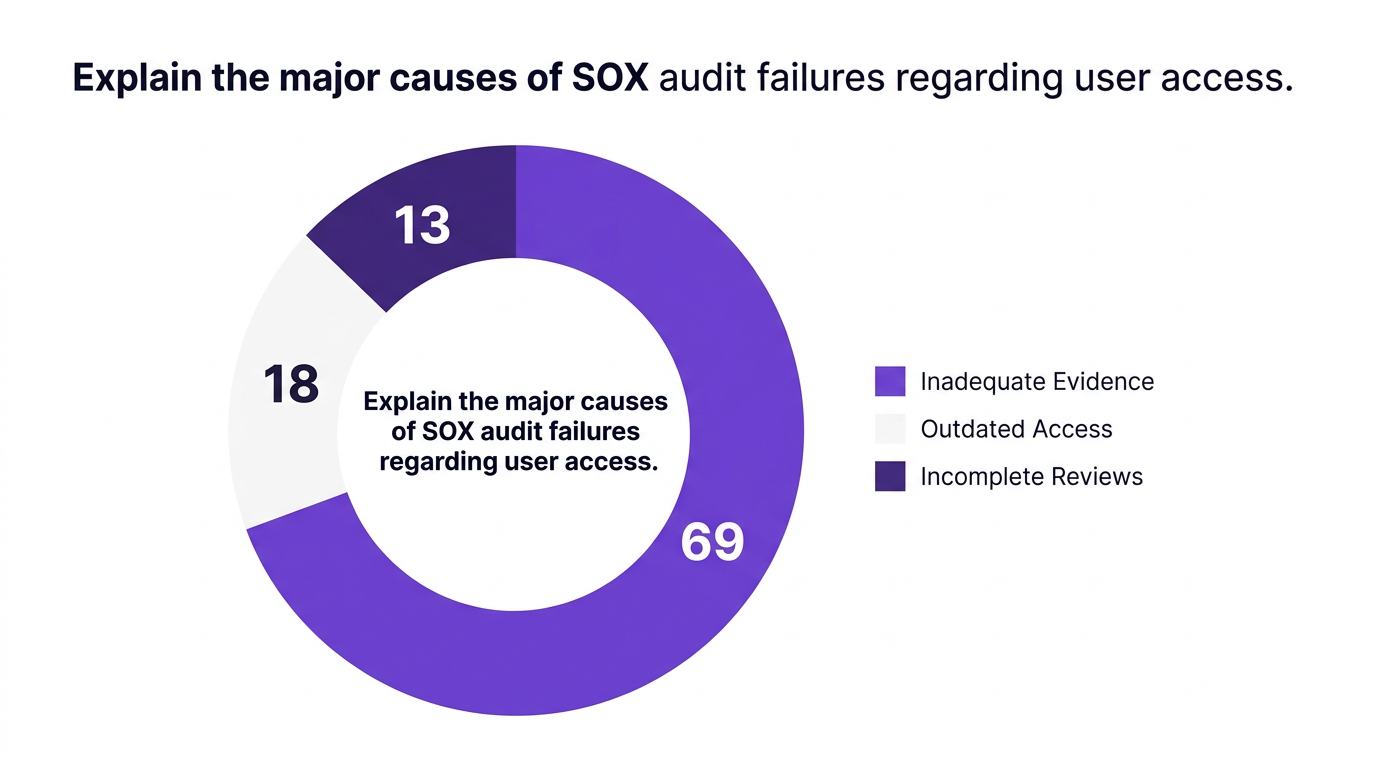
Recent 2026 figures from EY indicate that 69% of failed SOX audits cite inadequate evidence for review and documentation as their primary reason. Common pitfalls include:
Orphaned Accounts: Terminated employees frequently lose central directory access but maintain localized vendor access because the integration was never automated.
Role Creep: As employees transfer across departments, they accumulate legacy permissions. A mover process that only grants new privileges without purging the old ones directly violates SOX segregation of duties.
Shadow Deployments: Business units expensing unapproved tools circumvent official IT oversight entirely, creating massive undocumented environments where financial data may improperly reside.
Without a unified platform connecting these endpoints, security teams spend weeks manually requesting activity logs from individual departments, drastically inflating overall compliance labor costs.
To achieve consistent SOX access certification, companies must define clear lifecycle procedures. Organizations can begin by consulting a complete user access review checklist to standardise their evaluation intervals. Implementing a rigorous framework involves mapping out every digital identity phase.
Consider the analogy of a high-security facility keycard system. If an employee transfers from human resources to corporate finance, they are given a new access card. However, if security forgets to deactivate their old card, the employee retains unrestricted physical entry to confidential personnel files. This same logic applies universally to digital roles.
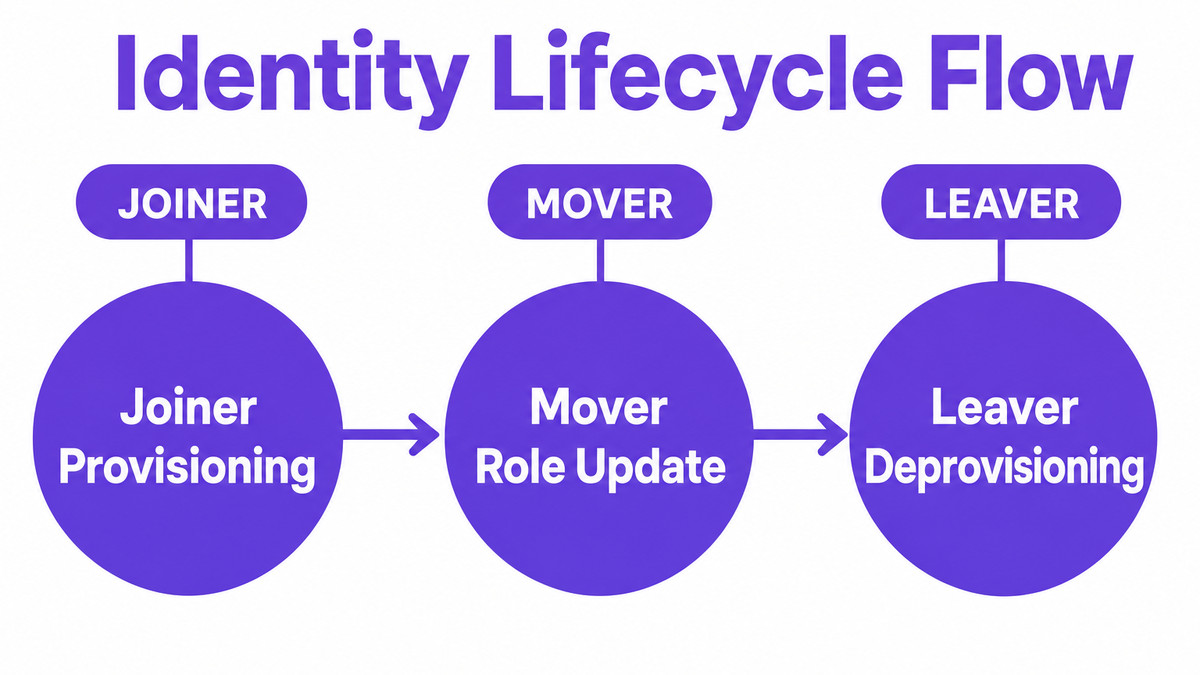
A formalized approach governs the three primary identity transitions: joiner, mover, and leaver.
The Joiner Process: New hires receive tightly scoped initialization. Initial access relies solely on standardized job profiles dictating clear, compliant approval chains.
The Mover Process: When an employee transfers, managers must engage in an immediate SOX access certification event to revoke conflicting historical permissions.
The Leaver Process: Terminated staff require automated, SOX compliant deprovisioning that severs connectivity synchronously across all authorized platforms.
Executing these steps manually drains hundreds of cumulative hours. Establishing continuous compliance requires shifting from periodic, retrospective checks to an ongoing governance strategy.
The integration of artificial intelligence into IT governance represents a significant architectural improvement. Rather than waiting for a quarterly audit cycle to discover a permissions violation, advanced systems can analyze user behavior continuously. If an employee exhibits abnormal download patterns or requests a privilege escalation out of scope with their role tier, AI systems trigger immediate governance alerts.
"Automation of user access reviews is no longer a future goal; it is a 2026 imperative for any public company seeking SOX compliance at scale," stated Priya Gupta, a leading compliance solutions expert tracked by KPMG research.
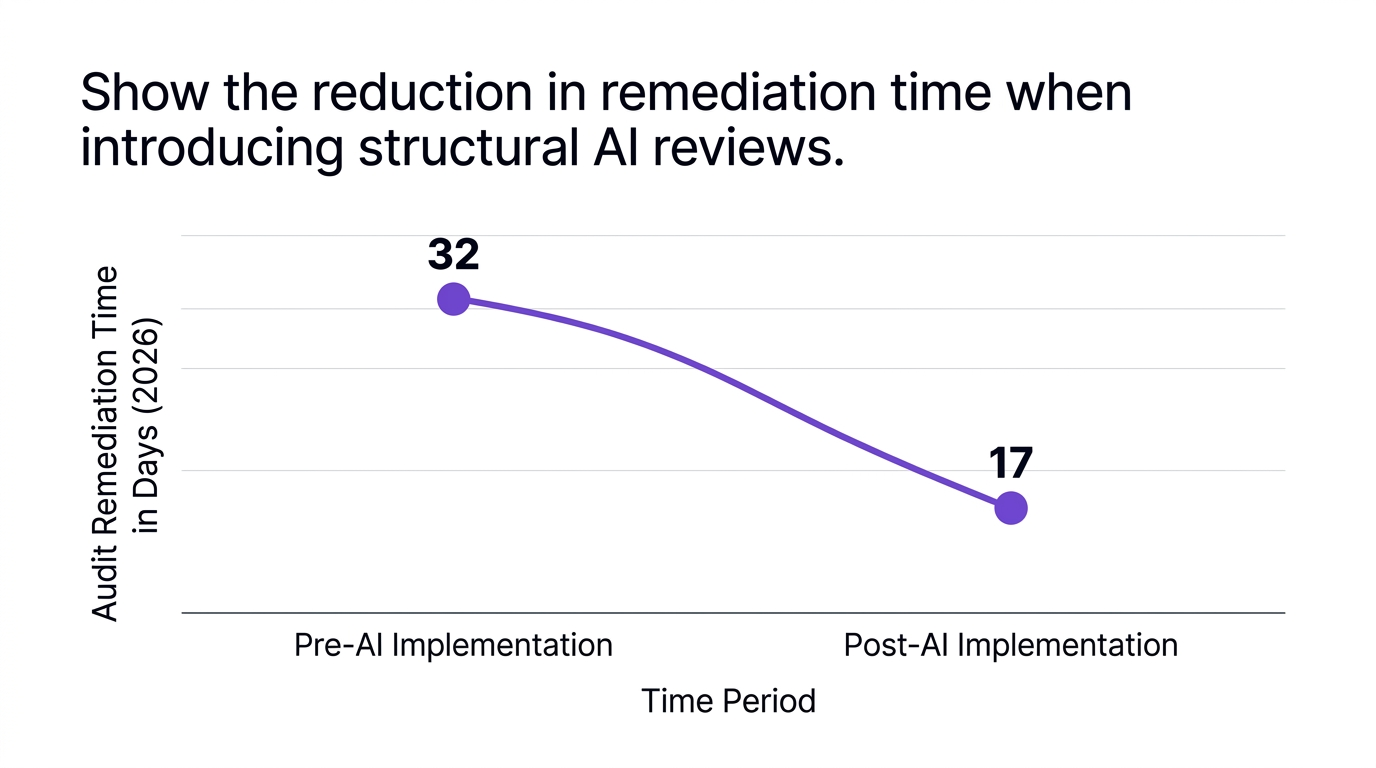
This technology directly impacts auditor outcomes. Based on Deloitte 2026 data, the average audit remediation time for user access irregularities has dropped from 32 days down to 17 days after implementing AI-driven review tools. AI risk scoring shifts the control paradigm from detective to predictive, fundamentally enhancing baseline IT security posture. Companies prioritizing smart behavioral analytics gain faster auditor approval and drastically reduce baseline operational exposure.
Addressing sophisticated enterprise requirements demands specific infrastructure capable of standardizing complex environments. CloudNuro offers a cohesive ecosystem explicitly structured to conquer operational fragmentation and regulatory overhead. Through targeted deployment models, businesses establish immediate financial discipline and audit-ready governance.
The CloudNuro Unified Cloud Custodian provides AI-driven visibility and precise control for complex hybrid infrastructures. By enabling cross-app user and permissions auditing, organizations ensure complete identity governance and drastically reduce the compliance workload. In real-time, the CloudNuro AI Custodian executes continuous anomaly detection and risk-based workflow automation, ensuring auditors receive precise, immutable evidence logs without manual data aggregation.
For granular, app-specific tracking, the CloudNuro Microsoft 365 Custodian, CloudNuro Salesforce Custodian, and CloudNuro ServiceNow Custodian provide deep institutional control. These distinct Custodian products integrate directly into their respective environments to automate onboarding workflows, manage complex license provisions, and strictly enforce the principle of least privilege. In practice, a multinational financial services firm achieved a 100% access review pass rate while drastically reducing enterprise costs by uniting automated onboarding workflows across their enterprise productivity suites via these Custodian modules. Ultimately, uniting IT visibility optimizes ongoing financial utilization and secures critical system environments simultaneously.
The core process includes defining an inventory of all financial systems, generating current user permission lists, distributing these lists to authorized business managers for validation, and immediately removing inappropriate access.
Standard frequency depends on the financial risk level of the application. High-risk core financial transaction platforms typically require quarterly reviews, whereas secondary support systems may require bi-annual or annual reviews. Continuous automation platforms frequently provide daily or weekly variance reporting.
Organizations should strictly enforce role-based access controls, segregate conflicting duties, deeply document the Joiner-Mover-Leaver lifecycle, and deploy centralized governance platforms that extract real-time identity data automatically to eliminate manual spreadsheet errors.
Auditors require time-stamped proof detailing who performed the request, who executed the change, who reviewed the approval, and confirmation that the change was successfully applied in the respective digital environment. Centralized logical access platforms maintain immutable logs for exactly this purpose.
Failing a review typically mandates a structured incident response. The organization must immediately revoke the unapproved privileges, conduct an exhaustive forensic investigation to determine if inappropriate acts occurred during the credential gap, and document a new control process to prevent immediate system recurrence.
Sustaining regulatory alignment relies on visibility. As public companies integrate a wider array of digital functions into their infrastructure, conducting an accurate SOX user access review remains an ongoing necessity rather than an annual inconvenience. Organizations risk severe financial penalties, operational fatigue, and structural insecurity if they attempt to govern complex environments with archaic manual methodologies.
The shift toward intelligent automation transforms a deeply administrative burden into a strategic corporate advantage. By establishing centralized documentation, aggressively prosecuting the Joiner-Mover-Leaver framework, and employing advanced AI alert patterns, enterprise leaders can navigate strict auditor scrutiny with confidence. Establishing a robust governance architecture today secures a compliant, efficient, and vastly protected operational tomorrow.
About CloudNuro CloudNuro is a leader in Enterprise SaaS Management Platforms, providing enterprises with unmatched visibility, governance, and cost optimization. Recognized twice in a row in the SaaS Management Platforms category and named a Leader in the SoftwareReviews Data Quadrant, CloudNuro is trusted by global enterprises and government agencies to bring financial discipline to SaaS, cloud, and AI. Trusted by enterprises such as Konica Minolta and Federal Signal, CloudNuro provides centralized SaaS inventory, license optimization, and renewal management along with advanced cost allocation and chargeback, giving IT and Finance leaders the visibility, control, and cost-conscious culture needed to drive financial discipline.
Request a no cost, no obligation free assessment —just 15 minutes to savings!
Get StartedConducting a comprehensive SOX user access review is an absolute mandate for any public enterprise maintaining financial data. As organizations transition core financial operations into interconnected cloud applications, verifying exact permission levels across hundreds of different systems has become exceedingly difficult. Security teams must ensure that employees have access only to what they need, at the exact time they need it, and provide absolute proof of this governance to external auditors. Failing to execute these reviews properly can lead to severe regulatory penalties, loss of corporate trust, and costly audit remediations.
Historically, IT compliance managers relied on manual spreadsheets to cross-reference identity systems with application access logs. That methodology faces irreconcilable breakdowns when applied to modern corporate infrastructure. An explosion of shadow software purchasing and decentralized cloud commitments has made the typical enterprise footprint too large to audit manually. Establishing an intelligent, automated framework is critical for leaders seeking to manage risk, consolidate operational expenditures, and guarantee compliance across their digital ecosystems.
Sarbanes-Oxley Act (SOX) Section 404 requires corporate management to assess the effectiveness of the company's internal controls over financial reporting. A critical component of this requirement involves an Information Technology General Control (ITGC) review. The purpose of these logical access controls is to enforce the principle of least privilege: users must possess only the exact system privileges necessary to perform their stated job functions. When employees change roles or depart the firm, their access must be adjusted or revoked immediately to preserve the segregation of duties.
According to 2026 research from KPMG, 82% of public companies identified access review as a top challenge for regulatory compliance in the cloud era. The primary driver of this challenge is data sprawl. An organization may authorize a user strictly within a central identity provider, but that user may still possess broad administrative privileges locally within individual operational applications. An effective SOX access management program cannot merely audit the central directory; it must audit the exact permissions assigned in every connected service.
While some may argue that manual audits build a deeper, more hands-on understanding of company data models, manual interventions are structurally incapable of matching enterprise scale. According to Forrester's 2026 analysis, less than 12% of large enterprises report full automation of access reviews across all major platforms, leaving the vast majority vulnerable to human error and data mismatch.
The most persistent vulnerability in SOX access control testing does not necessarily involve malicious activity. Instead, it stems from operational documentation failures. Auditors mandate irrefutable evidence that a review occurred, that unauthorized access was revoked in a timely manner, and that the review was approved by a manager with documented authority.
Recent 2026 figures from EY indicate that 69% of failed SOX audits cite inadequate evidence for review and documentation as their primary reason. Common pitfalls include:
Orphaned Accounts: Terminated employees frequently lose central directory access but maintain localized vendor access because the integration was never automated.
Role Creep: As employees transfer across departments, they accumulate legacy permissions. A mover process that only grants new privileges without purging the old ones directly violates SOX segregation of duties.
Shadow Deployments: Business units expensing unapproved tools circumvent official IT oversight entirely, creating massive undocumented environments where financial data may improperly reside.
Without a unified platform connecting these endpoints, security teams spend weeks manually requesting activity logs from individual departments, drastically inflating overall compliance labor costs.
To achieve consistent SOX access certification, companies must define clear lifecycle procedures. Organizations can begin by consulting a complete user access review checklist to standardise their evaluation intervals. Implementing a rigorous framework involves mapping out every digital identity phase.
Consider the analogy of a high-security facility keycard system. If an employee transfers from human resources to corporate finance, they are given a new access card. However, if security forgets to deactivate their old card, the employee retains unrestricted physical entry to confidential personnel files. This same logic applies universally to digital roles.
A formalized approach governs the three primary identity transitions: joiner, mover, and leaver.
The Joiner Process: New hires receive tightly scoped initialization. Initial access relies solely on standardized job profiles dictating clear, compliant approval chains.
The Mover Process: When an employee transfers, managers must engage in an immediate SOX access certification event to revoke conflicting historical permissions.
The Leaver Process: Terminated staff require automated, SOX compliant deprovisioning that severs connectivity synchronously across all authorized platforms.
Executing these steps manually drains hundreds of cumulative hours. Establishing continuous compliance requires shifting from periodic, retrospective checks to an ongoing governance strategy.
The integration of artificial intelligence into IT governance represents a significant architectural improvement. Rather than waiting for a quarterly audit cycle to discover a permissions violation, advanced systems can analyze user behavior continuously. If an employee exhibits abnormal download patterns or requests a privilege escalation out of scope with their role tier, AI systems trigger immediate governance alerts.
"Automation of user access reviews is no longer a future goal; it is a 2026 imperative for any public company seeking SOX compliance at scale," stated Priya Gupta, a leading compliance solutions expert tracked by KPMG research.
This technology directly impacts auditor outcomes. Based on Deloitte 2026 data, the average audit remediation time for user access irregularities has dropped from 32 days down to 17 days after implementing AI-driven review tools. AI risk scoring shifts the control paradigm from detective to predictive, fundamentally enhancing baseline IT security posture. Companies prioritizing smart behavioral analytics gain faster auditor approval and drastically reduce baseline operational exposure.
Addressing sophisticated enterprise requirements demands specific infrastructure capable of standardizing complex environments. CloudNuro offers a cohesive ecosystem explicitly structured to conquer operational fragmentation and regulatory overhead. Through targeted deployment models, businesses establish immediate financial discipline and audit-ready governance.
The CloudNuro Unified Cloud Custodian provides AI-driven visibility and precise control for complex hybrid infrastructures. By enabling cross-app user and permissions auditing, organizations ensure complete identity governance and drastically reduce the compliance workload. In real-time, the CloudNuro AI Custodian executes continuous anomaly detection and risk-based workflow automation, ensuring auditors receive precise, immutable evidence logs without manual data aggregation.
For granular, app-specific tracking, the CloudNuro Microsoft 365 Custodian, CloudNuro Salesforce Custodian, and CloudNuro ServiceNow Custodian provide deep institutional control. These distinct Custodian products integrate directly into their respective environments to automate onboarding workflows, manage complex license provisions, and strictly enforce the principle of least privilege. In practice, a multinational financial services firm achieved a 100% access review pass rate while drastically reducing enterprise costs by uniting automated onboarding workflows across their enterprise productivity suites via these Custodian modules. Ultimately, uniting IT visibility optimizes ongoing financial utilization and secures critical system environments simultaneously.
The core process includes defining an inventory of all financial systems, generating current user permission lists, distributing these lists to authorized business managers for validation, and immediately removing inappropriate access.
Standard frequency depends on the financial risk level of the application. High-risk core financial transaction platforms typically require quarterly reviews, whereas secondary support systems may require bi-annual or annual reviews. Continuous automation platforms frequently provide daily or weekly variance reporting.
Organizations should strictly enforce role-based access controls, segregate conflicting duties, deeply document the Joiner-Mover-Leaver lifecycle, and deploy centralized governance platforms that extract real-time identity data automatically to eliminate manual spreadsheet errors.
Auditors require time-stamped proof detailing who performed the request, who executed the change, who reviewed the approval, and confirmation that the change was successfully applied in the respective digital environment. Centralized logical access platforms maintain immutable logs for exactly this purpose.
Failing a review typically mandates a structured incident response. The organization must immediately revoke the unapproved privileges, conduct an exhaustive forensic investigation to determine if inappropriate acts occurred during the credential gap, and document a new control process to prevent immediate system recurrence.
Sustaining regulatory alignment relies on visibility. As public companies integrate a wider array of digital functions into their infrastructure, conducting an accurate SOX user access review remains an ongoing necessity rather than an annual inconvenience. Organizations risk severe financial penalties, operational fatigue, and structural insecurity if they attempt to govern complex environments with archaic manual methodologies.
The shift toward intelligent automation transforms a deeply administrative burden into a strategic corporate advantage. By establishing centralized documentation, aggressively prosecuting the Joiner-Mover-Leaver framework, and employing advanced AI alert patterns, enterprise leaders can navigate strict auditor scrutiny with confidence. Establishing a robust governance architecture today secures a compliant, efficient, and vastly protected operational tomorrow.
About CloudNuro CloudNuro is a leader in Enterprise SaaS Management Platforms, providing enterprises with unmatched visibility, governance, and cost optimization. Recognized twice in a row in the SaaS Management Platforms category and named a Leader in the SoftwareReviews Data Quadrant, CloudNuro is trusted by global enterprises and government agencies to bring financial discipline to SaaS, cloud, and AI. Trusted by enterprises such as Konica Minolta and Federal Signal, CloudNuro provides centralized SaaS inventory, license optimization, and renewal management along with advanced cost allocation and chargeback, giving IT and Finance leaders the visibility, control, and cost-conscious culture needed to drive financial discipline.
Request a no cost, no obligation free assessment - just 15 minutes to savings!
Get StartedWe're offering complimentary ServiceNow license assessments to only 25 enterprises this quarter who want to unlock immediate savings without disrupting operations.
Get Free AssessmentGet Started



CloudNuro Corp
1755 Park St. Suite 207
Naperville, IL 60563
Phone : +1-630-277-9470
Email: info@cloudnuro.com




.webp)

Recognized Leader in SaaS Management Platforms by Info-Tech SoftwareReviews


.svg)