

Sign Up
Thank you for Submitting!
Tokenized AI consumption has become the new unit of value in enterprise technology. As large language models and AI services are priced per token, a disciplined TokenOps capability is quickly becoming as essential as traditional IT operations and FinOps.
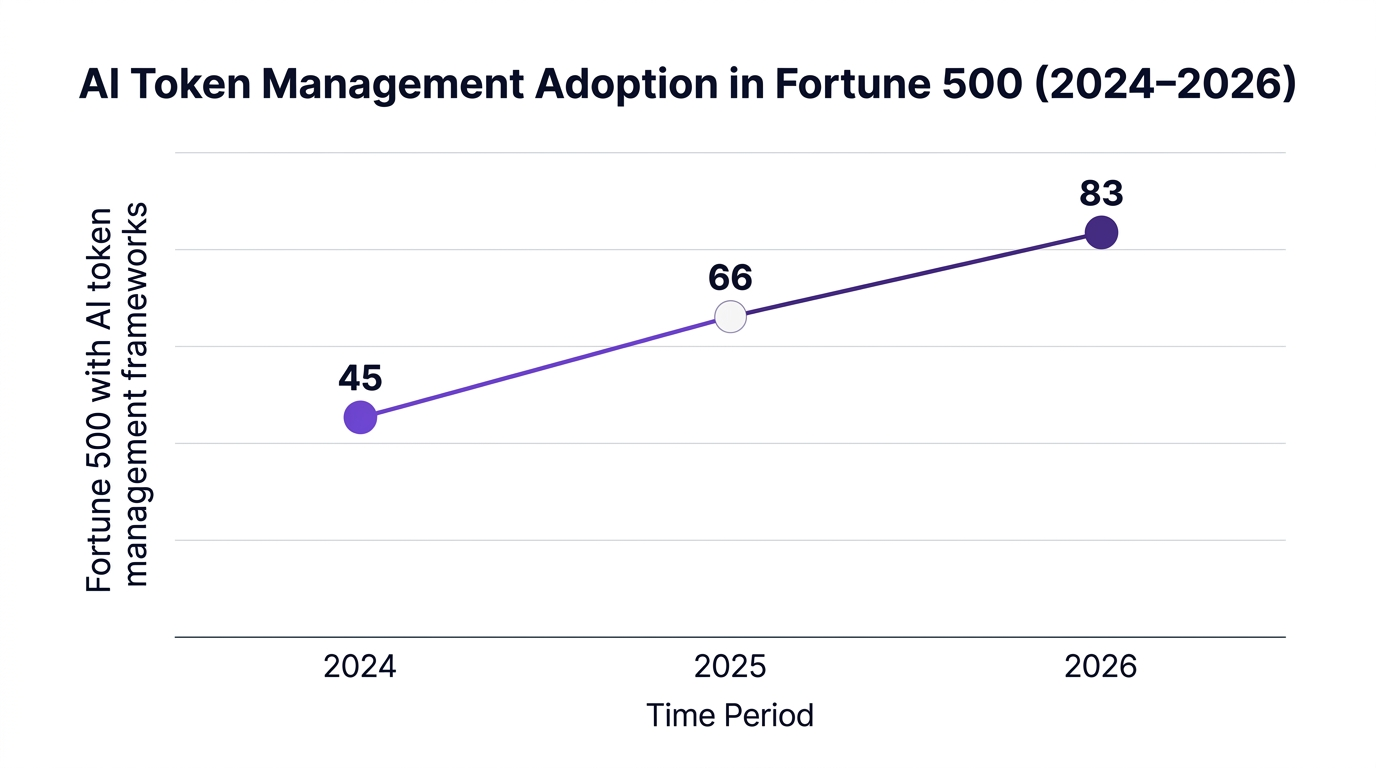
By 2026, an estimated 83% of Fortune 500 enterprises are expected to deploy AI token management frameworks to govern entitlements and optimize digital asset spend, according to a recent enterprise IT report. For Fortune 500 leaders, the question is no longer if TokenOps will be required, but how fast they can stand up an AI Token Management Office before costs, risk, and compliance pressures converge.
This article outlines why TokenOps matters, what an AI Token Management Office does, and how enterprises can operationalize token governance using platforms like CloudNuro.
TokenOps is the practice of governing, monitoring, and optimizing AI token consumption across SaaS and cloud environments. It connects token lifecycle management, entitlement controls, and financial accountability into one operating discipline.
In practical terms, TokenOps answers three questions: who can use which AI tokens, for what purpose, and at what cost. It treats tokens as a strategic asset, not an invisible byproduct of AI adoption.
According to a recent enterprise AI adoption study, AI-related SaaS token consumption in major U.S. enterprises is projected to increase by 112% year over year through 2026, driven by generative AI and large language model deployments. That growth rate is not just a budget concern, it is a governance and compliance challenge.
A 2026 enterprise risk survey found that 76% of IT executives in Fortune 500 companies cite token lifecycle management as a top three compliance risk for AI deployments. As tokens represent both spend and access to potentially sensitive data, uncontrolled growth can quickly lead to regulatory exposure.
Two analogies help frame the urgency:
This is why TokenOps must move from an experimental practice to a formal office with clear accountability.
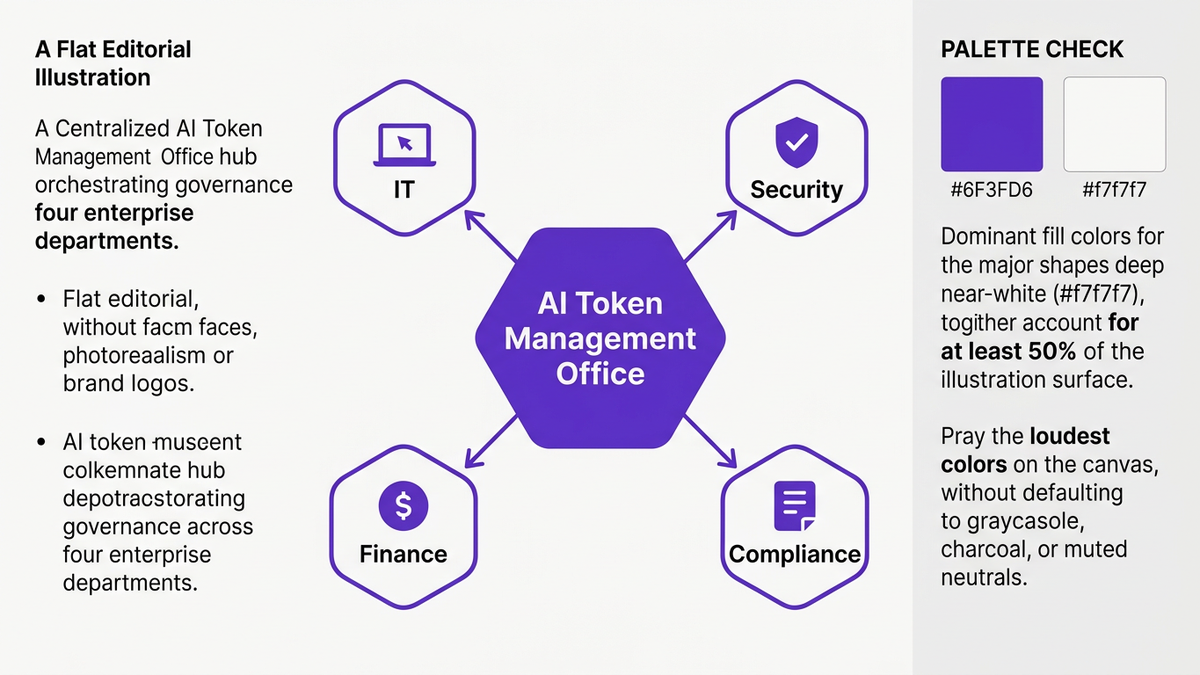
An AI Token Management Office (ATMO) is a centralized function responsible for token governance enterprise wide. It sits at the intersection of IT, security, finance, and compliance, similar to how modern cloud centers of excellence operate.
According to recent large-enterprise benchmarks, nearly 70% of organizations with established AI Token Management Offices realized more than 15% annual savings on SaaS and cloud license costs by mid 2026. That alone would justify the function, but the mandate is broader.
A mature ATMO typically owns:
According to a recent industry analyst insight in 2026, AI token governance is emerging as the linchpin for digital asset control and compliance at scale. An ATMO formalizes this governance into a consistent operating model.
AI tokens are not just a new billing unit, they also change how enterprises must think about digital asset governance and risk.
Traditional access control focused on static entitlements to applications. Token based AI services are more fluid: tokens are consumed by prompts, automations, and background services that may be difficult to attribute to a specific user or business process.
Recent enterprise compliance studies highlight three shifts:
A recent report on automated token platforms found that 94% of enterprises implementing automated token management tools report accelerated audit readiness and regulatory compliance in 2026. The insight is clear: manual spreadsheets and ad hoc logs cannot satisfy modern audit requirements.
To manage this, many TokenOps teams are adopting a zero trust token model where:
This is where token policy automation becomes essential. Policies must be enforced in real time, not as a quarterly review.
Cost pressure is the surface symptom of token chaos. The deeper issue is ungoverned ai token economics that fail to connect consumption with value.
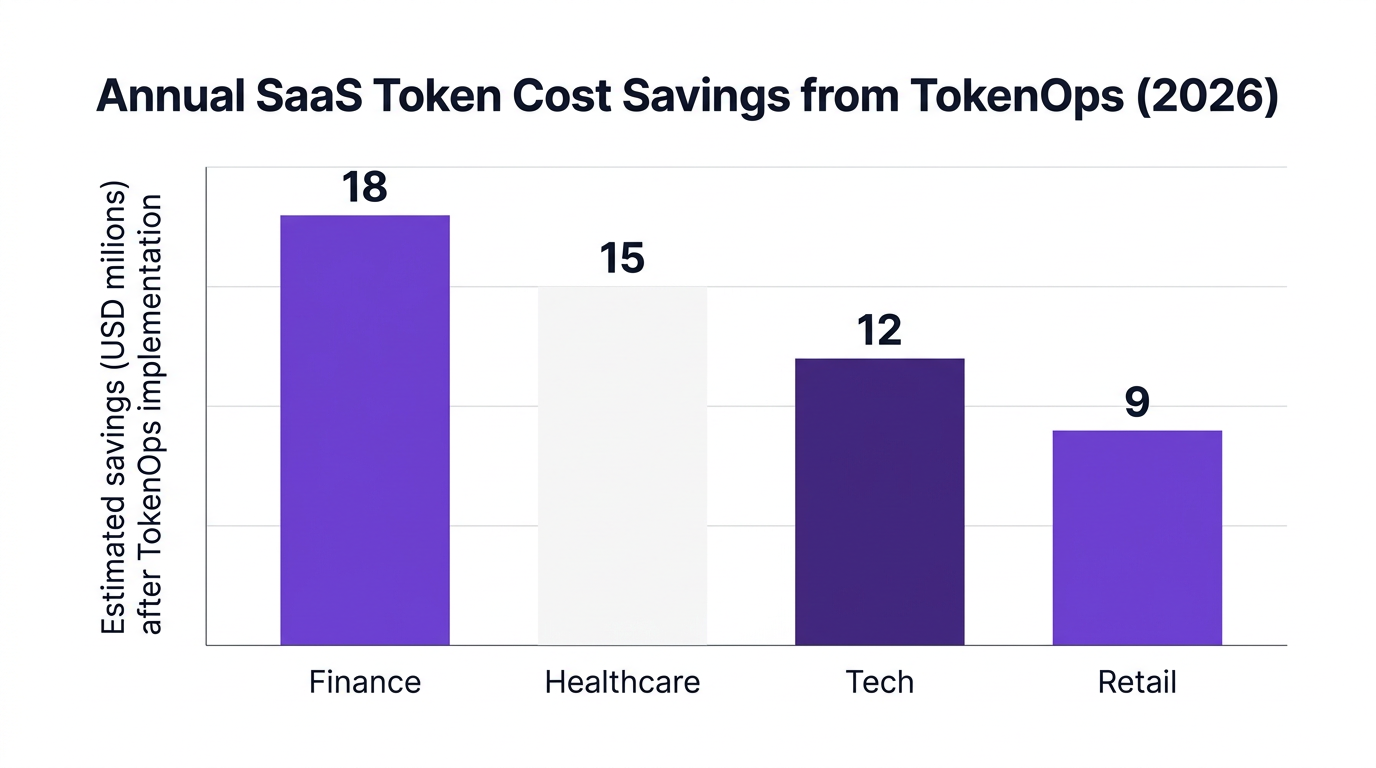
According to a recent digital asset governance report, healthcare and finance will account for over 47% of global enterprise spend on AI token governance solutions by 2026. These sectors understand that unmanaged token spend threatens margins, regulatory capital ratios, and patient or customer outcomes.
A practical token economics framework for a Fortune 500 enterprise typically includes:
A cloud procurement advisor study in 2026 noted that automation in license reclamation and token lifecycle management can free up 20 to 30% of unused digital assets, delivering instant budget impact. This is classic SaaS cost optimization, translated into the token era.
Some executives argue that AI pricing is still volatile, so it is better to wait. In reality, that volatility is a reason to formalize TokenOps sooner.
A strong token governance enterprise function lets you experiment safely, understand emerging cost curves, and negotiate from a position of data backed strength. Waiting simply means funding experiments without the controls to learn from them.
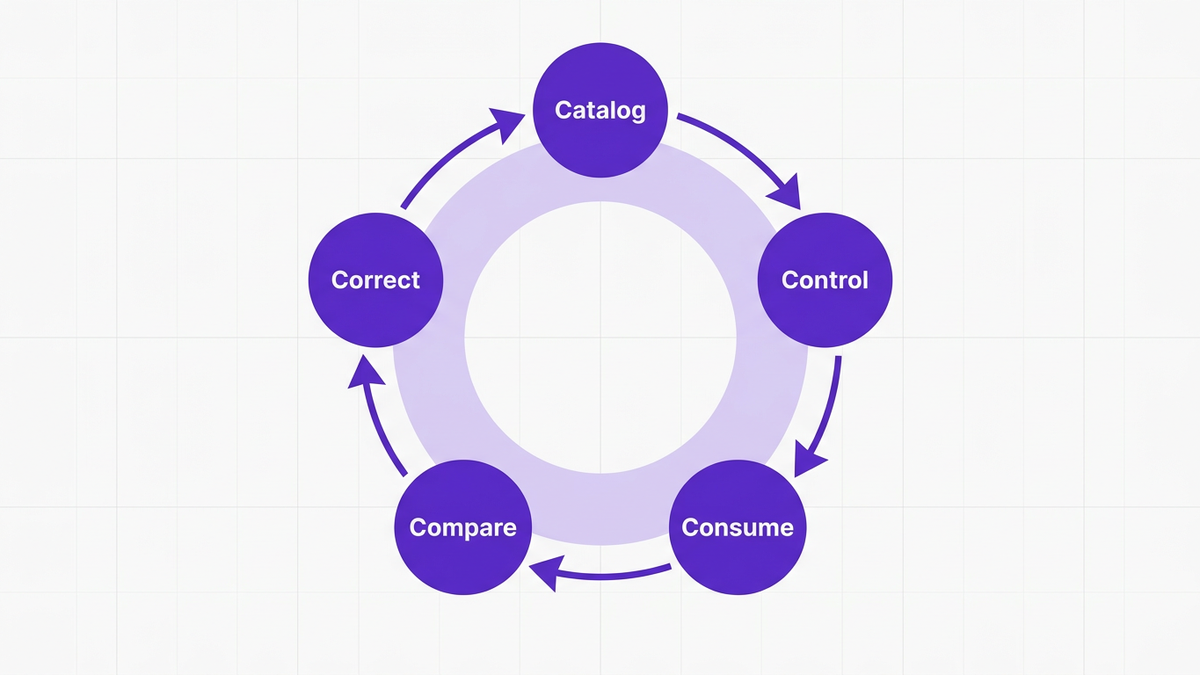
Turning TokenOps from a concept into an operating reality requires process, technology, and clear ownership. A helpful mental model is the "5C TokenOps Loop": Catalog, Control, Consume, Compare, Correct.
This loop should operate continuously, not as a quarterly exercise. It is the operational backbone of an effective AI Token Management Office.
A Fortune 100 financial services company established an AI Token Management Office in 2026. By implementing automated token lifecycle tools and centralizing entitlement governance, the organization reclaimed 14 million dollars in underutilized SaaS licenses and avoided major regulatory penalties related to AI model access.
A large healthcare provider adopted unified AI token governance and entitlement analytics in early 2026. With full visibility into token usage across clinical and administrative workflows, the provider streamlined compliance with new digital health regulations and realized 6 million dollars in cost savings within eight months.
Both organizations combined automated controls, executive level reporting, and FinOps token management practices. TokenOps gave them a language to discuss AI usage with regulators, auditors, and boards.
CloudNuro is built for enterprises that need TokenOps to operate at the same level of rigor as traditional IT and cloud governance. Its platform capabilities map directly to the needs of an AI Token Management Office.
CloudNuro AI Custodian provides complete visibility across SaaS and cloud by integrating with over 400 applications, including productivity suites, CRM platforms, collaboration tools, and cloud services. This creates a living inventory of AI related entitlements and token usage.
For CIOs and CFOs, this means:
CloudNuro’s governance-first architecture supports an enterprise grade cloud compliance office and ATMO by:
This is particularly valuable for organizations in healthcare and finance that face strict ai token compliance requirements and need evidence ready audit trails.
CloudNuro AI Custodian and focused modules such as Microsoft 365 Custodian and Salesforce Custodian bring automated cost optimization to AI token consumption by:
By combining cloud spend analytics with token specific insights, CloudNuro helps ATMO teams drive consistent SaaS cost optimization while supporting strategic AI growth.
CloudNuro’s executive dashboards align with the way Fortune 500 leaders make decisions. According to a recent large enterprise study, executive dashboards providing unified visibility for token usage and entitlement are used by 81% of Fortune 500s with mature TokenOps practices in 2026.
CloudNuro operationalizes this by offering:
The result is an ATMO that is not just a control function, but a strategic partner to the business.
Most enterprises underestimate how quickly AI token usage will grow. According to recent industry data, AI related SaaS token consumption is projected to grow 112% annually through 2026, which implies a multi fold expansion in only a few budget cycles.
By 2027, the gap between organizations with mature TokenOps and those without will be stark:
Two mindset shifts are crucial:
Enterprises that start now can align TokenOps with broader cloud SaaS governance and FinOps efforts, instead of bolting it on later under regulatory pressure.
TokenOps is the discipline of managing AI token usage across an enterprise. It covers token lifecycle management, entitlement controls, spend optimization, and compliance.
For Fortune 500 companies, TokenOps ensures that AI tokens are used responsibly, efficiently, and in line with regulatory expectations.
Traditional license management focuses on static seats or subscriptions. AI token management deals with dynamic, usage based consumption where cost and risk are driven by prompts, workloads, and automations.
TokenOps connects these dynamics to digital asset governance, so enterprises can control who consumes tokens, for which use cases, and at what cost.
An AI Token Management Office formalizes ownership of token policies, economics, and compliance. It coordinates IT, security, finance, and legal stakeholders who would otherwise manage tokens in isolation.
Research from 2026 shows that organizations with formal ATMO structures achieve over 15% annual savings on SaaS and cloud license costs on average, while also improving audit readiness.
TokenOps provides end to end ai token lifecycle visibility, so you can show regulators how tokens are issued, used, and retired. It supports token risk analysis that correlates high risk usage with access patterns and data types.
Combined with token policy automation and a zero trust token model, this significantly reduces the likelihood and impact of misuse or non compliant AI workloads.
CloudNuro offers an AI enabled SaaS management platform that underpins TokenOps with unified visibility, automation, and governance. It centralizes token and license inventory, powers AI-powered license reclamation, and delivers real time compliance reporting.
For Fortune 500 enterprises, CloudNuro becomes the operational system of record for FinOps token management, cloud SaaS governance, and executive level insights into AI consumption.
Timelines vary, but many organizations can establish a foundational AI Token Management Office within six to nine months. The fastest adopters reuse existing FinOps, security, and procurement structures, then use platforms like CloudNuro to instrument inventory, controls, and reporting.
The key is to start with high value, high risk token domains, such as customer facing AI or regulated data workflows, then expand coverage as the TokenOps practice matures.
AI tokens are now a first class asset, and TokenOps is the operating model that keeps that asset under control. With token consumption forecast to more than double annually through 2026, Fortune 500s that delay structured token governance risk uncontrolled spend, compliance gaps, and slowed innovation.
By establishing an AI Token Management Office, adopting clear token economics frameworks, and using platforms like CloudNuro to automate visibility and control, enterprises can turn token usage into a strategic advantage instead of a liability.
For CIOs, CTOs, and CFOs, the path forward is clear: treat TokenOps as a board level priority, implement the right technology, and make 2027 the year your organization can say it has AI token management fully under control.
Ready to operationalize TokenOps at scale? Engage with CloudNuro to see how unified SaaS and AI token governance can transform your cost, compliance, and innovation trajectory.
CloudNuro is a leader in Enterprise SaaS Management Platforms, providing enterprises with unmatched visibility, governance, and cost optimization. Recognized twice in a row in the SaaS Management Platforms category and named a Leader in the SoftwareReviews Data Quadrant, CloudNuro is trusted by global enterprises and government agencies to bring financial discipline to SaaS, cloud, and AI. Trusted by enterprises such as Konica Minolta and Federal Signal, CloudNuro provides centralized SaaS inventory, license optimization, and renewal management along with advanced cost allocation and chargeback, giving IT and Finance leaders the visibility, control, and cost-conscious culture needed to drive financial discipline. Request a Demo | Get Free Savings | Explore Product
Request a no cost, no obligation free assessment —just 15 minutes to savings!
Get StartedTokenized AI consumption has become the new unit of value in enterprise technology. As large language models and AI services are priced per token, a disciplined TokenOps capability is quickly becoming as essential as traditional IT operations and FinOps.
By 2026, an estimated 83% of Fortune 500 enterprises are expected to deploy AI token management frameworks to govern entitlements and optimize digital asset spend, according to a recent enterprise IT report. For Fortune 500 leaders, the question is no longer if TokenOps will be required, but how fast they can stand up an AI Token Management Office before costs, risk, and compliance pressures converge.
This article outlines why TokenOps matters, what an AI Token Management Office does, and how enterprises can operationalize token governance using platforms like CloudNuro.
TokenOps is the practice of governing, monitoring, and optimizing AI token consumption across SaaS and cloud environments. It connects token lifecycle management, entitlement controls, and financial accountability into one operating discipline.
In practical terms, TokenOps answers three questions: who can use which AI tokens, for what purpose, and at what cost. It treats tokens as a strategic asset, not an invisible byproduct of AI adoption.
According to a recent enterprise AI adoption study, AI-related SaaS token consumption in major U.S. enterprises is projected to increase by 112% year over year through 2026, driven by generative AI and large language model deployments. That growth rate is not just a budget concern, it is a governance and compliance challenge.
A 2026 enterprise risk survey found that 76% of IT executives in Fortune 500 companies cite token lifecycle management as a top three compliance risk for AI deployments. As tokens represent both spend and access to potentially sensitive data, uncontrolled growth can quickly lead to regulatory exposure.
Two analogies help frame the urgency:
This is why TokenOps must move from an experimental practice to a formal office with clear accountability.
An AI Token Management Office (ATMO) is a centralized function responsible for token governance enterprise wide. It sits at the intersection of IT, security, finance, and compliance, similar to how modern cloud centers of excellence operate.
According to recent large-enterprise benchmarks, nearly 70% of organizations with established AI Token Management Offices realized more than 15% annual savings on SaaS and cloud license costs by mid 2026. That alone would justify the function, but the mandate is broader.
A mature ATMO typically owns:
According to a recent industry analyst insight in 2026, AI token governance is emerging as the linchpin for digital asset control and compliance at scale. An ATMO formalizes this governance into a consistent operating model.
AI tokens are not just a new billing unit, they also change how enterprises must think about digital asset governance and risk.
Traditional access control focused on static entitlements to applications. Token based AI services are more fluid: tokens are consumed by prompts, automations, and background services that may be difficult to attribute to a specific user or business process.
Recent enterprise compliance studies highlight three shifts:
A recent report on automated token platforms found that 94% of enterprises implementing automated token management tools report accelerated audit readiness and regulatory compliance in 2026. The insight is clear: manual spreadsheets and ad hoc logs cannot satisfy modern audit requirements.
To manage this, many TokenOps teams are adopting a zero trust token model where:
This is where token policy automation becomes essential. Policies must be enforced in real time, not as a quarterly review.
Cost pressure is the surface symptom of token chaos. The deeper issue is ungoverned ai token economics that fail to connect consumption with value.
According to a recent digital asset governance report, healthcare and finance will account for over 47% of global enterprise spend on AI token governance solutions by 2026. These sectors understand that unmanaged token spend threatens margins, regulatory capital ratios, and patient or customer outcomes.
A practical token economics framework for a Fortune 500 enterprise typically includes:
A cloud procurement advisor study in 2026 noted that automation in license reclamation and token lifecycle management can free up 20 to 30% of unused digital assets, delivering instant budget impact. This is classic SaaS cost optimization, translated into the token era.
Some executives argue that AI pricing is still volatile, so it is better to wait. In reality, that volatility is a reason to formalize TokenOps sooner.
A strong token governance enterprise function lets you experiment safely, understand emerging cost curves, and negotiate from a position of data backed strength. Waiting simply means funding experiments without the controls to learn from them.
Turning TokenOps from a concept into an operating reality requires process, technology, and clear ownership. A helpful mental model is the "5C TokenOps Loop": Catalog, Control, Consume, Compare, Correct.
This loop should operate continuously, not as a quarterly exercise. It is the operational backbone of an effective AI Token Management Office.
A Fortune 100 financial services company established an AI Token Management Office in 2026. By implementing automated token lifecycle tools and centralizing entitlement governance, the organization reclaimed 14 million dollars in underutilized SaaS licenses and avoided major regulatory penalties related to AI model access.
A large healthcare provider adopted unified AI token governance and entitlement analytics in early 2026. With full visibility into token usage across clinical and administrative workflows, the provider streamlined compliance with new digital health regulations and realized 6 million dollars in cost savings within eight months.
Both organizations combined automated controls, executive level reporting, and FinOps token management practices. TokenOps gave them a language to discuss AI usage with regulators, auditors, and boards.
CloudNuro is built for enterprises that need TokenOps to operate at the same level of rigor as traditional IT and cloud governance. Its platform capabilities map directly to the needs of an AI Token Management Office.
CloudNuro AI Custodian provides complete visibility across SaaS and cloud by integrating with over 400 applications, including productivity suites, CRM platforms, collaboration tools, and cloud services. This creates a living inventory of AI related entitlements and token usage.
For CIOs and CFOs, this means:
CloudNuro’s governance-first architecture supports an enterprise grade cloud compliance office and ATMO by:
This is particularly valuable for organizations in healthcare and finance that face strict ai token compliance requirements and need evidence ready audit trails.
CloudNuro AI Custodian and focused modules such as Microsoft 365 Custodian and Salesforce Custodian bring automated cost optimization to AI token consumption by:
By combining cloud spend analytics with token specific insights, CloudNuro helps ATMO teams drive consistent SaaS cost optimization while supporting strategic AI growth.
CloudNuro’s executive dashboards align with the way Fortune 500 leaders make decisions. According to a recent large enterprise study, executive dashboards providing unified visibility for token usage and entitlement are used by 81% of Fortune 500s with mature TokenOps practices in 2026.
CloudNuro operationalizes this by offering:
The result is an ATMO that is not just a control function, but a strategic partner to the business.
Most enterprises underestimate how quickly AI token usage will grow. According to recent industry data, AI related SaaS token consumption is projected to grow 112% annually through 2026, which implies a multi fold expansion in only a few budget cycles.
By 2027, the gap between organizations with mature TokenOps and those without will be stark:
Two mindset shifts are crucial:
Enterprises that start now can align TokenOps with broader cloud SaaS governance and FinOps efforts, instead of bolting it on later under regulatory pressure.
TokenOps is the discipline of managing AI token usage across an enterprise. It covers token lifecycle management, entitlement controls, spend optimization, and compliance.
For Fortune 500 companies, TokenOps ensures that AI tokens are used responsibly, efficiently, and in line with regulatory expectations.
Traditional license management focuses on static seats or subscriptions. AI token management deals with dynamic, usage based consumption where cost and risk are driven by prompts, workloads, and automations.
TokenOps connects these dynamics to digital asset governance, so enterprises can control who consumes tokens, for which use cases, and at what cost.
An AI Token Management Office formalizes ownership of token policies, economics, and compliance. It coordinates IT, security, finance, and legal stakeholders who would otherwise manage tokens in isolation.
Research from 2026 shows that organizations with formal ATMO structures achieve over 15% annual savings on SaaS and cloud license costs on average, while also improving audit readiness.
TokenOps provides end to end ai token lifecycle visibility, so you can show regulators how tokens are issued, used, and retired. It supports token risk analysis that correlates high risk usage with access patterns and data types.
Combined with token policy automation and a zero trust token model, this significantly reduces the likelihood and impact of misuse or non compliant AI workloads.
CloudNuro offers an AI enabled SaaS management platform that underpins TokenOps with unified visibility, automation, and governance. It centralizes token and license inventory, powers AI-powered license reclamation, and delivers real time compliance reporting.
For Fortune 500 enterprises, CloudNuro becomes the operational system of record for FinOps token management, cloud SaaS governance, and executive level insights into AI consumption.
Timelines vary, but many organizations can establish a foundational AI Token Management Office within six to nine months. The fastest adopters reuse existing FinOps, security, and procurement structures, then use platforms like CloudNuro to instrument inventory, controls, and reporting.
The key is to start with high value, high risk token domains, such as customer facing AI or regulated data workflows, then expand coverage as the TokenOps practice matures.
AI tokens are now a first class asset, and TokenOps is the operating model that keeps that asset under control. With token consumption forecast to more than double annually through 2026, Fortune 500s that delay structured token governance risk uncontrolled spend, compliance gaps, and slowed innovation.
By establishing an AI Token Management Office, adopting clear token economics frameworks, and using platforms like CloudNuro to automate visibility and control, enterprises can turn token usage into a strategic advantage instead of a liability.
For CIOs, CTOs, and CFOs, the path forward is clear: treat TokenOps as a board level priority, implement the right technology, and make 2027 the year your organization can say it has AI token management fully under control.
Ready to operationalize TokenOps at scale? Engage with CloudNuro to see how unified SaaS and AI token governance can transform your cost, compliance, and innovation trajectory.
CloudNuro is a leader in Enterprise SaaS Management Platforms, providing enterprises with unmatched visibility, governance, and cost optimization. Recognized twice in a row in the SaaS Management Platforms category and named a Leader in the SoftwareReviews Data Quadrant, CloudNuro is trusted by global enterprises and government agencies to bring financial discipline to SaaS, cloud, and AI. Trusted by enterprises such as Konica Minolta and Federal Signal, CloudNuro provides centralized SaaS inventory, license optimization, and renewal management along with advanced cost allocation and chargeback, giving IT and Finance leaders the visibility, control, and cost-conscious culture needed to drive financial discipline. Request a Demo | Get Free Savings | Explore Product
Request a no cost, no obligation free assessment - just 15 minutes to savings!
Get StartedWe're offering complimentary ServiceNow license assessments to only 25 enterprises this quarter who want to unlock immediate savings without disrupting operations.
Get Free AssessmentGet Started




CloudNuro Corp
1755 Park St. Suite 207
Naperville, IL 60563
Phone : +1-630-277-9470
Email: info@cloudnuro.com




.webp)

Recognized Leader in SaaS Management Platforms by Info-Tech SoftwareReviews

.svg)