

Sign Up
Thank you for Submitting!
Artificial intelligence is transforming the enterprise landscape, driving exponential growth in productivity, automation, and innovation. However, as organizations adopt more AI-powered tools like ChatGPT, Copilot, Claude, and Gemini, the complexity of tracking and optimizing AI spend increases dramatically. Enterprises are struggling to gain a unified view of where AI investments go, who is using which models, and how those costs break down across departments, projects, and teams. Without clear visibility and governance, AI spend can spiral and compliance risks rise.

For CIOs, CTOs, IT financial controllers, and procurement leaders, especially in regulated sectors like healthcare, finance, and government, the challenge is not just tracking licenses, but understanding granular, usage-based costs across multiple AI vendors. This guide explores the urgent need for unified AI spend visibility, common obstacles, industry trends, and how CloudNuro solves these challenges with the AI Custodian platform.
Enterprises rarely rely on a single AI provider. Instead, they combine large language models and assistants from multiple vendors, OpenAI’s ChatGPT, Microsoft’s Copilot, Anthropic’s Claude, and Google’s Gemini, to fit different business needs. Each system introduces its own consumption billing model, usage metrics, and reporting formats. This fragmentation creates major hurdles for finance and IT leaders:
Data Silos: Each provider issues invoices and usage reports in proprietary formats, isolating cost data in different portals and files.
Usage-Based Economics: AI usage is often billed according to tokens, prompts, or context window consumption. Costs can fluctuate unpredictably by user, model, and day.
User and Project Attribution: Without direct mapping, it is difficult to pinpoint which teams, projects, and agents are responsible for specific AI expenses.
Compliance and Security: Disparate usage tracking impedes policy enforcement, compliance monitoring, and minimization of PII exposure.
AI is moving from fixed-seat software economics to variable, consumption-based economics across multiple providers, and most enterprises do not yet have the governance to see, attribute, and control that spend.
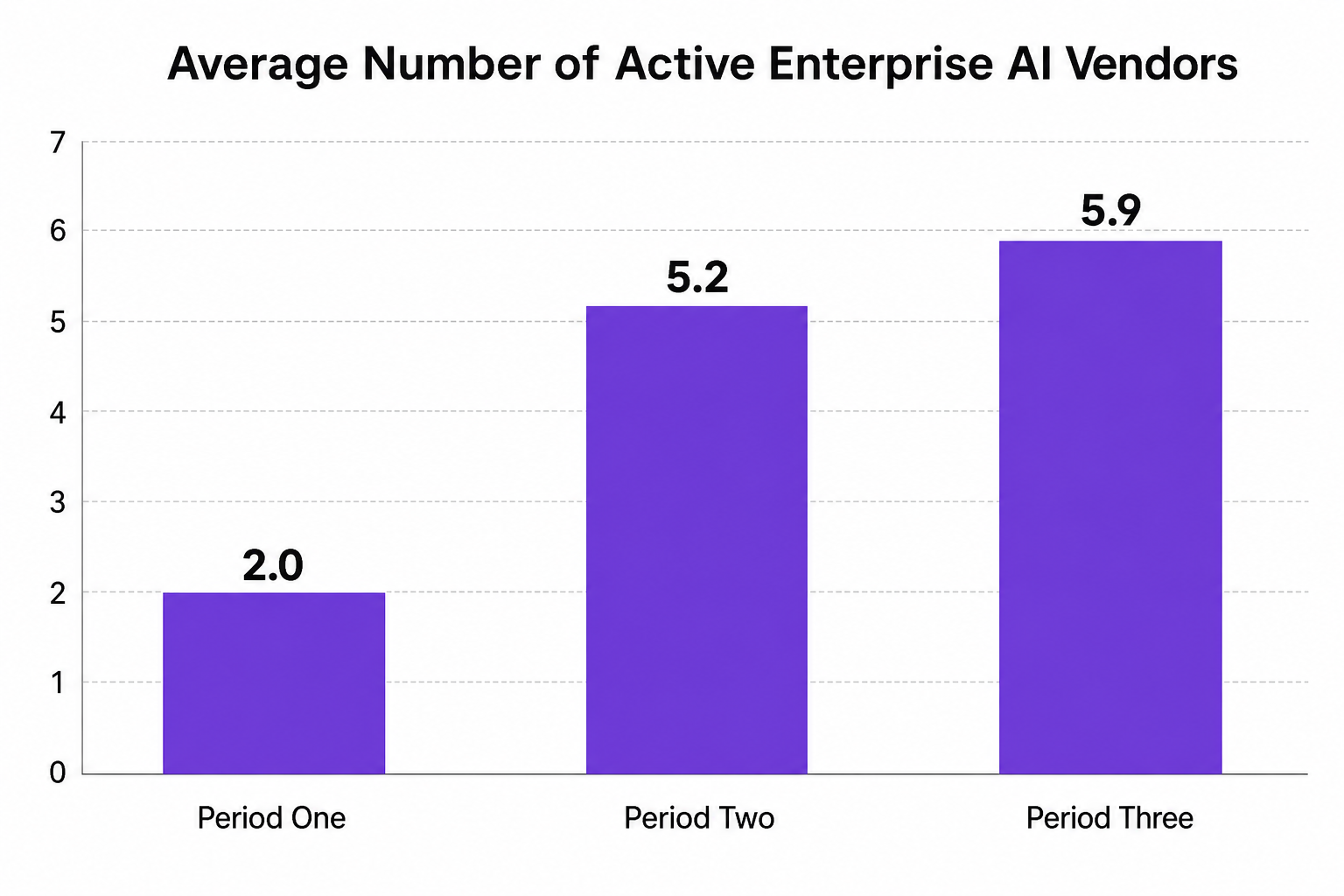
Organizations are experiencing a major shift in how AI spend is managed:
The average enterprise used 2.0 AI vendors in early adoption phases, a figure now topping 5.9 as different departments deploy their own tools.
AI vendors’ share of enterprise software spend grew dramatically from just 1.4% to 8.1%, and will keep growing as adoption scales up across the business.
84% of companies now report a growing share of software spend going directly to AI.
These trends, alongside rapid growth in generative AI and predictive analytics, underscore why a centralized, unified dashboard is no longer optional. Proper AI financial governance demands consolidated views, allocation and chargeback capabilities, and real accountability for spend.
Getting to this single-pane-of-glass view is harder than it seems. Common pain points include:
1. Incompatible Provider APIs
Each provider exposes different telemetry, with token consumption, prompt frequency, and agent involvement often buried deep in logs or missing entirely from billing.
2. Inconsistent Spend Attribution
Invoices alone only show aggregate totals, obscuring which team, user, or use case is generating the highest costs. Variable project and agent budgeting gets lost without unified tagging.
3. Lack of Governance Controls
Without visibility, organizations risk overspending, unexpectedly high bills, and compliance violations such as rogue PII exposure or personal use out of policy.
4. Tool Proliferation
With 5.9 AI vendors per enterprise on average, managing access, entitlements, and spend across dozens of interfaces quickly becomes unwieldy.
Enterprise AI spend is fragmented across cloud providers, foundation model vendors, software platforms, experimentation environments, and business units, making it hard to see enterprise-wide consumption or cost drivers.
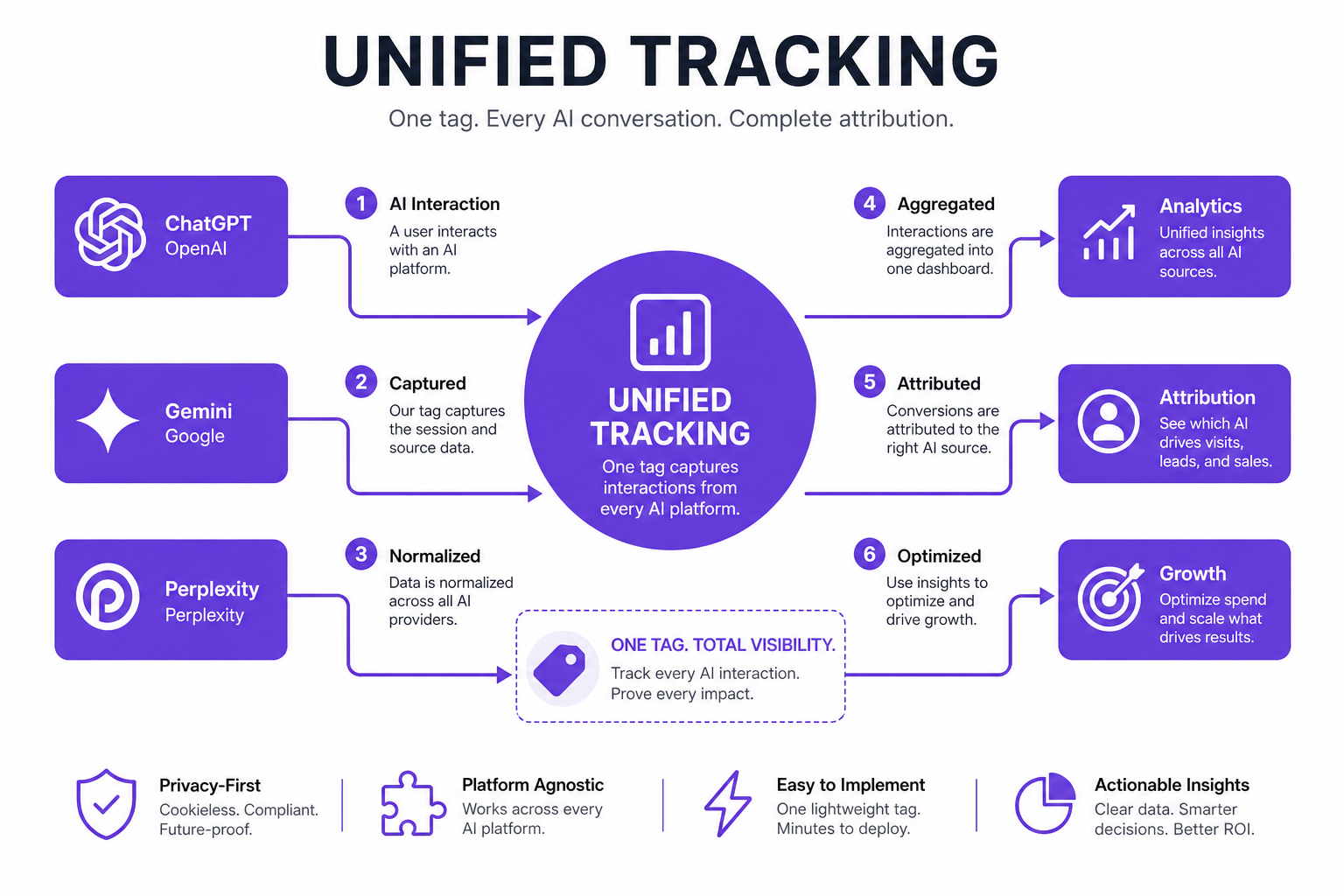
CloudNuro’s AI Custodian is engineered to tackle these exact pain points, transforming AI spend management for peerless visibility and control:
Provider-Agnostic Integration: Tracks real-time consumption from ChatGPT, Copilot, Claude, and Gemini alongside 400+ SaaS and cloud services. All breakdowns are accessible in one dashboard.
Granular Attribution and Budget Controls: Attribute costs to individual agents, teams, and projects with strict budgeting at every level. Administrators can enforce policy-based thresholds, preventing budget overruns.
Consumption Analytics and Showback: Visualizes token usage, prompt frequency, and financial outlay per user or agent, supporting showback and chargeback workflows to drive financial accountability.
Governance-First Security Architecture: The AI Custodian actively monitors application usage, flags excessive use or policy violations, and alerts on risky patterns, such as PII leaks.
Compliance and Optimization: Ensure spending aligns with both internal policies and regulatory standards, and right-size AI model utilization for ongoing cost optimization.
CloudNuro’s deep integration means IT and finance teams move beyond license counts, isolating real consumption trends and pinpointing where AI dollars flow across the organization. It bridges the transparency gap so leaders can act quickly, ensuring every AI dollar yields maximum enterprise value.
CloudNuro’s unique approach delivers results:
A public transit authority saw a 64% reduction in M365 spend, 22% lower cloud storage costs, and 14% optimization in project management spend, achieved through unified spend analytics and license governance.
By establishing Copilot usage transparency, a government client validated its investments and confidently scaled future AI deployments under tight internal controls.
A global organization remediated rogue and orphaned accounts in less than a year, cutting spend leakage and reducing security exposure substantially.
Rapid AI Adopter Expansion: The number of active enterprise AI vendors jumped from 2.0 to 5.9.
AI Spend Explosion: Global AI spend reached 2.59 trillion dollars, up 47% year-over-year.
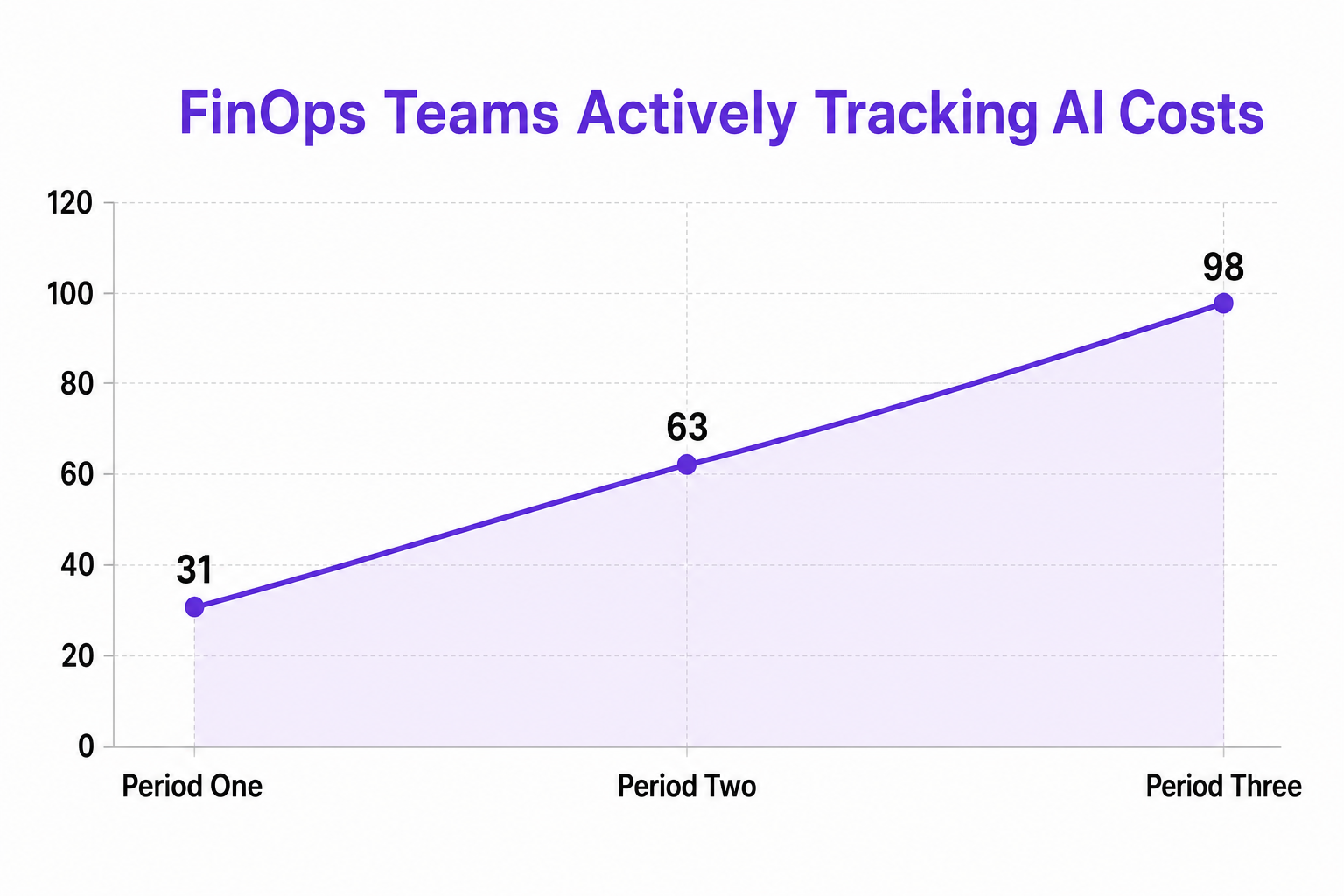
CIO/CTO Mandate: The proportion of FinOps teams actively tracking AI costs jumped from 31% to 63%, projected to hit 98%, consolidation is the only route to sane, scalable management.
Automated Analytics: 55% of spend platforms now feature predictive analytics, and 35% have generative AI for spend anomaly detection.
Unlike generic SaaS management tools, CloudNuro provides:
Real-time, provider-agnostic AI consumption visibility on a single pane of glass
Showback and chargeback features driving adoption of cost accountability
Deep integration with leading model providers for breakdowns by agent, project, and usage type
Automated alerts for out-of-policy activity, personal use, and compliance violations
Centralized dashboard bridging SaaS, cloud, and AI spend, aiding both IT and Finance leaders
With CloudNuro, every stakeholder, from department heads to finance and CIO-level, understands exactly how, where, and why AI is being used, with full confidence in cost controls and compliance.
How can I track AI spend across multiple providers?
Platforms like CloudNuro’s AI Custodian integrate directly with major AI vendors, ChatGPT, Copilot, Claude, and Gemini, to provide a consolidated, real-time dashboard where all spend data is unified and attributed by team, agent, or project.
What tools show combined AI spend for ChatGPT, Copilot, Claude, and Gemini?
CloudNuro’s unified dashboard is purpose-built for complete AI SaaS, cloud, and license visibility. Unlike traditional license trackers, it visualizes token and consumption data across all providers in a central pane.
How do enterprises gain visibility into AI usage costs?
By enabling API-level integrations and leveraging showback/chargeback workflows, organizations bring AI usage and cost data together, empowering proactive governance, detailed reporting, and rapid optimization.
What are the best practices for multi-provider AI cost tracking?
Unify all AI spend data in a single analytics platform, enforce project/agent tagging, automate budget limits, and implement role-based access controls. Leverage showback for department awareness, and establish periodic audits for compliance.
Can I use a single dashboard for AI spend management?
Yes. CloudNuro’s platform was designed for exactly this purpose, one dashboard, unified integration, granular attribution, and actionable analytics for all your enterprise AI spend.
The proliferation of AI across every enterprise function demands a step change in how organizations approach cost governance and control. Disparate provider portals and manual reconciliations are no longer fit for purpose. CloudNuro’s AI Custodian unifies spend insight and optimization, making AI cost transparency, governance, and budget discipline achievable, no matter how many models, agents, or workflows your teams adopt. As AI investments accelerate, only a centralized, provider-agnostic platform can ensure every dollar counts while maintaining security, compliance, and trust.
About CloudNuro
CloudNuro is a leader in Enterprise AI Adoption Management, providing enterprises with unmatched visibility, governance, and cost optimization. Recognized twice in a row in the SaaS Management Platforms category and named a Leader in the SoftwareReviews Data Quadrant, CloudNuro is trusted by global enterprises and government agencies to bring financial discipline to SaaS, cloud, and AI. Trusted by enterprises, CloudNuro provides centralized SaaS inventory, license optimization, and renewal management along with advanced cost allocation and chargeback, giving IT and Finance leaders the visibility, control, and cost-conscious culture needed to drive financial discipline.
Request a no cost, no obligation free assessment —just 15 minutes to savings!
Get StartedArtificial intelligence is transforming the enterprise landscape, driving exponential growth in productivity, automation, and innovation. However, as organizations adopt more AI-powered tools like ChatGPT, Copilot, Claude, and Gemini, the complexity of tracking and optimizing AI spend increases dramatically. Enterprises are struggling to gain a unified view of where AI investments go, who is using which models, and how those costs break down across departments, projects, and teams. Without clear visibility and governance, AI spend can spiral and compliance risks rise.
For CIOs, CTOs, IT financial controllers, and procurement leaders, especially in regulated sectors like healthcare, finance, and government, the challenge is not just tracking licenses, but understanding granular, usage-based costs across multiple AI vendors. This guide explores the urgent need for unified AI spend visibility, common obstacles, industry trends, and how CloudNuro solves these challenges with the AI Custodian platform.
Enterprises rarely rely on a single AI provider. Instead, they combine large language models and assistants from multiple vendors, OpenAI’s ChatGPT, Microsoft’s Copilot, Anthropic’s Claude, and Google’s Gemini, to fit different business needs. Each system introduces its own consumption billing model, usage metrics, and reporting formats. This fragmentation creates major hurdles for finance and IT leaders:
Data Silos: Each provider issues invoices and usage reports in proprietary formats, isolating cost data in different portals and files.
Usage-Based Economics: AI usage is often billed according to tokens, prompts, or context window consumption. Costs can fluctuate unpredictably by user, model, and day.
User and Project Attribution: Without direct mapping, it is difficult to pinpoint which teams, projects, and agents are responsible for specific AI expenses.
Compliance and Security: Disparate usage tracking impedes policy enforcement, compliance monitoring, and minimization of PII exposure.
AI is moving from fixed-seat software economics to variable, consumption-based economics across multiple providers, and most enterprises do not yet have the governance to see, attribute, and control that spend.
Organizations are experiencing a major shift in how AI spend is managed:
The average enterprise used 2.0 AI vendors in early adoption phases, a figure now topping 5.9 as different departments deploy their own tools.
AI vendors’ share of enterprise software spend grew dramatically from just 1.4% to 8.1%, and will keep growing as adoption scales up across the business.
84% of companies now report a growing share of software spend going directly to AI.
These trends, alongside rapid growth in generative AI and predictive analytics, underscore why a centralized, unified dashboard is no longer optional. Proper AI financial governance demands consolidated views, allocation and chargeback capabilities, and real accountability for spend.
Getting to this single-pane-of-glass view is harder than it seems. Common pain points include:
1. Incompatible Provider APIs
Each provider exposes different telemetry, with token consumption, prompt frequency, and agent involvement often buried deep in logs or missing entirely from billing.
2. Inconsistent Spend Attribution
Invoices alone only show aggregate totals, obscuring which team, user, or use case is generating the highest costs. Variable project and agent budgeting gets lost without unified tagging.
3. Lack of Governance Controls
Without visibility, organizations risk overspending, unexpectedly high bills, and compliance violations such as rogue PII exposure or personal use out of policy.
4. Tool Proliferation
With 5.9 AI vendors per enterprise on average, managing access, entitlements, and spend across dozens of interfaces quickly becomes unwieldy.
Enterprise AI spend is fragmented across cloud providers, foundation model vendors, software platforms, experimentation environments, and business units, making it hard to see enterprise-wide consumption or cost drivers.
CloudNuro’s AI Custodian is engineered to tackle these exact pain points, transforming AI spend management for peerless visibility and control:
Provider-Agnostic Integration: Tracks real-time consumption from ChatGPT, Copilot, Claude, and Gemini alongside 400+ SaaS and cloud services. All breakdowns are accessible in one dashboard.
Granular Attribution and Budget Controls: Attribute costs to individual agents, teams, and projects with strict budgeting at every level. Administrators can enforce policy-based thresholds, preventing budget overruns.
Consumption Analytics and Showback: Visualizes token usage, prompt frequency, and financial outlay per user or agent, supporting showback and chargeback workflows to drive financial accountability.
Governance-First Security Architecture: The AI Custodian actively monitors application usage, flags excessive use or policy violations, and alerts on risky patterns, such as PII leaks.
Compliance and Optimization: Ensure spending aligns with both internal policies and regulatory standards, and right-size AI model utilization for ongoing cost optimization.
CloudNuro’s deep integration means IT and finance teams move beyond license counts, isolating real consumption trends and pinpointing where AI dollars flow across the organization. It bridges the transparency gap so leaders can act quickly, ensuring every AI dollar yields maximum enterprise value.
CloudNuro’s unique approach delivers results:
A public transit authority saw a 64% reduction in M365 spend, 22% lower cloud storage costs, and 14% optimization in project management spend, achieved through unified spend analytics and license governance.
By establishing Copilot usage transparency, a government client validated its investments and confidently scaled future AI deployments under tight internal controls.
A global organization remediated rogue and orphaned accounts in less than a year, cutting spend leakage and reducing security exposure substantially.
Rapid AI Adopter Expansion: The number of active enterprise AI vendors jumped from 2.0 to 5.9.
AI Spend Explosion: Global AI spend reached 2.59 trillion dollars, up 47% year-over-year.
CIO/CTO Mandate: The proportion of FinOps teams actively tracking AI costs jumped from 31% to 63%, projected to hit 98%, consolidation is the only route to sane, scalable management.
Automated Analytics: 55% of spend platforms now feature predictive analytics, and 35% have generative AI for spend anomaly detection.
Unlike generic SaaS management tools, CloudNuro provides:
Real-time, provider-agnostic AI consumption visibility on a single pane of glass
Showback and chargeback features driving adoption of cost accountability
Deep integration with leading model providers for breakdowns by agent, project, and usage type
Automated alerts for out-of-policy activity, personal use, and compliance violations
Centralized dashboard bridging SaaS, cloud, and AI spend, aiding both IT and Finance leaders
With CloudNuro, every stakeholder, from department heads to finance and CIO-level, understands exactly how, where, and why AI is being used, with full confidence in cost controls and compliance.
How can I track AI spend across multiple providers?
Platforms like CloudNuro’s AI Custodian integrate directly with major AI vendors, ChatGPT, Copilot, Claude, and Gemini, to provide a consolidated, real-time dashboard where all spend data is unified and attributed by team, agent, or project.
What tools show combined AI spend for ChatGPT, Copilot, Claude, and Gemini?
CloudNuro’s unified dashboard is purpose-built for complete AI SaaS, cloud, and license visibility. Unlike traditional license trackers, it visualizes token and consumption data across all providers in a central pane.
How do enterprises gain visibility into AI usage costs?
By enabling API-level integrations and leveraging showback/chargeback workflows, organizations bring AI usage and cost data together, empowering proactive governance, detailed reporting, and rapid optimization.
What are the best practices for multi-provider AI cost tracking?
Unify all AI spend data in a single analytics platform, enforce project/agent tagging, automate budget limits, and implement role-based access controls. Leverage showback for department awareness, and establish periodic audits for compliance.
Can I use a single dashboard for AI spend management?
Yes. CloudNuro’s platform was designed for exactly this purpose, one dashboard, unified integration, granular attribution, and actionable analytics for all your enterprise AI spend.
The proliferation of AI across every enterprise function demands a step change in how organizations approach cost governance and control. Disparate provider portals and manual reconciliations are no longer fit for purpose. CloudNuro’s AI Custodian unifies spend insight and optimization, making AI cost transparency, governance, and budget discipline achievable, no matter how many models, agents, or workflows your teams adopt. As AI investments accelerate, only a centralized, provider-agnostic platform can ensure every dollar counts while maintaining security, compliance, and trust.
About CloudNuro
CloudNuro is a leader in Enterprise AI Adoption Management, providing enterprises with unmatched visibility, governance, and cost optimization. Recognized twice in a row in the SaaS Management Platforms category and named a Leader in the SoftwareReviews Data Quadrant, CloudNuro is trusted by global enterprises and government agencies to bring financial discipline to SaaS, cloud, and AI. Trusted by enterprises, CloudNuro provides centralized SaaS inventory, license optimization, and renewal management along with advanced cost allocation and chargeback, giving IT and Finance leaders the visibility, control, and cost-conscious culture needed to drive financial discipline.
Request a no cost, no obligation free assessment - just 15 minutes to savings!
Get StartedWe're offering complimentary ServiceNow license assessments to only 25 enterprises this quarter who want to unlock immediate savings without disrupting operations.
Get Free AssessmentGet Started




CloudNuro Corp
1755 Park St. Suite 207
Naperville, IL 60563
Phone : +1-630-277-9470
Email: info@cloudnuro.com





.webp)

Recognized Leader in SaaS Management Platforms by Info-Tech SoftwareReviews
%20SW.png)


.svg)