

Sign Up
Thank you for Submitting!
AI-powered SaaS discovery has moved from innovation project to operational necessity for enterprise IT and security leaders. As SaaS adoption explodes across business units, traditional inventories fail to keep pace, leaving dangerous blind spots in your software stack.
Research from Forrester in 2026 found that 78% of enterprises uncovered previously unknown SaaS and cloud apps after deploying AI discovery platforms. Those are not just extra line items in a spreadsheet. They are potential security gaps, compliance exposures, and sources of waste that you cannot manage or govern.
This article explains how AI-powered SaaS discovery works, where the biggest blind spots hide, and how to turn continuous discovery into cost savings, stronger security, and better governance.
Even the most mature IT teams struggle to maintain a complete and current view of their SaaS estate. SaaS is purchased on credit cards, trialed by teams, embedded in workflows, and often never reported back to central IT.
By the time a manual inventory is updated, the environment has already changed. McKinsey reported in 2026 that continuous AI-powered discovery cut IT asset inventory time by 60%, a clear signal that human-centric processes alone cannot keep up.
Common sources of SaaS blind spots include:
Unknown does not mean unused. It simply means ungoverned.
AI-powered SaaS discovery replaces periodic, spreadsheet-driven exercises with continuous, intelligent SaaS visibility. Instead of relying on employee surveys or ad hoc reports, it watches how users, devices, and cloud services interact, then infers which applications are in play.
Think of it as a constantly updating radar for your SaaS environment. Where traditional IT asset management for SaaS is like a static map, AI-powered discovery operates more like live air traffic control.
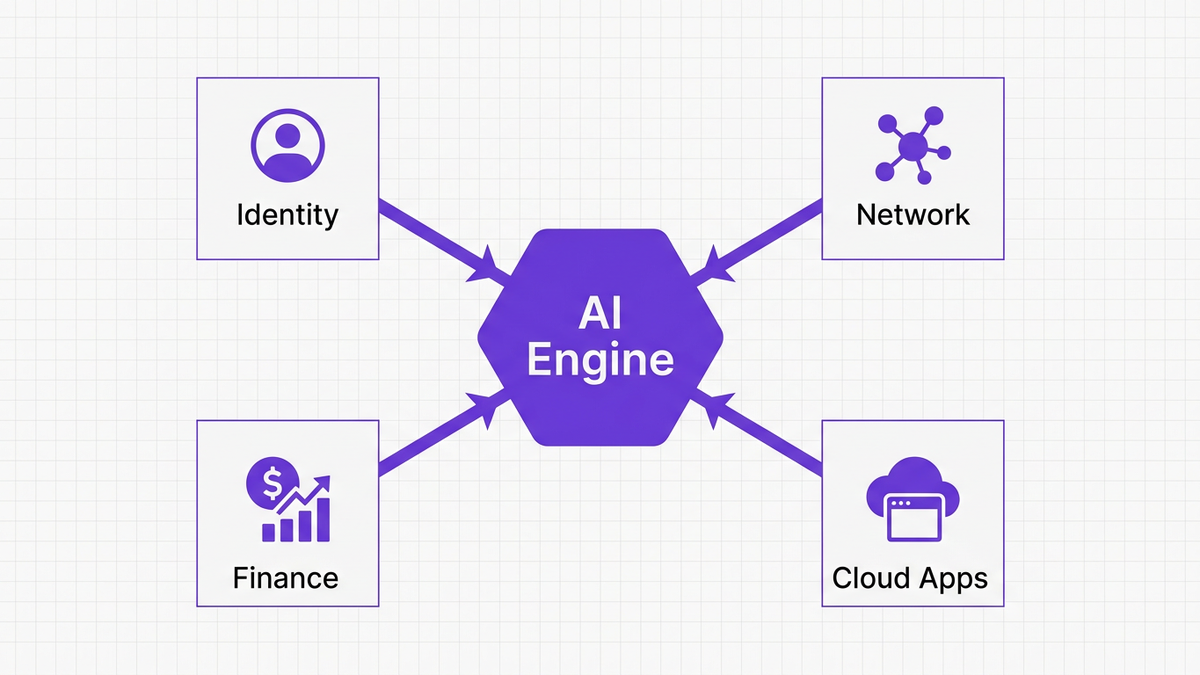
Modern AI SaaS management platforms typically combine several data sources:
Machine learning SaaS discovery models then classify and group apps, distinguish personal from business use, and assign risk and business context. According to Gartner in 2026, real-time SaaS usage data increasingly feeds into FinOps and procurement optimization engines, connecting IT, finance, and security decisions.
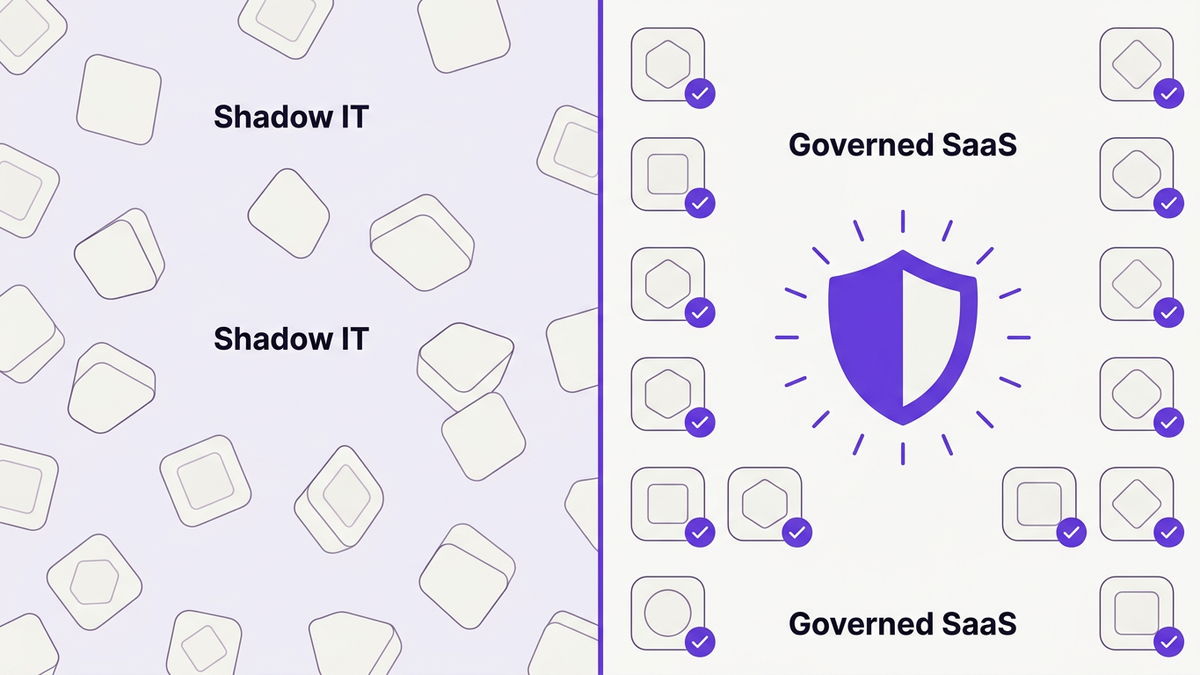
The first and most visible benefit of AI-powered SaaS discovery is shadow IT detection. ISG reported in its 2026 SaaS trends research that 41% of IT leaders now rank shadow IT from unmanaged SaaS as a top three security risk.
Unknown SaaS introduces multiple risks:
An effective AI SaaS discovery and risk assessment approach should provide:
A 2026 IDC study found that 92% of organizations using AI-driven SaaS discovery improved their compliance audit scores within the first year. That improvement comes from turning discovery insights into enforceable governance policies, not just dashboards.
Blind spots are not only a security problem; they are a budget problem. Redundant tools, unused seats, and unoptimized tiers quietly drain millions from IT and business unit budgets.
Gartner reported in 2026 that enterprises achieved an average 28% reduction in SaaS overspend through automated license optimization rooted in AI-powered discovery. Another 2026 analysis of Global 2000 firms found that real-time SaaS usage monitoring reduced redundant or underutilized subscriptions by 35%.
Automated SaaS discovery enables cost optimization in three key ways:
A leading compliance strategist cited in 2026 warned that without AI-driven inventory, organizations both overspend and increase compliance exposure. AI-powered SaaS discovery directly addresses both sides of that equation.
Not all discovery tools are created equal. Many legacy IT asset management for SaaS solutions still depend heavily on manual uploads or narrow data sources.
For CIOs, CISOs, and procurement leaders evaluating the best SaaS management platforms with AI discovery, key capabilities include:
A useful analogy: traditional discovery is like counting parked cars once a quarter from a single entrance. AI-powered SaaS discovery is more like having sensors on every roadway, parking spot, and gate, so you always know what is coming, going, and sitting idle.
For additional background on discovery approaches, explore this guide on SaaS discovery for shadow IT and shadow AI and the broader primer, What is SaaS discovery: complete guide for IT and procurement teams.
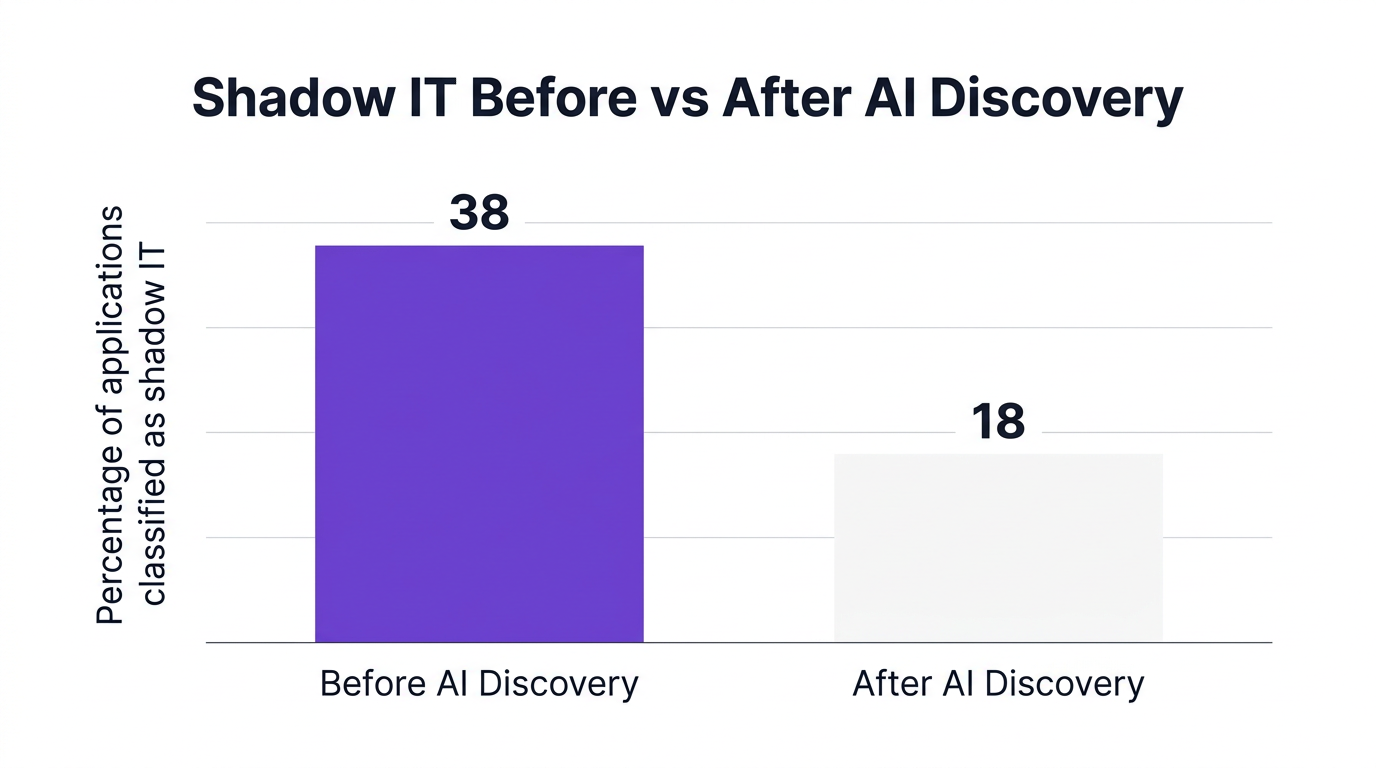
A large healthcare organization deployed an AI-powered SaaS discovery platform, including CloudNuro AI Custodian, to address growing risk from unknown applications. Before the rollout, only a partial inventory of sanctioned tools existed and security teams discovered new apps reactively during incidents.
Within months, the AI-powered SaaS discovery engine:
The results were concrete:
Similarly, a global financial services enterprise that rolled out automated SaaS discovery and governance reported $5.7 million in savings from unused licenses and a 40% drop in compliance incidents related to unsanctioned apps. These are the kinds of outcomes boards increasingly expect from IT and security investments.
For a deeper cost-focused view, see how shadow apps drive spend in this article on how visibility lowers your SaaS spend.

CloudNuro was designed as an AI SaaS management platform with discovery and governance at its core, not bolted on after the fact. Its AI Custodian unifies automated SaaS discovery with security, compliance, and financial optimization.
Key ways CloudNuro addresses software stack blind spots include:
CloudNuro AI Custodian uses advanced AI and machine learning to perform continuous SaaS monitoring:
This creates a live, centralized SaaS management for IT teams, eliminating gaps between what is deployed and what is known.
CloudNuro builds governance directly into the discovery fabric:
These features turn raw discovery data into a functioning AI SaaS governance platform, so security and compliance teams can act quickly.
CloudNuro goes beyond visibility to enforce financial discipline:
By pairing AI-powered SaaS discovery with cost optimization and governance workflows, CloudNuro functions as a true b2b saas management platform for enterprise IT, security, and finance teams.
You can explore a detailed view of these capabilities in the CloudNuro product overview, including integration coverage across more than 400 cloud and workplace tools and dedicated SaaS management and IT asset management solutions.
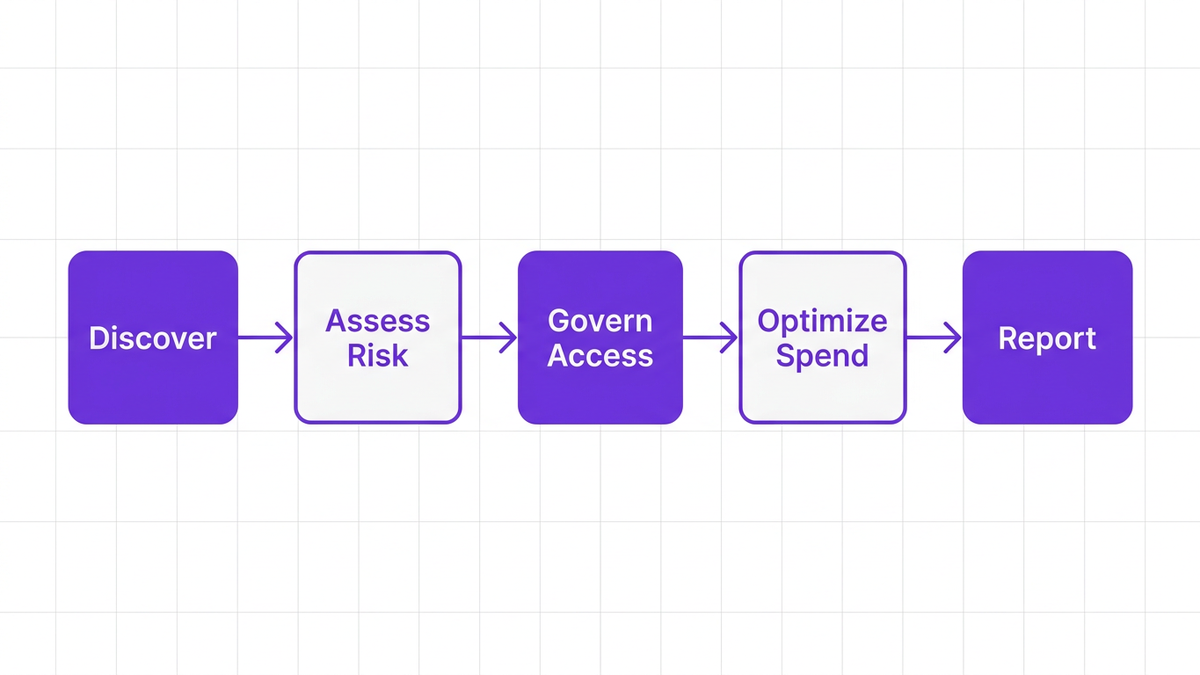
A common question from CIOs and ITAM leaders is how AI-powered SaaS discovery differs from traditional asset management. The answer lies in scope, speed, and automation.
Traditional IT asset management tools often:
In contrast, modern SaaS visibility platforms with AI discovery:
A 2026 SaaS visibility survey found that only 16% of organizations relied exclusively on manual or legacy discovery, a sharp decline from 44% in 2024. The market has clearly concluded that static approaches cannot protect or optimize modern SaaS estates.
For organizations that adopt AI-powered approaches, the benefits compound over time: fewer blind spots, lower risk, and a more disciplined SaaS cost profile.
AI-powered SaaS discovery combines multiple data sources such as identity logs, network telemetry, browser data, and financial records. Machine learning models then classify patterns that indicate business use of SaaS, even if the app is not on an approved list.
This allows the platform to detect new or unusual domains, group them as applications, and flag them as potential shadow IT for review.
Unmanaged SaaS introduces risks such as weak or missing MFA, unapproved data processing locations, and untracked third-party integrations. It also undermines incident response because security teams lack visibility into which apps hold sensitive data.
Over time, this can lead to data leakage, failed audits, and non-compliance with regulations that require clear control over vendors and data flows.
Automated discovery provides an accurate, always-current view of what SaaS you pay for and how it is used. By comparing usage data to license counts and tiers, the platform can flag inactive users, low-adoption apps, and redundant tools.
IT and procurement teams can then reclaim unused seats, consolidate vendors, and renegotiate contracts based on real consumption patterns.
Key features include broad coverage across SaaS, PaaS, and IaaS, robust AI shadow IT detection, and integrations with identity, network, and finance systems. Security and compliance capabilities such as SSPM and audit-ready reporting are also critical.
Finally, look for governance workflows, such as access reviews and approval flows, that translate discovery insights into concrete actions.
IT leaders should deploy a centralized SaaS visibility platform that ingests data from SSO, network, and financial systems across the organization. The platform should map users, departments, and cost centers to each application.
Role-based dashboards and reports then give CIOs, CISOs, and finance teams the ability to see which teams use which apps, at what cost, and with what level of risk.
SaaS discovery focuses on continuously identifying and monitoring cloud applications accessed by users, often without installation on corporate devices. It emphasizes real-time usage, risk posture, and financial impact.
Traditional IT asset management centers on tracking owned hardware and licensed software, usually through periodic scans or manual updates, and often lacks deep visibility into SaaS behavior.
AI-powered SaaS discovery closes the visibility gap that traditional tools leave behind. By continuously mapping your SaaS landscape, it reveals shadow IT, strengthens security posture, and frees significant spend through license optimization.
For CIOs, CISOs, and IT finance leaders, the mandate is clear: AI-powered SaaS discovery is now a foundational capability for resilient, cost-effective cloud operations.
CloudNuro brings these capabilities together in a unified platform that combines discovery, governance, security, and FinOps alignment. To see how this works in your own environment, request a tailored walkthrough of your SaaS estate.
CloudNuro is a leader in Enterprise SaaS Management Platforms, providing enterprises with unmatched visibility, governance, and cost optimization. Recognized twice in a row in the SaaS Management Platforms category and named a Leader in the SoftwareReviews Data Quadrant, CloudNuro is trusted by global enterprises and government agencies to bring financial discipline to SaaS, cloud, and AI. Trusted by enterprises such as Konica Minolta and Federal Signal, CloudNuro provides centralized SaaS inventory, license optimization, and renewal management along with advanced cost allocation and chargeback, giving IT and Finance leaders the visibility, control, and cost-conscious culture needed to drive financial discipline.
Request a no cost, no obligation free assessment —just 15 minutes to savings!
Get StartedAI-powered SaaS discovery has moved from innovation project to operational necessity for enterprise IT and security leaders. As SaaS adoption explodes across business units, traditional inventories fail to keep pace, leaving dangerous blind spots in your software stack.
Research from Forrester in 2026 found that 78% of enterprises uncovered previously unknown SaaS and cloud apps after deploying AI discovery platforms. Those are not just extra line items in a spreadsheet. They are potential security gaps, compliance exposures, and sources of waste that you cannot manage or govern.
This article explains how AI-powered SaaS discovery works, where the biggest blind spots hide, and how to turn continuous discovery into cost savings, stronger security, and better governance.
Even the most mature IT teams struggle to maintain a complete and current view of their SaaS estate. SaaS is purchased on credit cards, trialed by teams, embedded in workflows, and often never reported back to central IT.
By the time a manual inventory is updated, the environment has already changed. McKinsey reported in 2026 that continuous AI-powered discovery cut IT asset inventory time by 60%, a clear signal that human-centric processes alone cannot keep up.
Common sources of SaaS blind spots include:
Unknown does not mean unused. It simply means ungoverned.
AI-powered SaaS discovery replaces periodic, spreadsheet-driven exercises with continuous, intelligent SaaS visibility. Instead of relying on employee surveys or ad hoc reports, it watches how users, devices, and cloud services interact, then infers which applications are in play.
Think of it as a constantly updating radar for your SaaS environment. Where traditional IT asset management for SaaS is like a static map, AI-powered discovery operates more like live air traffic control.
Modern AI SaaS management platforms typically combine several data sources:
Machine learning SaaS discovery models then classify and group apps, distinguish personal from business use, and assign risk and business context. According to Gartner in 2026, real-time SaaS usage data increasingly feeds into FinOps and procurement optimization engines, connecting IT, finance, and security decisions.
The first and most visible benefit of AI-powered SaaS discovery is shadow IT detection. ISG reported in its 2026 SaaS trends research that 41% of IT leaders now rank shadow IT from unmanaged SaaS as a top three security risk.
Unknown SaaS introduces multiple risks:
An effective AI SaaS discovery and risk assessment approach should provide:
A 2026 IDC study found that 92% of organizations using AI-driven SaaS discovery improved their compliance audit scores within the first year. That improvement comes from turning discovery insights into enforceable governance policies, not just dashboards.
Blind spots are not only a security problem; they are a budget problem. Redundant tools, unused seats, and unoptimized tiers quietly drain millions from IT and business unit budgets.
Gartner reported in 2026 that enterprises achieved an average 28% reduction in SaaS overspend through automated license optimization rooted in AI-powered discovery. Another 2026 analysis of Global 2000 firms found that real-time SaaS usage monitoring reduced redundant or underutilized subscriptions by 35%.
Automated SaaS discovery enables cost optimization in three key ways:
A leading compliance strategist cited in 2026 warned that without AI-driven inventory, organizations both overspend and increase compliance exposure. AI-powered SaaS discovery directly addresses both sides of that equation.
Not all discovery tools are created equal. Many legacy IT asset management for SaaS solutions still depend heavily on manual uploads or narrow data sources.
For CIOs, CISOs, and procurement leaders evaluating the best SaaS management platforms with AI discovery, key capabilities include:
A useful analogy: traditional discovery is like counting parked cars once a quarter from a single entrance. AI-powered SaaS discovery is more like having sensors on every roadway, parking spot, and gate, so you always know what is coming, going, and sitting idle.
For additional background on discovery approaches, explore this guide on SaaS discovery for shadow IT and shadow AI and the broader primer, What is SaaS discovery: complete guide for IT and procurement teams.
A large healthcare organization deployed an AI-powered SaaS discovery platform, including CloudNuro AI Custodian, to address growing risk from unknown applications. Before the rollout, only a partial inventory of sanctioned tools existed and security teams discovered new apps reactively during incidents.
Within months, the AI-powered SaaS discovery engine:
The results were concrete:
Similarly, a global financial services enterprise that rolled out automated SaaS discovery and governance reported $5.7 million in savings from unused licenses and a 40% drop in compliance incidents related to unsanctioned apps. These are the kinds of outcomes boards increasingly expect from IT and security investments.
For a deeper cost-focused view, see how shadow apps drive spend in this article on how visibility lowers your SaaS spend.
CloudNuro was designed as an AI SaaS management platform with discovery and governance at its core, not bolted on after the fact. Its AI Custodian unifies automated SaaS discovery with security, compliance, and financial optimization.
Key ways CloudNuro addresses software stack blind spots include:
CloudNuro AI Custodian uses advanced AI and machine learning to perform continuous SaaS monitoring:
This creates a live, centralized SaaS management for IT teams, eliminating gaps between what is deployed and what is known.
CloudNuro builds governance directly into the discovery fabric:
These features turn raw discovery data into a functioning AI SaaS governance platform, so security and compliance teams can act quickly.
CloudNuro goes beyond visibility to enforce financial discipline:
By pairing AI-powered SaaS discovery with cost optimization and governance workflows, CloudNuro functions as a true b2b saas management platform for enterprise IT, security, and finance teams.
You can explore a detailed view of these capabilities in the CloudNuro product overview, including integration coverage across more than 400 cloud and workplace tools and dedicated SaaS management and IT asset management solutions.
A common question from CIOs and ITAM leaders is how AI-powered SaaS discovery differs from traditional asset management. The answer lies in scope, speed, and automation.
Traditional IT asset management tools often:
In contrast, modern SaaS visibility platforms with AI discovery:
A 2026 SaaS visibility survey found that only 16% of organizations relied exclusively on manual or legacy discovery, a sharp decline from 44% in 2024. The market has clearly concluded that static approaches cannot protect or optimize modern SaaS estates.
For organizations that adopt AI-powered approaches, the benefits compound over time: fewer blind spots, lower risk, and a more disciplined SaaS cost profile.
AI-powered SaaS discovery combines multiple data sources such as identity logs, network telemetry, browser data, and financial records. Machine learning models then classify patterns that indicate business use of SaaS, even if the app is not on an approved list.
This allows the platform to detect new or unusual domains, group them as applications, and flag them as potential shadow IT for review.
Unmanaged SaaS introduces risks such as weak or missing MFA, unapproved data processing locations, and untracked third-party integrations. It also undermines incident response because security teams lack visibility into which apps hold sensitive data.
Over time, this can lead to data leakage, failed audits, and non-compliance with regulations that require clear control over vendors and data flows.
Automated discovery provides an accurate, always-current view of what SaaS you pay for and how it is used. By comparing usage data to license counts and tiers, the platform can flag inactive users, low-adoption apps, and redundant tools.
IT and procurement teams can then reclaim unused seats, consolidate vendors, and renegotiate contracts based on real consumption patterns.
Key features include broad coverage across SaaS, PaaS, and IaaS, robust AI shadow IT detection, and integrations with identity, network, and finance systems. Security and compliance capabilities such as SSPM and audit-ready reporting are also critical.
Finally, look for governance workflows, such as access reviews and approval flows, that translate discovery insights into concrete actions.
IT leaders should deploy a centralized SaaS visibility platform that ingests data from SSO, network, and financial systems across the organization. The platform should map users, departments, and cost centers to each application.
Role-based dashboards and reports then give CIOs, CISOs, and finance teams the ability to see which teams use which apps, at what cost, and with what level of risk.
SaaS discovery focuses on continuously identifying and monitoring cloud applications accessed by users, often without installation on corporate devices. It emphasizes real-time usage, risk posture, and financial impact.
Traditional IT asset management centers on tracking owned hardware and licensed software, usually through periodic scans or manual updates, and often lacks deep visibility into SaaS behavior.
AI-powered SaaS discovery closes the visibility gap that traditional tools leave behind. By continuously mapping your SaaS landscape, it reveals shadow IT, strengthens security posture, and frees significant spend through license optimization.
For CIOs, CISOs, and IT finance leaders, the mandate is clear: AI-powered SaaS discovery is now a foundational capability for resilient, cost-effective cloud operations.
CloudNuro brings these capabilities together in a unified platform that combines discovery, governance, security, and FinOps alignment. To see how this works in your own environment, request a tailored walkthrough of your SaaS estate.
CloudNuro is a leader in Enterprise SaaS Management Platforms, providing enterprises with unmatched visibility, governance, and cost optimization. Recognized twice in a row in the SaaS Management Platforms category and named a Leader in the SoftwareReviews Data Quadrant, CloudNuro is trusted by global enterprises and government agencies to bring financial discipline to SaaS, cloud, and AI. Trusted by enterprises such as Konica Minolta and Federal Signal, CloudNuro provides centralized SaaS inventory, license optimization, and renewal management along with advanced cost allocation and chargeback, giving IT and Finance leaders the visibility, control, and cost-conscious culture needed to drive financial discipline.
Request a no cost, no obligation free assessment - just 15 minutes to savings!
Get StartedWe're offering complimentary ServiceNow license assessments to only 25 enterprises this quarter who want to unlock immediate savings without disrupting operations.
Get Free AssessmentGet Started




CloudNuro Corp
1755 Park St. Suite 207
Naperville, IL 60563
Phone : +1-630-277-9470
Email: info@cloudnuro.com





.webp)

Recognized Leader in SaaS Management Platforms by Info-Tech SoftwareReviews




.svg)