

Sign Up
Thank you for Submitting!
Governing artificial intelligence use cases at enterprise scale is quickly becoming a non-negotiable priority. As organizations transition from isolated AI pilots to managing portfolios of 100 or more production use cases, the complexity grows exponentially. Balancing innovative AI adoption with stringent compliance, financial discipline, and operational controls challenges even the most advanced CIOs, CTOs, and IT leaders.
In regulated industries like healthcare, finance, and government, the stakes are even higher. It is no longer enough to launch impressive pilots; enterprises must now ensure repeatable, compliant, and value-driven AI operationalization across a sprawling portfolio. This article explores the fundamentals and best practices of AI use case governance, the critical roadblocks organizations face in scaling AI, and how tools like CloudNuro empower governance-first, cost-optimized enterprise AI portfolios.
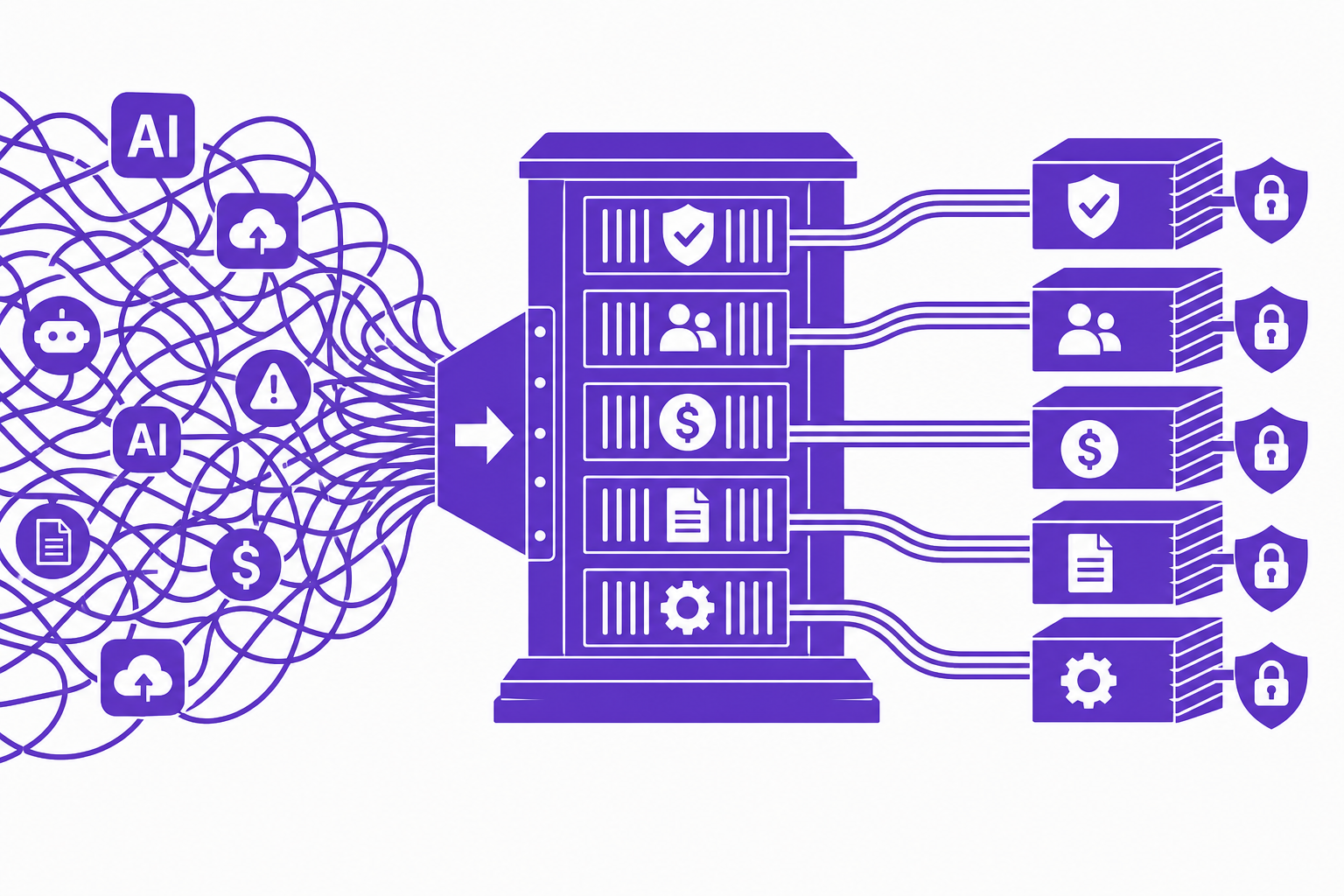
AI use case governance refers to the holistic oversight, controls, and accountability systems that shepherd AI initiatives from inception to full-scale, compliant, and value-generating deployment.
Enterprises that get governance right are able to:
Achieve visibility into all AI initiatives, pilots, and production deployments.
Ensure regulatory and security compliance at every project stage.
Track AI investments, costs, and ROI for each use case.
Establish clear ownership, approval workflows, and audit trails.
Prevent shadow AI and unsanctioned tool use.
Detect inefficiencies, such as duplicate agents or idle models.
Key Insight:
“Companies utilizing formal AI governance put 12 times more AI projects into production than those without governance programs.”
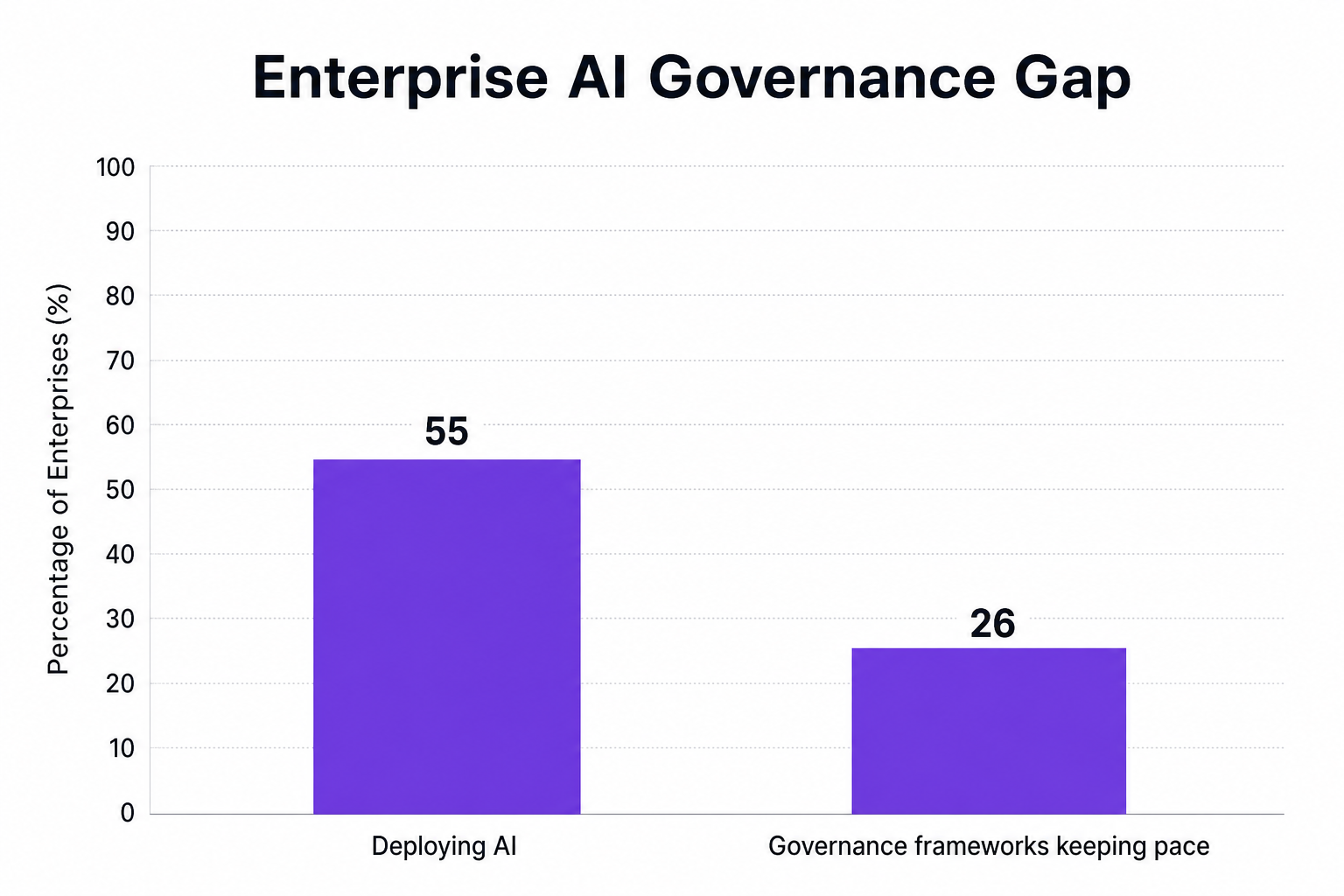
Laggards struggle with shadow AI, compliance risks, and costly redundancy. Only 8% of organizations globally have a comprehensive AI governance framework, and just 26% say their frameworks can keep pace with ambitious AI rollouts.
Most enterprise AI journeys follow a similar arc:
Experimentation: A handful of AI pilots and proofs-of-concept, often led by internal champions or innovation teams.
Pilot Proliferation: Success in early initiatives leads to dozens of new pilots, many piloted in silos.
Scaling Challenges: Disconnected governance leads to duplication, “shadow AI,” cost overruns, and compliance blind spots. Up to 88% of AI agent pilots never reach production due to lack of operational readiness.
Industrialization: The need for standardized controls, visibility, and cost management becomes urgent, especially as agentic and generative AI scale across functions.
Shadow AI: More than half of organizations lack unified inventories of AI systems, making untracked deployments and data risk commonplace.
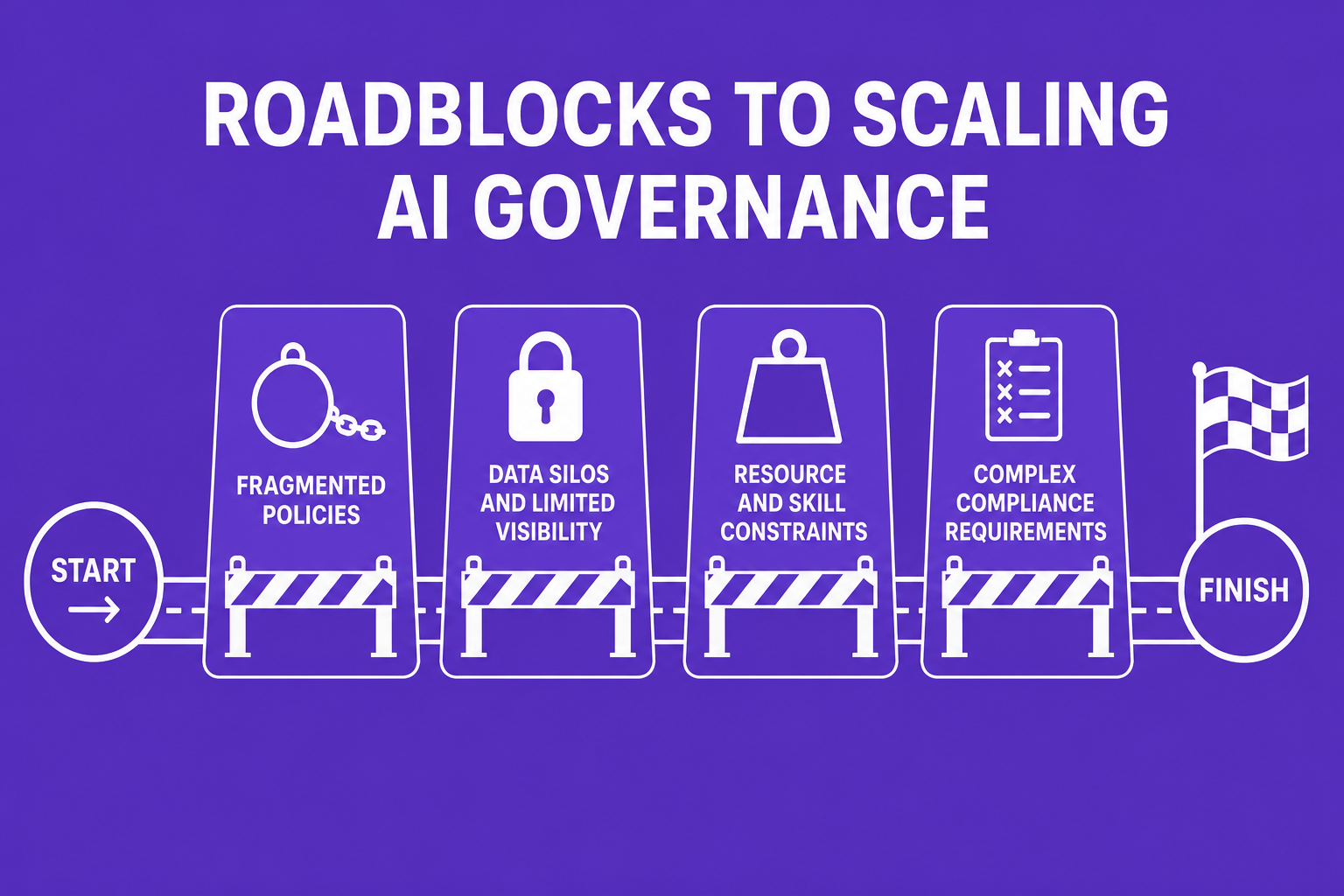
Fragmented Governance: Policies exist in silos, approval workflows are manual, and audit routines are irregular.
Runaway Costs: Lack of cost allocation, redundancy, and idle resource monitoring leads to major SaaS and AI spend leakage.
Security and Compliance Gaps: Absence of proactive controls exposes enterprises to data loss, privacy violations, and regulatory fines.
Ownership and Accountability Issues: Unclear project ownership leads to project drift and compliance ambiguity.
Best-in-class AI use case governance combines:
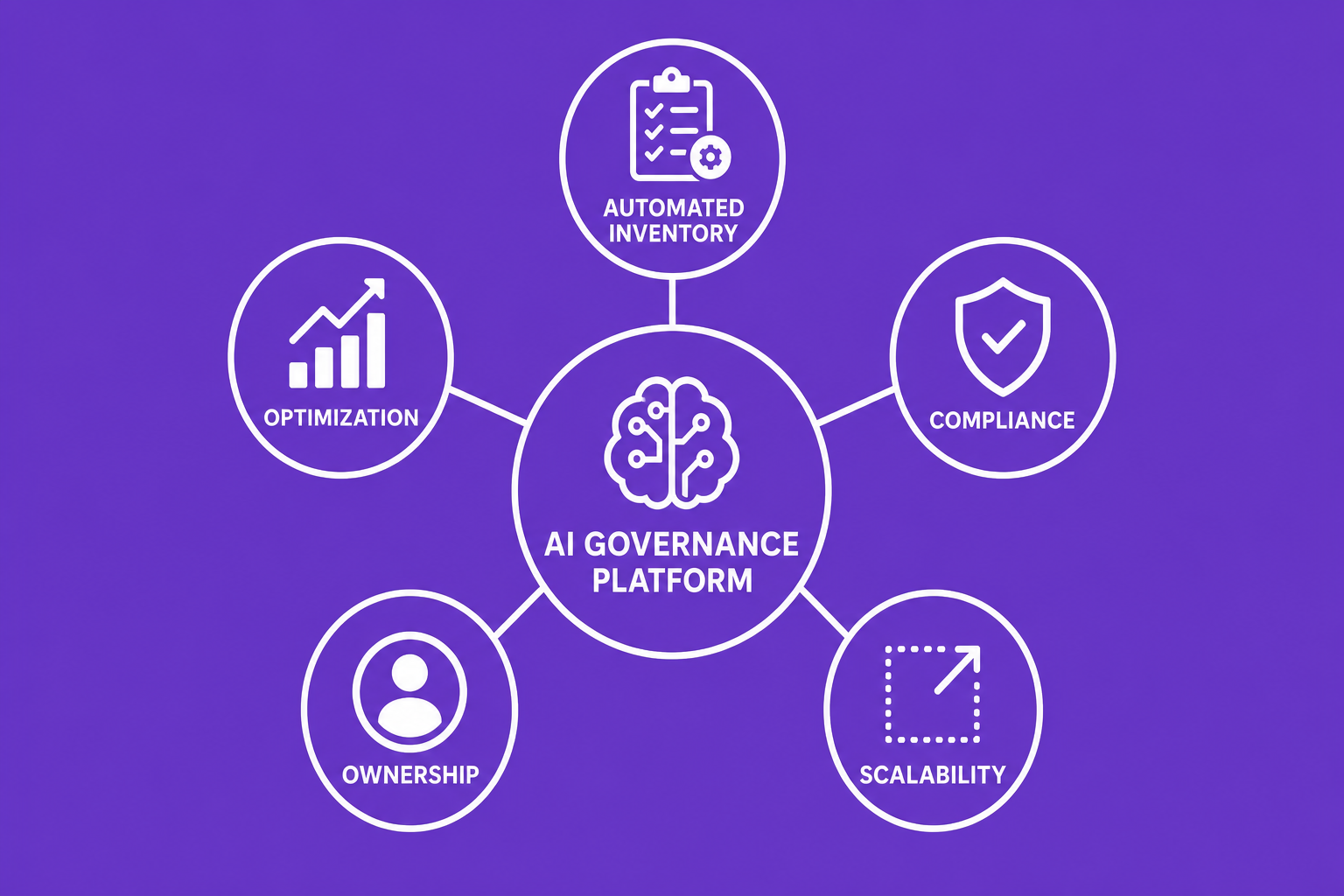
Comprehensive Inventory: All AI projects, agents, and models tracked in a unified use case registry.
Automated Cost Optimization: Real-time insight and automated reclamation of idle/duplicative resources and apps.
Policy Enforcement: Robust security controls, including sanctioning/unsanctioning tools, data loss prevention, and endpoint protection.
Active Audit Trails: Continuous logging of AI model, agent, and user activity; regular reviews for anomalous or unsanctioned use.
Ownership and Workflow Clarity: Defined ownership and approval workflows for project launch, handoff, and expansion.
“The primary barrier to scaling AI is less about model quality and more about governance operating model readiness, including approval workflows, policy enforcement, and visibility into usage.”
A modern registry does much more than simply list AI projects. It systematically enforces accountability and auditability from pilot to full-scale production.
Critical Elements:
Centralized, Dynamic Inventory: Automatically discover and track all AI and SaaS tools in use, even those initiated by business users (mitigating shadow AI).
Project Status Management: Monitor progress through experimentation, pilot, production, and sunset phases.
Usage & ROI Tracking: Connect real consumption metrics, such as AI agent and Copilot usage, to project and application costs.
Role-Based Access Controls: Define who can launch, view, update, and deprecate AI initiatives.
Integrated Governance Policies: Enforce policy compliance at the point of use, not just in documentation.
Continuous Audit and Remediation: Set up automated alerts for non-compliant behavior, idle resources, or abnormal spend spikes.
A robust registry drives up AI project success rates and enables industrialized governance, especially as organizations grow from a few strategic pilots to full-scale, enterprise-wide adoption.
CloudNuro’s AI Custodian delivers a governance-first, cost-optimized architecture for enterprises seeking to operationalize AI at scale. Here’s how CloudNuro addresses the toughest challenges of governing 100+ AI use cases:
Integrates with Microsoft Defender for Cloud Apps and 400+ enterprise platforms to continuously discover and classify sanctioned, unsanctioned, and shadow AI.
Browser-level monitoring and endpoint firewalls prevent unapproved AI tool use and sensitive data uploads.
Replaces fragmented spreadsheets with a centralized dashboard for project-level cost, license allocation, and anomaly reporting.
Implements automated cost reclamation for idle or redundant agents, ensuring maximum ROI across the AI portfolio.
Recent results: A metropolitan transportation agency using CloudNuro achieved 64% savings on Microsoft 365 licensing through structured policy enforcement and visibility.
Applies policy-based controls and budget guardrails across every AI project and agent.
Enables proactive enforcement of DLP and PCI/PII controls, blocking unsanctioned activity at the user and endpoint layer.
Copilot audit logs and DLP incident monitoring ensure no sensitive data leaks during AI-powered interactions.
Defines and enforces ownership, visibility, and approval workflows across the project lifecycle.
Audit routines become systematic rather than ad hoc. Regular incident reviews, idle detection, and usage thresholds ensure continuous operational discipline.
A public sector customer validated AI investments and set future controls by gaining clear, real-time visibility into all Copilot and SaaS usage.
CloudNuro’s architecture is designed to scale as fast as enterprise AI portfolios grow, eliminating bottlenecks, silos, and redundant implementations as new projects are onboarded.
Organizations using orchestration-led governance are 13 times more likely to scale their AI practice successfully.
Modern AI governance is about outcomes:
12x more AI projects reach production with formal governance
Higher audit readiness, less shadow IT, reduced costs
Streamlined adoption fuels innovation while protecting institutional knowledge and minimizing risk
Real-time management and insights support a truly cost-conscious, risk-aware culture
In one anonymized example, a major transportation network operationalized continuous license reclamation, reducing SaaS cost leakage and generating double-digit savings across enterprise applications.
What is AI use case governance and why is it important?
It is the systematic management of AI projects throughout their lifecycle, combining inventory, compliance, operational, and financial controls. Effective governance is critical for security, regulatory compliance, ROI maximization, and ensuring that innovation does not outpace safety or accountability.
How can enterprises scale from AI pilots to production use cases?
By building unified inventories, establishing clear ownership and workflows, implementing automated policy enforcement, and using tools like CloudNuro’s AI Custodian to industrialize tracking, compliance, and cost optimization.
What are best practices for managing an AI use case registry?
Centralize all AI projects in a dynamic, regularly updated registry. Automate discovery of shadow AI, link usage and costs, set up approval workflows and audit trails, and make policy checks operational.
How does AI portfolio management improve ROI?
With real-time visibility into usage, cost, idle resources, and redundant tools, organizations can reclaim budget, optimize licenses, and only scale the most valuable AI initiatives.
What challenges do enterprises face in governing 100+ AI initiatives?
Shadow IT, fragmented policy enforcement, uncontrolled spend, unclear ownership, and manual audits are common. CloudNuro solves these with unified visibility, automated controls, and scalable governance routines.
Only a small fraction of AI pilots become full production success stories; the gap often comes down to governance maturity, not capability. As organizations aim to manage 100, 500, or even 1,000 AI use cases, operational controls, centralized inventories, and continuous cost optimization make the difference between innovation that scales and costly, high-risk sprawl.
CloudNuro empowers enterprises to move beyond siloed pilots. With a governance-first platform purpose-built for large, complex organizations in highly regulated industries, CloudNuro ensures that every AI project is tracked, optimized, and secure. From discovery to production and beyond.
Ready to move from pilots to production at scale?
Request a no cost, no obligation free assessment —just 15 minutes to savings!
Get StartedGoverning artificial intelligence use cases at enterprise scale is quickly becoming a non-negotiable priority. As organizations transition from isolated AI pilots to managing portfolios of 100 or more production use cases, the complexity grows exponentially. Balancing innovative AI adoption with stringent compliance, financial discipline, and operational controls challenges even the most advanced CIOs, CTOs, and IT leaders.
In regulated industries like healthcare, finance, and government, the stakes are even higher. It is no longer enough to launch impressive pilots; enterprises must now ensure repeatable, compliant, and value-driven AI operationalization across a sprawling portfolio. This article explores the fundamentals and best practices of AI use case governance, the critical roadblocks organizations face in scaling AI, and how tools like CloudNuro empower governance-first, cost-optimized enterprise AI portfolios.
AI use case governance refers to the holistic oversight, controls, and accountability systems that shepherd AI initiatives from inception to full-scale, compliant, and value-generating deployment.
Enterprises that get governance right are able to:
Achieve visibility into all AI initiatives, pilots, and production deployments.
Ensure regulatory and security compliance at every project stage.
Track AI investments, costs, and ROI for each use case.
Establish clear ownership, approval workflows, and audit trails.
Prevent shadow AI and unsanctioned tool use.
Detect inefficiencies, such as duplicate agents or idle models.
Key Insight:
“Companies utilizing formal AI governance put 12 times more AI projects into production than those without governance programs.”
Laggards struggle with shadow AI, compliance risks, and costly redundancy. Only 8% of organizations globally have a comprehensive AI governance framework, and just 26% say their frameworks can keep pace with ambitious AI rollouts.
Most enterprise AI journeys follow a similar arc:
Experimentation: A handful of AI pilots and proofs-of-concept, often led by internal champions or innovation teams.
Pilot Proliferation: Success in early initiatives leads to dozens of new pilots, many piloted in silos.
Scaling Challenges: Disconnected governance leads to duplication, “shadow AI,” cost overruns, and compliance blind spots. Up to 88% of AI agent pilots never reach production due to lack of operational readiness.
Industrialization: The need for standardized controls, visibility, and cost management becomes urgent, especially as agentic and generative AI scale across functions.
Shadow AI: More than half of organizations lack unified inventories of AI systems, making untracked deployments and data risk commonplace.
Fragmented Governance: Policies exist in silos, approval workflows are manual, and audit routines are irregular.
Runaway Costs: Lack of cost allocation, redundancy, and idle resource monitoring leads to major SaaS and AI spend leakage.
Security and Compliance Gaps: Absence of proactive controls exposes enterprises to data loss, privacy violations, and regulatory fines.
Ownership and Accountability Issues: Unclear project ownership leads to project drift and compliance ambiguity.
Best-in-class AI use case governance combines:
Comprehensive Inventory: All AI projects, agents, and models tracked in a unified use case registry.
Automated Cost Optimization: Real-time insight and automated reclamation of idle/duplicative resources and apps.
Policy Enforcement: Robust security controls, including sanctioning/unsanctioning tools, data loss prevention, and endpoint protection.
Active Audit Trails: Continuous logging of AI model, agent, and user activity; regular reviews for anomalous or unsanctioned use.
Ownership and Workflow Clarity: Defined ownership and approval workflows for project launch, handoff, and expansion.
“The primary barrier to scaling AI is less about model quality and more about governance operating model readiness, including approval workflows, policy enforcement, and visibility into usage.”
A modern registry does much more than simply list AI projects. It systematically enforces accountability and auditability from pilot to full-scale production.
Critical Elements:
Centralized, Dynamic Inventory: Automatically discover and track all AI and SaaS tools in use, even those initiated by business users (mitigating shadow AI).
Project Status Management: Monitor progress through experimentation, pilot, production, and sunset phases.
Usage & ROI Tracking: Connect real consumption metrics, such as AI agent and Copilot usage, to project and application costs.
Role-Based Access Controls: Define who can launch, view, update, and deprecate AI initiatives.
Integrated Governance Policies: Enforce policy compliance at the point of use, not just in documentation.
Continuous Audit and Remediation: Set up automated alerts for non-compliant behavior, idle resources, or abnormal spend spikes.
A robust registry drives up AI project success rates and enables industrialized governance, especially as organizations grow from a few strategic pilots to full-scale, enterprise-wide adoption.
CloudNuro’s AI Custodian delivers a governance-first, cost-optimized architecture for enterprises seeking to operationalize AI at scale. Here’s how CloudNuro addresses the toughest challenges of governing 100+ AI use cases:
Integrates with Microsoft Defender for Cloud Apps and 400+ enterprise platforms to continuously discover and classify sanctioned, unsanctioned, and shadow AI.
Browser-level monitoring and endpoint firewalls prevent unapproved AI tool use and sensitive data uploads.
Replaces fragmented spreadsheets with a centralized dashboard for project-level cost, license allocation, and anomaly reporting.
Implements automated cost reclamation for idle or redundant agents, ensuring maximum ROI across the AI portfolio.
Recent results: A metropolitan transportation agency using CloudNuro achieved 64% savings on Microsoft 365 licensing through structured policy enforcement and visibility.
Applies policy-based controls and budget guardrails across every AI project and agent.
Enables proactive enforcement of DLP and PCI/PII controls, blocking unsanctioned activity at the user and endpoint layer.
Copilot audit logs and DLP incident monitoring ensure no sensitive data leaks during AI-powered interactions.
Defines and enforces ownership, visibility, and approval workflows across the project lifecycle.
Audit routines become systematic rather than ad hoc. Regular incident reviews, idle detection, and usage thresholds ensure continuous operational discipline.
A public sector customer validated AI investments and set future controls by gaining clear, real-time visibility into all Copilot and SaaS usage.
CloudNuro’s architecture is designed to scale as fast as enterprise AI portfolios grow, eliminating bottlenecks, silos, and redundant implementations as new projects are onboarded.
Organizations using orchestration-led governance are 13 times more likely to scale their AI practice successfully.
Modern AI governance is about outcomes:
12x more AI projects reach production with formal governance
Higher audit readiness, less shadow IT, reduced costs
Streamlined adoption fuels innovation while protecting institutional knowledge and minimizing risk
Real-time management and insights support a truly cost-conscious, risk-aware culture
In one anonymized example, a major transportation network operationalized continuous license reclamation, reducing SaaS cost leakage and generating double-digit savings across enterprise applications.
What is AI use case governance and why is it important?
It is the systematic management of AI projects throughout their lifecycle, combining inventory, compliance, operational, and financial controls. Effective governance is critical for security, regulatory compliance, ROI maximization, and ensuring that innovation does not outpace safety or accountability.
How can enterprises scale from AI pilots to production use cases?
By building unified inventories, establishing clear ownership and workflows, implementing automated policy enforcement, and using tools like CloudNuro’s AI Custodian to industrialize tracking, compliance, and cost optimization.
What are best practices for managing an AI use case registry?
Centralize all AI projects in a dynamic, regularly updated registry. Automate discovery of shadow AI, link usage and costs, set up approval workflows and audit trails, and make policy checks operational.
How does AI portfolio management improve ROI?
With real-time visibility into usage, cost, idle resources, and redundant tools, organizations can reclaim budget, optimize licenses, and only scale the most valuable AI initiatives.
What challenges do enterprises face in governing 100+ AI initiatives?
Shadow IT, fragmented policy enforcement, uncontrolled spend, unclear ownership, and manual audits are common. CloudNuro solves these with unified visibility, automated controls, and scalable governance routines.
Only a small fraction of AI pilots become full production success stories; the gap often comes down to governance maturity, not capability. As organizations aim to manage 100, 500, or even 1,000 AI use cases, operational controls, centralized inventories, and continuous cost optimization make the difference between innovation that scales and costly, high-risk sprawl.
CloudNuro empowers enterprises to move beyond siloed pilots. With a governance-first platform purpose-built for large, complex organizations in highly regulated industries, CloudNuro ensures that every AI project is tracked, optimized, and secure. From discovery to production and beyond.
Ready to move from pilots to production at scale?
Request a no cost, no obligation free assessment - just 15 minutes to savings!
Get StartedWe're offering complimentary ServiceNow license assessments to only 25 enterprises this quarter who want to unlock immediate savings without disrupting operations.
Get Free AssessmentGet Started




CloudNuro Corp
1755 Park St. Suite 207
Naperville, IL 60563
Phone : +1-630-277-9470
Email: info@cloudnuro.com




.webp)

Recognized Leader in SaaS Management Platforms by Info-Tech SoftwareReviews


.png)
.svg)