

Sign Up
Thank you for Submitting!
Unexpected costs from a Microsoft 365 true-up can blow up IT and finance plans in a single quarter. For many enterprises, the annual Microsoft 365 true-up process exposes fragmented data, weak controls, and licensing decisions that made sense once but no longer match reality.
This guide explains how the Microsoft 365 true-up works, why so many organizations get surprised, and how to turn true-up season into a predictable, controllable event. We will map out concrete steps for m365 EA compliance, cost optimization, and ongoing audit readiness.
Enterprise agreements are designed to accommodate growth, but the way many organizations track that growth is fundamentally broken.
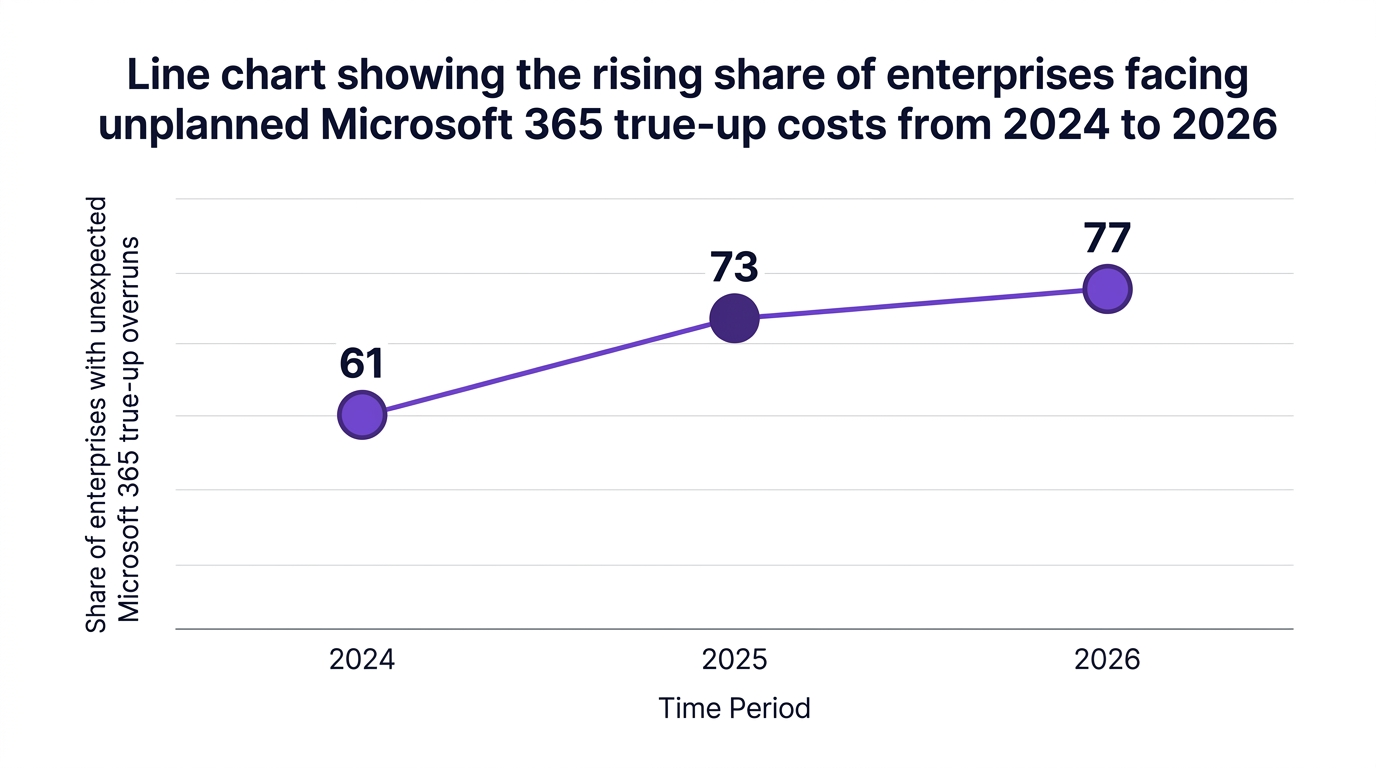
According to Forrester (2026), 77 percent of enterprises reported unexpected cost overruns related to Microsoft 365 true-up events in the last 12 months. Gartner (2026) reports that 64 percent of IT leaders cite compliance risk and audit penalties as top concerns in the Microsoft 365 true up process.
Several consistent root causes appear across enterprises:
Incomplete visibility into subscriptions, add-ons, and shadow IT
Manual spreadsheets that quickly drift out of sync with reality
Decentralized purchasing, where business units add seats outside central control
Poor offboarding hygiene, which inflates counts for inactive users
A senior analyst at Forrester notes that enterprises relying on manual spreadsheets for true-up preparation “routinely face audit findings and unplanned costs,” and that AI-driven tools are now table stakes for Microsoft 365 compliance (Forrester 2026).
The outcome is predictable: during a Microsoft license compliance audit or Microsoft 365 license audit, the vendor’s usage numbers rarely match the customer’s spreadsheets. The gap becomes an unbudgeted true-up bill.
A Microsoft 365 true-up is a formal reconciliation between what you committed to in your enterprise agreement and what you actually used over the period. The goal is to align contracted quantities with real usage and settle any deltas.
Think of it as a year-end inventory count. If your warehouse records say you hold 10,000 units but the physical count reveals 12,000, you need to reconcile the difference. The same logic applies to the Microsoft 365 license true up.
At a high level, the process involves:
Baseline commitments
The quantities and product mix you committed to under your Enterprise Agreement (EA) or similar contract.
Usage discovery and m365 license reconciliation
Identification of active users, assigned licenses, and add-ons, typically across multiple tenants and identity stores.
License mapping
Mapping users and workloads to the correct product SKUs, service plans, and EA entitlements.
Delta calculation
Comparing entitlements to actual usage to determine additional licenses and associated charges.
Compliance attestation and audit readiness
Documenting how you arrived at the numbers, often tested through a Microsoft 365 compliance audit or Microsoft license compliance audit.
True-ups are usually annual under an Enterprise Agreement, but some organizations face additional midterm reconciliation events, particularly after large expansions or mergers.
Most IT leaders focus on the obvious risk: having more active users than licenses, which leads to additional fees or penalties. The reality is more nuanced.
Microsoft true-up compliance expectations are rising as vendors deploy their own advanced telemetry. Gartner forecasts that 60 percent of enterprises will adopt AI-driven solutions for Microsoft 365 compliance audits by year-end (Gartner 2026). The corollary is that the vendor side will continue to raise its analytic baseline.
Common compliance risks include:
Unlicensed access to premium workloads or add-ons
Misaligned SKUs that do not match the workloads in use
Inability to prove historical alignment because of weak records
These issues complicate Office 365 true up exercises and increase the chance of adverse findings during a Microsoft 365 license audit.
The flip side of under-licensing is paying for far more than you need. IDC (2026) found that only 22 percent of organizations had complete visibility into underutilized Microsoft 365 licenses prior to their last true-up.
Everest Group (2026) reports that proactive SaaS management and true-up readiness can cut Microsoft 365 license costs by up to 26 percent for large enterprises. The savings typically come from:
Eliminating Microsoft 365 unused licenses
Right-sizing users to lower-cost SKUs
Rationalizing redundant workloads and overlapping tools
Manual true-up cycles consume weeks of IT, SAM, and finance time. Repeated scrambles for data, last-minute reconciliations, and internal disputes about headcount or SKU mix all add to operational drag.
As one research director at Gartner notes, continuous monitoring of license usage drives not only compliance but true cost control. Waiting until quarter four to understand your license position is like checking project health only on the eve of a board review.

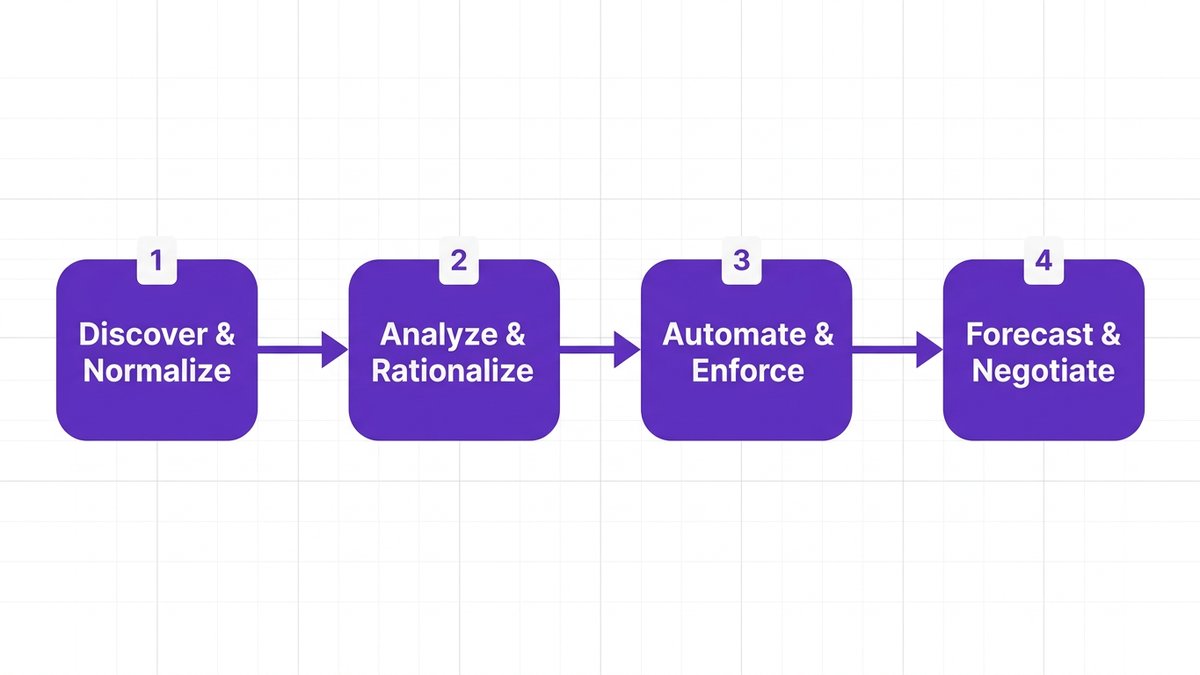
To move from reactive to proactive, CloudNuro recommends the True-Up Control Loop, a four-stage operational framework:
Discover and normalize
Analyze and rationalize
Automate and enforce
Forecast and negotiate
The foundation of m365 EA compliance is accurate, normalized data. This requires visibility across:
All tenants and subscriptions
Identity sources such as AD or HRIS
Departmental purchases and shadow IT
Actions you can implement now:
Consolidate license data from admin centers, HR, and finance systems
Normalize user identities and mailboxes to a single view
Classify accounts by type: employee, contractor, service, external, test
This discovery step is also the bridge to broader saas management for Microsoft 365, since many organizations find overlapping tools and alternative collaboration suites during this exercise.
Once you trust your data, the next step is Microsoft 365 license rationalization. This means optimizing who gets which SKU and why.
Key analysis dimensions:
Utilization: Identify Microsoft 365 unused licenses and underused premium features
Role-based needs: Map SKUs to personas or job families, not individuals
Compliance requirements: Understand which roles require specific security or compliance features
Example rationalization opportunities:
Downgrade users who never use advanced analytics or voice workloads
Reassign licenses from inactive or departed staff once deprovisioned
Consolidate specialized add-ons into carefully scoped groups
Organizations that embed this rationalization into regular operations see material gains in Microsoft 365 cost optimization and can reduce Microsoft 365 licensing costs long before the true-up date.
Manual workflows are a major cause of drift. The more you rely on tickets and emails, the likelier it is that your Microsoft 365 license management diverges from reality.
Areas where automation pays off quickly:
Onboarding: Auto-assign appropriate license bundles based on job role and department
Offboarding: Automatically revoke Microsoft 365 licenses when HR flags departures
Access reviews: Trigger regular user access reviews for high-cost or sensitive licenses
Policy enforcement: Block unauthorized SKU assignments or quota breaches
Gartner and IDC both highlight that organizations implementing automated m365 license reconciliation tools reduce true-up penalties by an average of 31 percent (IDC 2026).
True-up readiness is as much about finance as it is about IT. With accurate, near real-time telemetry, you can forecast your Microsoft 365 license true up obligations months in advance.
Practical steps:
Partner with finance to build rolling 12-month forecasts for key SKUs
Run scenario analysis for headcount changes, M&A, or project expansions
Use these insights during EA renegotiations to shape commitments and price protections
When you arrive at the negotiation table with precise usage trends and compliance proof, you shift the conversation from “what do we owe” to “what commitments and pricing make sense for the next 3 years.”
CloudNuro worked with a global pharmaceutical organization with roughly 23,000 Microsoft 365 seats. Ahead of its 2025, 2026 true-up cycle, internal estimates suggested a multi-million dollar exposure due to seat growth, acquisitions, and fragmented license management.
By deploying CloudNuro Microsoft 365 Custodian, the organization:
Discovered thousands of inactive accounts with premium SKUs
Identified overlapping workloads and unnecessary add-ons
Automated offboarding workflows integrated with HR
Implemented quarterly access reviews for high-value licenses
Within one cycle, the company achieved a 29 percent reduction in unused license costs and completed its true-up with zero penalties (CloudNuro Case Study 2026).
A financial services institution with 8,500 seats followed a similar path, using automated license reconciliation and unified compliance dashboards. The result was a full audit pass and roughly 1.8 million dollars in recovered spend within a single reporting period.
These examples illustrate a broader market trend. Deloitte (2026) found that 89 percent of finance and procurement leaders in regulated sectors now use third-party platforms for automated true-up reporting and compliance dashboards.
CloudNuro is built for enterprises that want to treat the Microsoft 365 true-up as a managed, predictable process, not an annual fire drill. The Microsoft 365 Custodian module focuses on three core outcomes: visibility, control, and continuous audit readiness.
CloudNuro’s Microsoft 365 Custodian continuously discovers license allocation, seat counts, and workload usage. Instead of waiting for an annual scramble, you get a real-time view of your true-up position.
Key capabilities:
Continuous inventory of users, SKUs, and add-ons
Automated detection of Microsoft 365 unused licenses and underutilized premium features
Policy-driven rules that flag non-compliant or misaligned assignments
This turns m365 license reconciliation into an always-on process that is ready for any Microsoft 365 license audit.
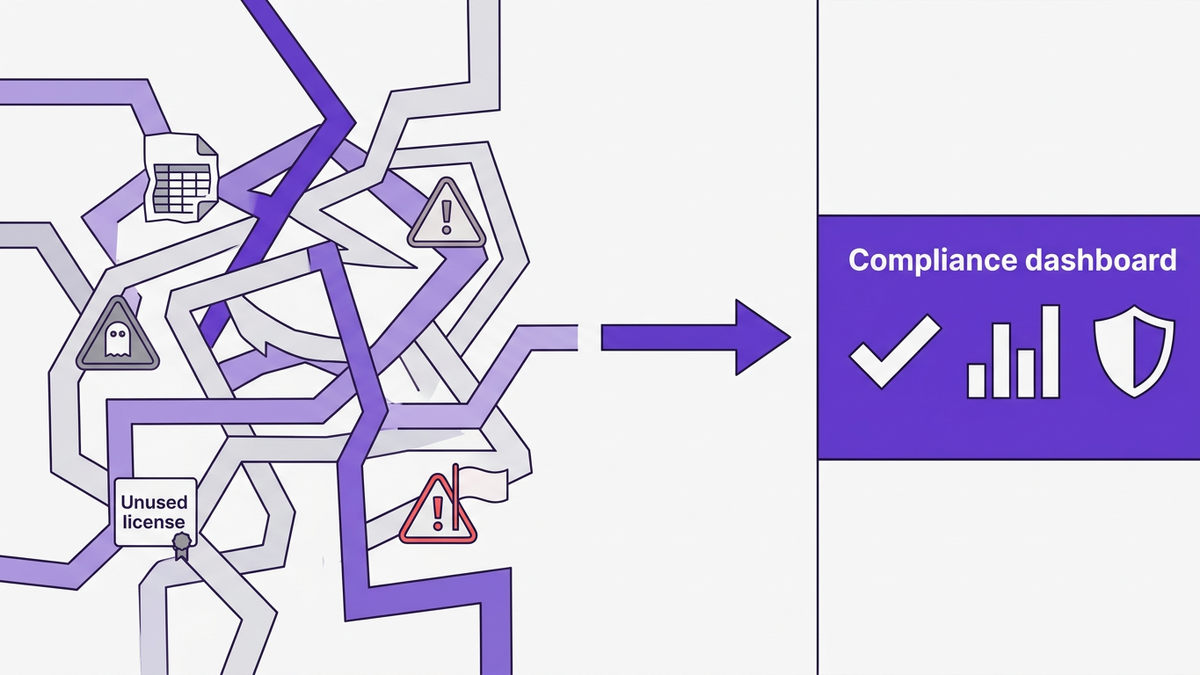
True-up success depends on aligning IT, finance, and procurement. CloudNuro provides unified dashboards that consolidate:
License utilization data
Entitlement positions and EA commitments
Risk insights and compliance exceptions
These dashboards support microsoft 365 audit readiness by providing clear evidence for Microsoft true-up licensing review. They also help finance model the impact of license changes on operating budgets.
For organizations looking to deepen financial discipline, CloudNuro’s FinOps services extend these insights into broader cloud and SaaS spend optimization.
CloudNuro connects with HR, ITSM, and identity systems to automate license operations.
Examples:
Automatically assigning correct license bundles for new hires based on role
Revoking and reclaiming licenses during offboarding within defined SLAs
Orchestrating periodic user access reviews for high-value licenses
These flows tighten Microsoft 365 license management, reduce idle spend, and improve microsoft 365 true up audit outcomes. Many enterprises use CloudNuro as their central engine for SaaS management, not only for Microsoft 365.
CloudNuro provides granular insights into utilization and trends that feed microsoft 365 cost optimization and negotiation.
With its analytics and AI-enabled recommendations, teams can:
Reduce Microsoft 365 licensing costs through right-sizing and rationalization
Prepare credible data narratives for enterprise agreement true-up discussions
Explore scenario modeling for growth, contraction, or M&A events
For organizations that want expert guidance, CloudNuro supports microsoft 365 true up consulting and microsoft 365 true up services engagements by pairing platform telemetry with advisory support.
To explore more ways CloudNuro drives license optimization, visit the Microsoft license optimization overview or browse CloudNuro case studies for additional examples.
Even mature IT shops fall into predictable traps.
Spreadsheets quickly diverge from reality, especially in organizations with frequent hiring, turnover, or acquisitions. They rarely capture departmental purchases or trial conversions.
Fix: Move to automated discovery and reconciliation that pulls from authoritative systems daily, not once a year.
Some leaders assume that if users have access, they must need it. In practice, real telemetry often shows that large populations never use premium features.
Fix: Use telemetry to identify low-usage cohorts and feed these insights into a structured Microsoft 365 license optimization program.
Unrevoked accounts are one of the largest contributors to excess true-up costs and Microsoft 365 unused licenses.
Fix: Integrate HR events with automated revocation workflows and license recycling policies.
When you treat the true-up as a single annual project, you compress all risk into a tight window.
Fix: Adopt continuous monitoring and quarterly internal Microsoft 365 true-up reviews so that the annual event becomes a formality.
A Microsoft 365 true-up is the formal reconciliation between the license quantities you committed to in your enterprise agreement and what you actually used over the period.
It results in an adjustment, often additional charges, to bring your contractual entitlements in line with real-world usage.
Typically, your team compiles usage data, performs Microsoft 365 license reconciliation against EA entitlements, and submits the results for review.
The vendor may perform a Microsoft 365 license audit or Microsoft true-up licensing review to validate your methodology, after which the financial settlement is calculated.
You can reduce costs by proactively managing licenses throughout the year rather than waiting for the true-up event.
This includes reclaiming Microsoft 365 unused licenses, right-sizing users to appropriate SKUs, enforcing offboarding workflows, and using tooling for Microsoft 365 license optimization.
Ownership varies, but successful organizations treat it as a joint responsibility among IT, software asset management, and finance.
IT manages technical configuration and telemetry, SAM governs entitlements and policies, and finance ensures alignment with budget and contracting strategy.
Audit readiness requires traceable, consistent data and clear processes.
You should maintain continuous inventory, access review records, entitlement documentation, and exportable reports that support Microsoft 365 true-up consulting conversations and any Microsoft 365 compliance audit.
If you manage thousands of seats, operate in multiple regions, or have a history of true-up surprises, specialized microsoft 365 true up services and saas management for Microsoft 365 platforms are usually cost-positive.
Research from IDC and Deloitte shows that organizations adopting automated reconciliation tools cut penalties and improve EA negotiation outcomes significantly.
The Microsoft 365 true-up will never disappear, but the chaos around it can. With the right data, continuous controls, and automation, you can transform true-up from a high-stress audit into a planned adjustment and an opportunity for ongoing microsoft 365 cost optimization.
CloudNuro helps enterprises gain that level of control through AI-driven visibility, automated workflows, and unified compliance dashboards tailored to microsoft 365 license management. If you are facing an upcoming true-up or want to avoid Microsoft true up penalties next cycle, now is the time to modernize your approach.
Take the next step:
Request a tailored Microsoft 365 optimization demo: Request a Demo
Get a no-cost assessment of your current Microsoft 365 spend: Get Free Savings
CloudNuro is a leader in Enterprise SaaS Management Platforms, providing enterprises with unmatched visibility, governance, and cost optimization. Recognized twice in a row in the SaaS Management Platforms category and named a Leader in the SoftwareReviews Data Quadrant, CloudNuro is trusted by global enterprises and government agencies to bring financial discipline to SaaS, cloud, and AI.
Trusted by enterprises such as Konica Minolta and Federal Signal, CloudNuro provides centralized SaaS inventory, license optimization, and renewal management along with advanced cost allocation and chargeback, giving IT and Finance leaders the visibility, control, and cost-conscious culture needed to drive financial discipline.
Request a no cost, no obligation free assessment —just 15 minutes to savings!
Get StartedUnexpected costs from a Microsoft 365 true-up can blow up IT and finance plans in a single quarter. For many enterprises, the annual Microsoft 365 true-up process exposes fragmented data, weak controls, and licensing decisions that made sense once but no longer match reality.
This guide explains how the Microsoft 365 true-up works, why so many organizations get surprised, and how to turn true-up season into a predictable, controllable event. We will map out concrete steps for m365 EA compliance, cost optimization, and ongoing audit readiness.
Enterprise agreements are designed to accommodate growth, but the way many organizations track that growth is fundamentally broken.
According to Forrester (2026), 77 percent of enterprises reported unexpected cost overruns related to Microsoft 365 true-up events in the last 12 months. Gartner (2026) reports that 64 percent of IT leaders cite compliance risk and audit penalties as top concerns in the Microsoft 365 true up process.
Several consistent root causes appear across enterprises:
Incomplete visibility into subscriptions, add-ons, and shadow IT
Manual spreadsheets that quickly drift out of sync with reality
Decentralized purchasing, where business units add seats outside central control
Poor offboarding hygiene, which inflates counts for inactive users
A senior analyst at Forrester notes that enterprises relying on manual spreadsheets for true-up preparation “routinely face audit findings and unplanned costs,” and that AI-driven tools are now table stakes for Microsoft 365 compliance (Forrester 2026).
The outcome is predictable: during a Microsoft license compliance audit or Microsoft 365 license audit, the vendor’s usage numbers rarely match the customer’s spreadsheets. The gap becomes an unbudgeted true-up bill.
A Microsoft 365 true-up is a formal reconciliation between what you committed to in your enterprise agreement and what you actually used over the period. The goal is to align contracted quantities with real usage and settle any deltas.
Think of it as a year-end inventory count. If your warehouse records say you hold 10,000 units but the physical count reveals 12,000, you need to reconcile the difference. The same logic applies to the Microsoft 365 license true up.
At a high level, the process involves:
Baseline commitments
The quantities and product mix you committed to under your Enterprise Agreement (EA) or similar contract.
Usage discovery and m365 license reconciliation
Identification of active users, assigned licenses, and add-ons, typically across multiple tenants and identity stores.
License mapping
Mapping users and workloads to the correct product SKUs, service plans, and EA entitlements.
Delta calculation
Comparing entitlements to actual usage to determine additional licenses and associated charges.
Compliance attestation and audit readiness
Documenting how you arrived at the numbers, often tested through a Microsoft 365 compliance audit or Microsoft license compliance audit.
True-ups are usually annual under an Enterprise Agreement, but some organizations face additional midterm reconciliation events, particularly after large expansions or mergers.
Most IT leaders focus on the obvious risk: having more active users than licenses, which leads to additional fees or penalties. The reality is more nuanced.
Microsoft true-up compliance expectations are rising as vendors deploy their own advanced telemetry. Gartner forecasts that 60 percent of enterprises will adopt AI-driven solutions for Microsoft 365 compliance audits by year-end (Gartner 2026). The corollary is that the vendor side will continue to raise its analytic baseline.
Common compliance risks include:
Unlicensed access to premium workloads or add-ons
Misaligned SKUs that do not match the workloads in use
Inability to prove historical alignment because of weak records
These issues complicate Office 365 true up exercises and increase the chance of adverse findings during a Microsoft 365 license audit.
The flip side of under-licensing is paying for far more than you need. IDC (2026) found that only 22 percent of organizations had complete visibility into underutilized Microsoft 365 licenses prior to their last true-up.
Everest Group (2026) reports that proactive SaaS management and true-up readiness can cut Microsoft 365 license costs by up to 26 percent for large enterprises. The savings typically come from:
Eliminating Microsoft 365 unused licenses
Right-sizing users to lower-cost SKUs
Rationalizing redundant workloads and overlapping tools
Manual true-up cycles consume weeks of IT, SAM, and finance time. Repeated scrambles for data, last-minute reconciliations, and internal disputes about headcount or SKU mix all add to operational drag.
As one research director at Gartner notes, continuous monitoring of license usage drives not only compliance but true cost control. Waiting until quarter four to understand your license position is like checking project health only on the eve of a board review.
To move from reactive to proactive, CloudNuro recommends the True-Up Control Loop, a four-stage operational framework:
Discover and normalize
Analyze and rationalize
Automate and enforce
Forecast and negotiate
The foundation of m365 EA compliance is accurate, normalized data. This requires visibility across:
All tenants and subscriptions
Identity sources such as AD or HRIS
Departmental purchases and shadow IT
Actions you can implement now:
Consolidate license data from admin centers, HR, and finance systems
Normalize user identities and mailboxes to a single view
Classify accounts by type: employee, contractor, service, external, test
This discovery step is also the bridge to broader saas management for Microsoft 365, since many organizations find overlapping tools and alternative collaboration suites during this exercise.
Once you trust your data, the next step is Microsoft 365 license rationalization. This means optimizing who gets which SKU and why.
Key analysis dimensions:
Utilization: Identify Microsoft 365 unused licenses and underused premium features
Role-based needs: Map SKUs to personas or job families, not individuals
Compliance requirements: Understand which roles require specific security or compliance features
Example rationalization opportunities:
Downgrade users who never use advanced analytics or voice workloads
Reassign licenses from inactive or departed staff once deprovisioned
Consolidate specialized add-ons into carefully scoped groups
Organizations that embed this rationalization into regular operations see material gains in Microsoft 365 cost optimization and can reduce Microsoft 365 licensing costs long before the true-up date.
Manual workflows are a major cause of drift. The more you rely on tickets and emails, the likelier it is that your Microsoft 365 license management diverges from reality.
Areas where automation pays off quickly:
Onboarding: Auto-assign appropriate license bundles based on job role and department
Offboarding: Automatically revoke Microsoft 365 licenses when HR flags departures
Access reviews: Trigger regular user access reviews for high-cost or sensitive licenses
Policy enforcement: Block unauthorized SKU assignments or quota breaches
Gartner and IDC both highlight that organizations implementing automated m365 license reconciliation tools reduce true-up penalties by an average of 31 percent (IDC 2026).
True-up readiness is as much about finance as it is about IT. With accurate, near real-time telemetry, you can forecast your Microsoft 365 license true up obligations months in advance.
Practical steps:
Partner with finance to build rolling 12-month forecasts for key SKUs
Run scenario analysis for headcount changes, M&A, or project expansions
Use these insights during EA renegotiations to shape commitments and price protections
When you arrive at the negotiation table with precise usage trends and compliance proof, you shift the conversation from “what do we owe” to “what commitments and pricing make sense for the next 3 years.”
CloudNuro worked with a global pharmaceutical organization with roughly 23,000 Microsoft 365 seats. Ahead of its 2025, 2026 true-up cycle, internal estimates suggested a multi-million dollar exposure due to seat growth, acquisitions, and fragmented license management.
By deploying CloudNuro Microsoft 365 Custodian, the organization:
Discovered thousands of inactive accounts with premium SKUs
Identified overlapping workloads and unnecessary add-ons
Automated offboarding workflows integrated with HR
Implemented quarterly access reviews for high-value licenses
Within one cycle, the company achieved a 29 percent reduction in unused license costs and completed its true-up with zero penalties (CloudNuro Case Study 2026).
A financial services institution with 8,500 seats followed a similar path, using automated license reconciliation and unified compliance dashboards. The result was a full audit pass and roughly 1.8 million dollars in recovered spend within a single reporting period.
These examples illustrate a broader market trend. Deloitte (2026) found that 89 percent of finance and procurement leaders in regulated sectors now use third-party platforms for automated true-up reporting and compliance dashboards.
CloudNuro is built for enterprises that want to treat the Microsoft 365 true-up as a managed, predictable process, not an annual fire drill. The Microsoft 365 Custodian module focuses on three core outcomes: visibility, control, and continuous audit readiness.
CloudNuro’s Microsoft 365 Custodian continuously discovers license allocation, seat counts, and workload usage. Instead of waiting for an annual scramble, you get a real-time view of your true-up position.
Key capabilities:
Continuous inventory of users, SKUs, and add-ons
Automated detection of Microsoft 365 unused licenses and underutilized premium features
Policy-driven rules that flag non-compliant or misaligned assignments
This turns m365 license reconciliation into an always-on process that is ready for any Microsoft 365 license audit.
True-up success depends on aligning IT, finance, and procurement. CloudNuro provides unified dashboards that consolidate:
License utilization data
Entitlement positions and EA commitments
Risk insights and compliance exceptions
These dashboards support microsoft 365 audit readiness by providing clear evidence for Microsoft true-up licensing review. They also help finance model the impact of license changes on operating budgets.
For organizations looking to deepen financial discipline, CloudNuro’s FinOps services extend these insights into broader cloud and SaaS spend optimization.
CloudNuro connects with HR, ITSM, and identity systems to automate license operations.
Examples:
Automatically assigning correct license bundles for new hires based on role
Revoking and reclaiming licenses during offboarding within defined SLAs
Orchestrating periodic user access reviews for high-value licenses
These flows tighten Microsoft 365 license management, reduce idle spend, and improve microsoft 365 true up audit outcomes. Many enterprises use CloudNuro as their central engine for SaaS management, not only for Microsoft 365.
CloudNuro provides granular insights into utilization and trends that feed microsoft 365 cost optimization and negotiation.
With its analytics and AI-enabled recommendations, teams can:
Reduce Microsoft 365 licensing costs through right-sizing and rationalization
Prepare credible data narratives for enterprise agreement true-up discussions
Explore scenario modeling for growth, contraction, or M&A events
For organizations that want expert guidance, CloudNuro supports microsoft 365 true up consulting and microsoft 365 true up services engagements by pairing platform telemetry with advisory support.
To explore more ways CloudNuro drives license optimization, visit the Microsoft license optimization overview or browse CloudNuro case studies for additional examples.
Even mature IT shops fall into predictable traps.
Spreadsheets quickly diverge from reality, especially in organizations with frequent hiring, turnover, or acquisitions. They rarely capture departmental purchases or trial conversions.
Fix: Move to automated discovery and reconciliation that pulls from authoritative systems daily, not once a year.
Some leaders assume that if users have access, they must need it. In practice, real telemetry often shows that large populations never use premium features.
Fix: Use telemetry to identify low-usage cohorts and feed these insights into a structured Microsoft 365 license optimization program.
Unrevoked accounts are one of the largest contributors to excess true-up costs and Microsoft 365 unused licenses.
Fix: Integrate HR events with automated revocation workflows and license recycling policies.
When you treat the true-up as a single annual project, you compress all risk into a tight window.
Fix: Adopt continuous monitoring and quarterly internal Microsoft 365 true-up reviews so that the annual event becomes a formality.
A Microsoft 365 true-up is the formal reconciliation between the license quantities you committed to in your enterprise agreement and what you actually used over the period.
It results in an adjustment, often additional charges, to bring your contractual entitlements in line with real-world usage.
Typically, your team compiles usage data, performs Microsoft 365 license reconciliation against EA entitlements, and submits the results for review.
The vendor may perform a Microsoft 365 license audit or Microsoft true-up licensing review to validate your methodology, after which the financial settlement is calculated.
You can reduce costs by proactively managing licenses throughout the year rather than waiting for the true-up event.
This includes reclaiming Microsoft 365 unused licenses, right-sizing users to appropriate SKUs, enforcing offboarding workflows, and using tooling for Microsoft 365 license optimization.
Ownership varies, but successful organizations treat it as a joint responsibility among IT, software asset management, and finance.
IT manages technical configuration and telemetry, SAM governs entitlements and policies, and finance ensures alignment with budget and contracting strategy.
Audit readiness requires traceable, consistent data and clear processes.
You should maintain continuous inventory, access review records, entitlement documentation, and exportable reports that support Microsoft 365 true-up consulting conversations and any Microsoft 365 compliance audit.
If you manage thousands of seats, operate in multiple regions, or have a history of true-up surprises, specialized microsoft 365 true up services and saas management for Microsoft 365 platforms are usually cost-positive.
Research from IDC and Deloitte shows that organizations adopting automated reconciliation tools cut penalties and improve EA negotiation outcomes significantly.
The Microsoft 365 true-up will never disappear, but the chaos around it can. With the right data, continuous controls, and automation, you can transform true-up from a high-stress audit into a planned adjustment and an opportunity for ongoing microsoft 365 cost optimization.
CloudNuro helps enterprises gain that level of control through AI-driven visibility, automated workflows, and unified compliance dashboards tailored to microsoft 365 license management. If you are facing an upcoming true-up or want to avoid Microsoft true up penalties next cycle, now is the time to modernize your approach.
Take the next step:
Request a tailored Microsoft 365 optimization demo: Request a Demo
Get a no-cost assessment of your current Microsoft 365 spend: Get Free Savings
CloudNuro is a leader in Enterprise SaaS Management Platforms, providing enterprises with unmatched visibility, governance, and cost optimization. Recognized twice in a row in the SaaS Management Platforms category and named a Leader in the SoftwareReviews Data Quadrant, CloudNuro is trusted by global enterprises and government agencies to bring financial discipline to SaaS, cloud, and AI.
Trusted by enterprises such as Konica Minolta and Federal Signal, CloudNuro provides centralized SaaS inventory, license optimization, and renewal management along with advanced cost allocation and chargeback, giving IT and Finance leaders the visibility, control, and cost-conscious culture needed to drive financial discipline.
Request a no cost, no obligation free assessment - just 15 minutes to savings!
Get StartedWe're offering complimentary ServiceNow license assessments to only 25 enterprises this quarter who want to unlock immediate savings without disrupting operations.
Get Free AssessmentGet Started




CloudNuro Corp
1755 Park St. Suite 207
Naperville, IL 60563
Phone : +1-630-277-9470
Email: info@cloudnuro.com





.webp)

Recognized Leader in SaaS Management Platforms by Info-Tech SoftwareReviews


.svg)