

Sign Up
Thank you for Submitting!

As more organizations deploy analytics platforms, cloud services, and AI-driven applications, effective capacity planning has become a cornerstone for cost control and performance. For IT leaders, CIOs, and CTOs in highly regulated or cost-sensitive sectors like healthcare, finance, and government, balancing trial environments, avoiding overprovisioning, and transitioning seamlessly to paid SaaS tiers is a daily challenge. Effective use of a modern fabric capacity calculator makes the difference between strategic investment and budgetary waste, especially when evaluating solutions such as Microsoft Fabric and managing sprawling SaaS portfolios.
This guide explores how fabric capacity calculators empower enterprises to right-size their cloud and SaaS usage, control spending, and drive governance. Building on CloudNuro’s cost optimization and compliance-focused management platform, we break down capacity planning for Microsoft Fabric, show how to evaluate trial versus paid options, and illustrate how to deploy tools and insights that optimize spend without risk.
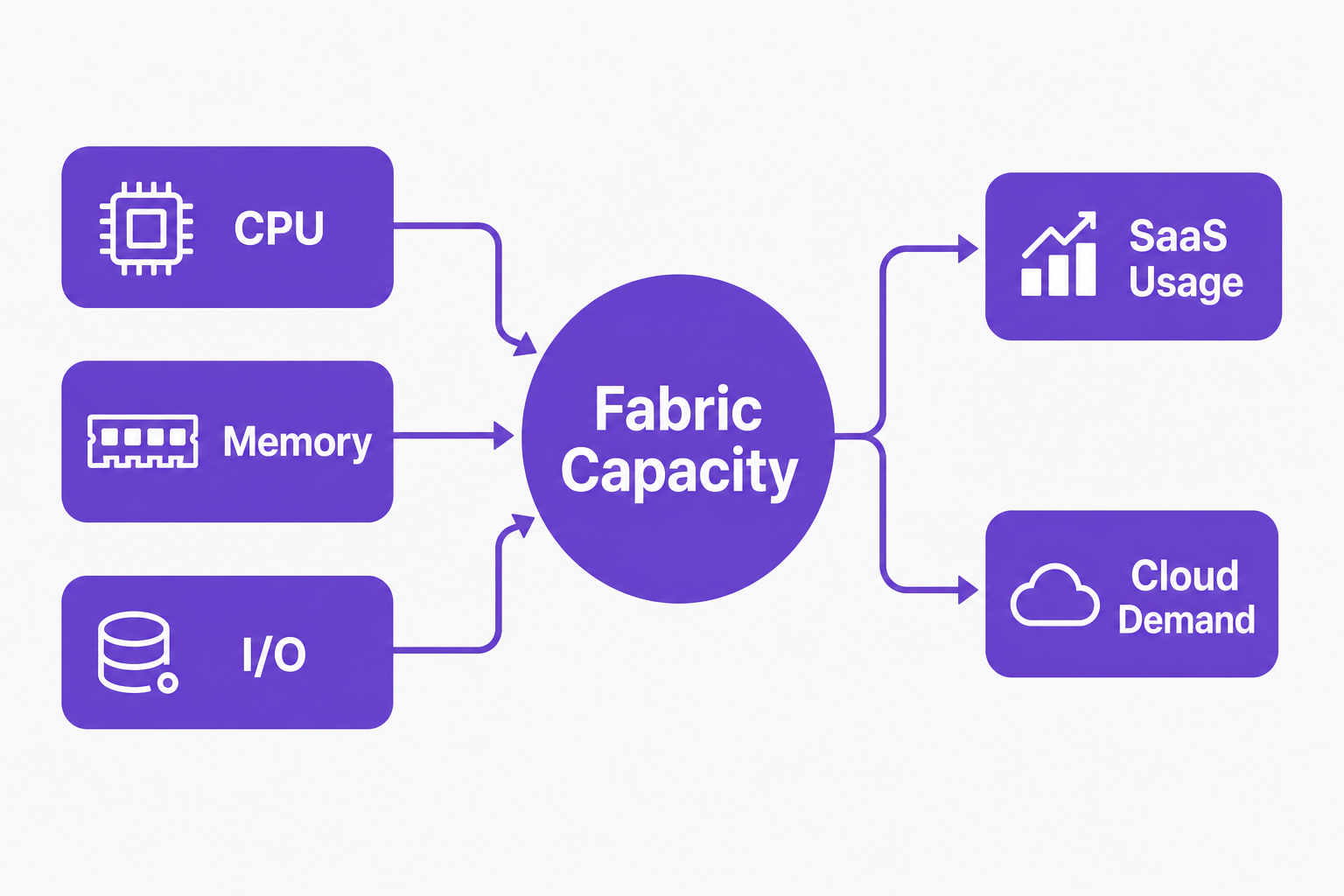
Fabric capacity, in platforms like Microsoft Fabric, measures a blend of key computing resources, CPU, memory, and I/O, expressed as Capacity Units (CUs). These units aggregate resource consumption on 30-second rolling windows, giving organizations a granular means to assess actual, not just theoretical, workload demand.
Typical enterprise deployments begin at F64 SKUs, which map to 64 vCores and 4 Capacity Units per second for baseline performance.
All workloads, from SQL compute to persistent data storage, are billed against the central capacity pool, making holistic management essential.
Advanced AI features and automated query agents can lift sustained utilization by 10% to 20%, intensifying the need for precise usage tracking.
Without accurate baseline data, overprovisioning and wasted spend are common. In fact, up to 40% of organizations are overprovisioned simply due to lack of actionable insight or reliance on outdated forecast spreadsheets.
When exploring platforms like Microsoft Fabric, the distinction between trial and paid capacities has significant budget and management implications.
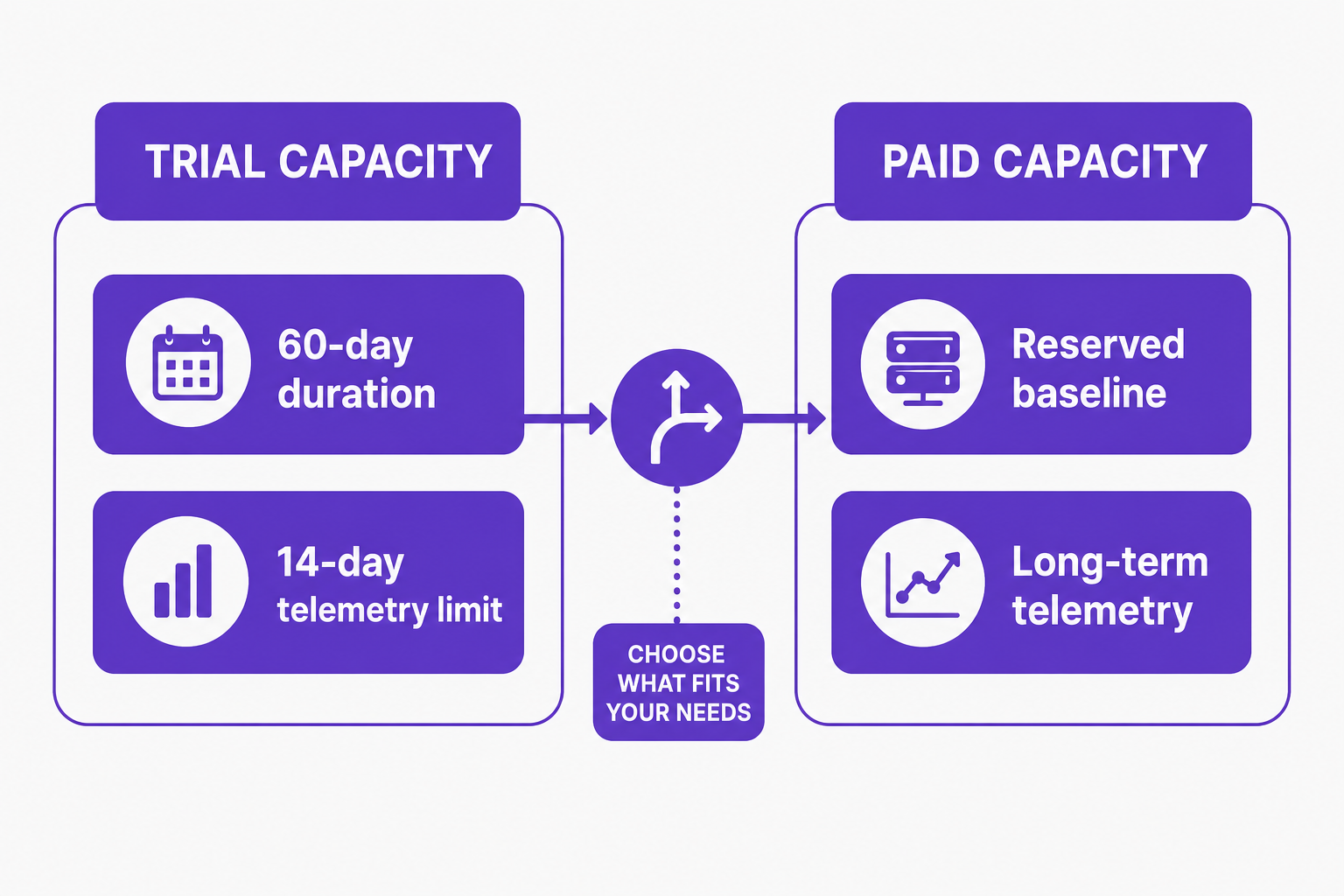
Microsoft Fabric Free Trial: Offers a 60-day, pay-as-you-go capacity environment, ideal for collecting real usage telemetry before making long-term commitments. However, data retention for built-in monitoring is limited to 14 days, demanding external visibility for robust evaluation.
Paid Fabric Capacity: Firms can lock in reserved capacity based on accurate baseline collected during the trial. Doing so can yield up to 52% cost savings versus running exclusively on default, pay-as-you-go rates.
Testing fabric before buying, understanding the applicable limits, and right-sizing reserved SKUs are all achievable with a reliable fabric capacity calculator. This approach reduces the risk of adopting excess capacity and allows for intelligent, data-backed purchase decisions.
Several trends and best practices drive today’s approach to capacity planning:
Usage-Based Forecasting: Rather than relying on seat counts, enterprises now estimate based on observed workload mix and real utilization.
Trial Utilization Data: Collecting telemetry during trials is vital; these insights translate into accurate paid tier sizing.
Automation and AI: AI-driven usage monitoring, as embedded in CloudNuro, can identify idle SKUs or automate downshifts to prevent waste, further boosting savings.
Unified Management: Integrating SaaS and cloud data into a single dashboard allows IT and finance teams to execute chargebacks, monitor departmental consumption, and drive compliance.
Enterprises adopting these methods gain financial discipline: One pharmaceutical leader automated department chargebacks and reduced overage fees by 36%, while a multinational bank cut unused compute hours by 45% and trimmed analytics expenses by 36% through rightsizing.
CloudNuro’s platform goes beyond standard calculators and monitoring scripts:
Automated SaaS and Cloud Cost Optimization: CloudNuro ingests usage telemetry across 400+ enterprise applications, providing live insights on actual versus forecasted consumption.
360-Degree Visibility and Compliance: The Microsoft 365 Custodian gives you a continuous view of all Fabric-related resources, users, and inactive licenses, well beyond native retention limits.
AI-Driven License and Capacity Management: The platform flags underutilized SKUs, suggests downshifts, and can pause workspaces during low-demand hours, securing savings without compromising service.
Unified Dashboard: The Unified Cloud Custodian pulls together cloud, database, and SaaS metrics, supporting automated departmental chargeback and ensuring every dollar is accounted for.
Whether you are planning a transition from trial to paid SaaS or want to optimize across an entire portfolio, CloudNuro’s embedded calculators and governance tools enable proactive, intelligent management.
Don’t use the free trial capacity just for light testing. Instead, simulate real production workloads. This ensures that the baseline data collected actually reflects future business operations and enables effective right-sizing before purchase.
With platforms like Microsoft Fabric limiting metrics retention to 14 days, external tools such as CloudNuro are essential for long-term tracking and analysis. Extended telemetry reveals seasonal or cyclical spikes that short-term views miss.
Modern SaaS and cloud environments demand forecasting grounded in actual usage, not headcount or historic averages. Use calculators and AI insights to align license and capacity purchases to evolving demand.
Successful organizations assign and track software and cloud consumption by department. Automated chargeback through platforms like CloudNuro helps create a cost-conscious culture and prevents hidden overspend.
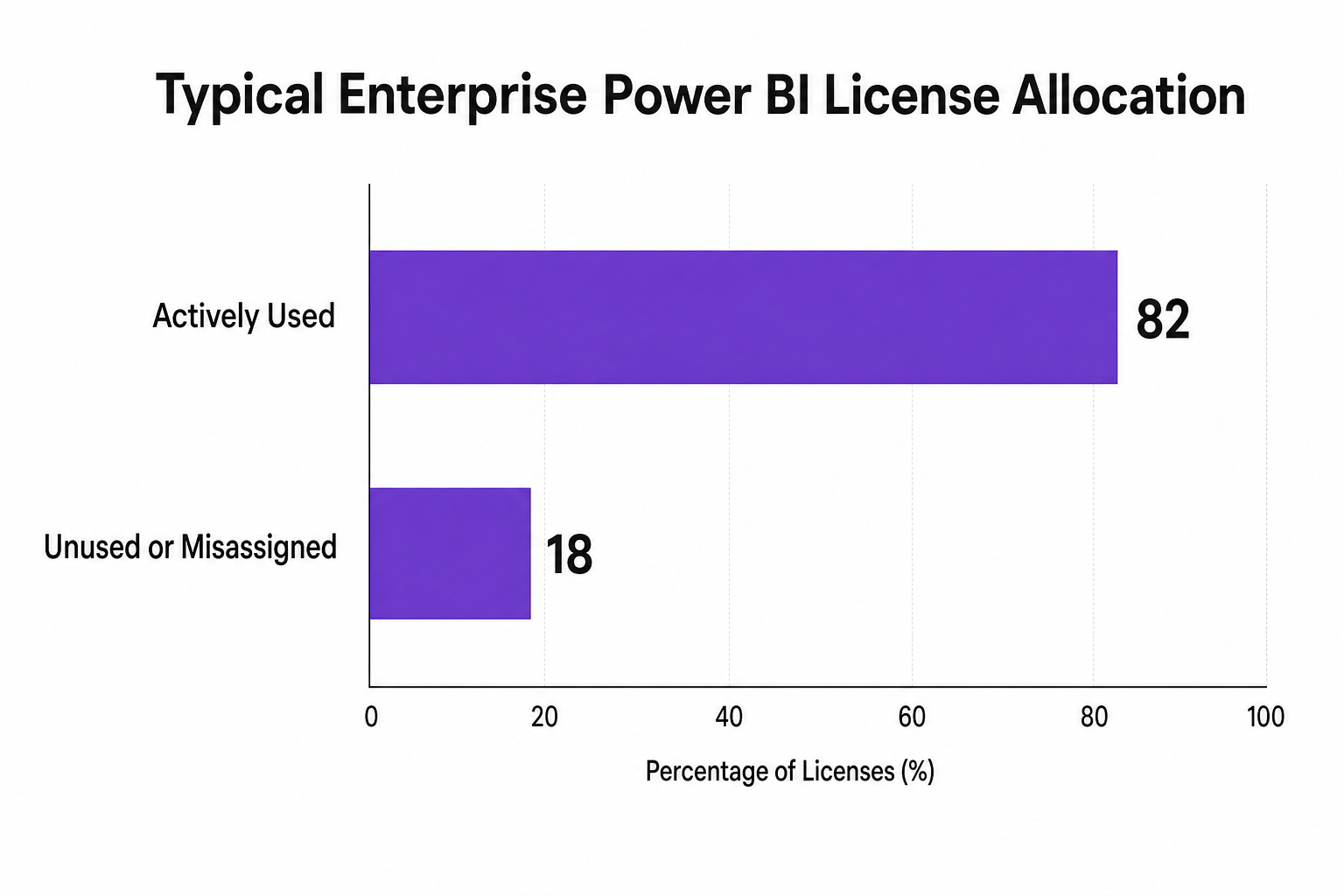
Idle or misassigned resources drain budgets. CloudNuro’s AI-powered tracking eliminates orphaned admin licenses and surfaces underused capacity for reclamation.
How do I calculate fabric capacity for SaaS tools?
Start by capturing real-world utilization data via a trial or pilot environment. Use fabric capacity calculators to translate workload mix into Capacity Units or similar metrics. Account for AI feature usage, which can impact steady-state consumption.
What is the Microsoft Fabric free trial capacity?
Enterprises receive a 60-day pay-as-you-go trial. This allows for full workload simulation but only provides 14-day retention of built-in usage metrics. External visibility is needed for extended analysis.
How can I test fabric solutions before buying?
Leverage trial periods to run representative production scenarios, not just light testing. Analyze telemetry with third-party tools to spot potential overprovisioning or underestimation, ensuring informed purchase decisions.
Is there a difference between fabric trial and paid capacities?
Typically, trial environments may limit retention or feature certain restrictions but otherwise mirror the resource allocation and performance of production levels. The key difference is often in how long telemetry and monitoring data are retained and the guarantee of reserved capacity with paid tiers.
What factors affect fabric capacity planning?
Key influencers include workload mix, peak concurrency, AI feature usage, license assignment models, and policies for pausing or downshifting idle workspaces. Visibility across all these factors is crucial to avoid costly overprovisioning.
In today’s enterprise landscape, manual spreadsheets, incomplete native dashboards, and static allocation models lead to overspend and compliance risk. Capacity planning and optimization using a robust fabric capacity calculator, especially when paired with unified platforms like CloudNuro, transform cloud and SaaS operations into data-driven, cost-conscious, and policy-compliant practices.
Organizations that adopt automated usage monitoring, AI-guided license management, and unified cost governance eliminate waste, right-size spending, and build a culture of financial discipline from the ground up.
For IT and finance leaders seeking to optimize their Microsoft Fabric and SaaS investments, CloudNuro delivers clarity, automation, and governance built for scale.
About CloudNuro
CloudNuro is a leader in Enterprise AI Adoption Management, providing enterprises with unmatched visibility, governance, and cost optimization. Recognized twice in a row in the SaaS Management Platforms category and named a Leader in the SoftwareReviews Data Quadrant, CloudNuro is trusted by global enterprises and government agencies to bring financial discipline to SaaS, cloud, and AI. Trusted by enterprises, CloudNuro provides centralized SaaS inventory, license optimization, and renewal management along with advanced cost allocation and chargeback, giving IT and Finance leaders the visibility, control, and cost-conscious culture needed to drive financial discipline.
Request a no cost, no obligation free assessment —just 15 minutes to savings!
Get StartedAs more organizations deploy analytics platforms, cloud services, and AI-driven applications, effective capacity planning has become a cornerstone for cost control and performance. For IT leaders, CIOs, and CTOs in highly regulated or cost-sensitive sectors like healthcare, finance, and government, balancing trial environments, avoiding overprovisioning, and transitioning seamlessly to paid SaaS tiers is a daily challenge. Effective use of a modern fabric capacity calculator makes the difference between strategic investment and budgetary waste, especially when evaluating solutions such as Microsoft Fabric and managing sprawling SaaS portfolios.
This guide explores how fabric capacity calculators empower enterprises to right-size their cloud and SaaS usage, control spending, and drive governance. Building on CloudNuro’s cost optimization and compliance-focused management platform, we break down capacity planning for Microsoft Fabric, show how to evaluate trial versus paid options, and illustrate how to deploy tools and insights that optimize spend without risk.
Fabric capacity, in platforms like Microsoft Fabric, measures a blend of key computing resources, CPU, memory, and I/O, expressed as Capacity Units (CUs). These units aggregate resource consumption on 30-second rolling windows, giving organizations a granular means to assess actual, not just theoretical, workload demand.
Typical enterprise deployments begin at F64 SKUs, which map to 64 vCores and 4 Capacity Units per second for baseline performance.
All workloads, from SQL compute to persistent data storage, are billed against the central capacity pool, making holistic management essential.
Advanced AI features and automated query agents can lift sustained utilization by 10% to 20%, intensifying the need for precise usage tracking.
Without accurate baseline data, overprovisioning and wasted spend are common. In fact, up to 40% of organizations are overprovisioned simply due to lack of actionable insight or reliance on outdated forecast spreadsheets.
When exploring platforms like Microsoft Fabric, the distinction between trial and paid capacities has significant budget and management implications.
Microsoft Fabric Free Trial: Offers a 60-day, pay-as-you-go capacity environment, ideal for collecting real usage telemetry before making long-term commitments. However, data retention for built-in monitoring is limited to 14 days, demanding external visibility for robust evaluation.
Paid Fabric Capacity: Firms can lock in reserved capacity based on accurate baseline collected during the trial. Doing so can yield up to 52% cost savings versus running exclusively on default, pay-as-you-go rates.
Testing fabric before buying, understanding the applicable limits, and right-sizing reserved SKUs are all achievable with a reliable fabric capacity calculator. This approach reduces the risk of adopting excess capacity and allows for intelligent, data-backed purchase decisions.
Several trends and best practices drive today’s approach to capacity planning:
Usage-Based Forecasting: Rather than relying on seat counts, enterprises now estimate based on observed workload mix and real utilization.
Trial Utilization Data: Collecting telemetry during trials is vital; these insights translate into accurate paid tier sizing.
Automation and AI: AI-driven usage monitoring, as embedded in CloudNuro, can identify idle SKUs or automate downshifts to prevent waste, further boosting savings.
Unified Management: Integrating SaaS and cloud data into a single dashboard allows IT and finance teams to execute chargebacks, monitor departmental consumption, and drive compliance.
Enterprises adopting these methods gain financial discipline: One pharmaceutical leader automated department chargebacks and reduced overage fees by 36%, while a multinational bank cut unused compute hours by 45% and trimmed analytics expenses by 36% through rightsizing.
CloudNuro’s platform goes beyond standard calculators and monitoring scripts:
Automated SaaS and Cloud Cost Optimization: CloudNuro ingests usage telemetry across 400+ enterprise applications, providing live insights on actual versus forecasted consumption.
360-Degree Visibility and Compliance: The Microsoft 365 Custodian gives you a continuous view of all Fabric-related resources, users, and inactive licenses, well beyond native retention limits.
AI-Driven License and Capacity Management: The platform flags underutilized SKUs, suggests downshifts, and can pause workspaces during low-demand hours, securing savings without compromising service.
Unified Dashboard: The Unified Cloud Custodian pulls together cloud, database, and SaaS metrics, supporting automated departmental chargeback and ensuring every dollar is accounted for.
Whether you are planning a transition from trial to paid SaaS or want to optimize across an entire portfolio, CloudNuro’s embedded calculators and governance tools enable proactive, intelligent management.
Don’t use the free trial capacity just for light testing. Instead, simulate real production workloads. This ensures that the baseline data collected actually reflects future business operations and enables effective right-sizing before purchase.
With platforms like Microsoft Fabric limiting metrics retention to 14 days, external tools such as CloudNuro are essential for long-term tracking and analysis. Extended telemetry reveals seasonal or cyclical spikes that short-term views miss.
Modern SaaS and cloud environments demand forecasting grounded in actual usage, not headcount or historic averages. Use calculators and AI insights to align license and capacity purchases to evolving demand.
Successful organizations assign and track software and cloud consumption by department. Automated chargeback through platforms like CloudNuro helps create a cost-conscious culture and prevents hidden overspend.
Idle or misassigned resources drain budgets. CloudNuro’s AI-powered tracking eliminates orphaned admin licenses and surfaces underused capacity for reclamation.
How do I calculate fabric capacity for SaaS tools?
Start by capturing real-world utilization data via a trial or pilot environment. Use fabric capacity calculators to translate workload mix into Capacity Units or similar metrics. Account for AI feature usage, which can impact steady-state consumption.
What is the Microsoft Fabric free trial capacity?
Enterprises receive a 60-day pay-as-you-go trial. This allows for full workload simulation but only provides 14-day retention of built-in usage metrics. External visibility is needed for extended analysis.
How can I test fabric solutions before buying?
Leverage trial periods to run representative production scenarios, not just light testing. Analyze telemetry with third-party tools to spot potential overprovisioning or underestimation, ensuring informed purchase decisions.
Is there a difference between fabric trial and paid capacities?
Typically, trial environments may limit retention or feature certain restrictions but otherwise mirror the resource allocation and performance of production levels. The key difference is often in how long telemetry and monitoring data are retained and the guarantee of reserved capacity with paid tiers.
What factors affect fabric capacity planning?
Key influencers include workload mix, peak concurrency, AI feature usage, license assignment models, and policies for pausing or downshifting idle workspaces. Visibility across all these factors is crucial to avoid costly overprovisioning.
In today’s enterprise landscape, manual spreadsheets, incomplete native dashboards, and static allocation models lead to overspend and compliance risk. Capacity planning and optimization using a robust fabric capacity calculator, especially when paired with unified platforms like CloudNuro, transform cloud and SaaS operations into data-driven, cost-conscious, and policy-compliant practices.
Organizations that adopt automated usage monitoring, AI-guided license management, and unified cost governance eliminate waste, right-size spending, and build a culture of financial discipline from the ground up.
For IT and finance leaders seeking to optimize their Microsoft Fabric and SaaS investments, CloudNuro delivers clarity, automation, and governance built for scale.
About CloudNuro
CloudNuro is a leader in Enterprise AI Adoption Management, providing enterprises with unmatched visibility, governance, and cost optimization. Recognized twice in a row in the SaaS Management Platforms category and named a Leader in the SoftwareReviews Data Quadrant, CloudNuro is trusted by global enterprises and government agencies to bring financial discipline to SaaS, cloud, and AI. Trusted by enterprises, CloudNuro provides centralized SaaS inventory, license optimization, and renewal management along with advanced cost allocation and chargeback, giving IT and Finance leaders the visibility, control, and cost-conscious culture needed to drive financial discipline.
Request a no cost, no obligation free assessment - just 15 minutes to savings!
Get StartedWe're offering complimentary ServiceNow license assessments to only 25 enterprises this quarter who want to unlock immediate savings without disrupting operations.
Get Free AssessmentGet Started




CloudNuro Corp
1755 Park St. Suite 207
Naperville, IL 60563
Phone : +1-630-277-9470
Email: info@cloudnuro.com





.webp)

Recognized Leader in SaaS Management Platforms by Info-Tech SoftwareReviews



.svg)