
Sign Up
Thank you for Submitting!
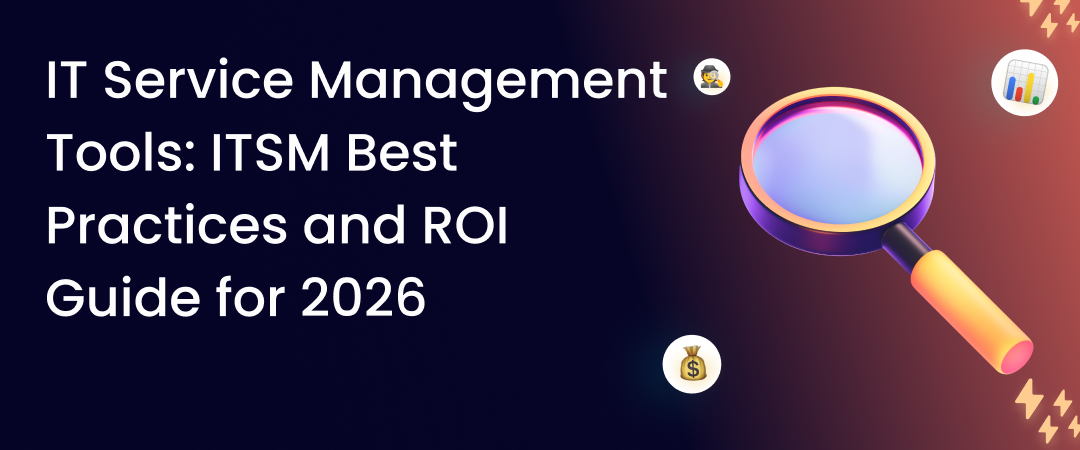
IT service management tools transform how organizations deliver and support technology services through structured processes, automation, and continuous improvement. In 2026, successful ITSM implementation requires more than selecting a platform. It demands attention to incident management, change control, AI capabilities, and integration with SaaS governance. This guide covers essential capabilities, proven best practices, ROI measurement frameworks, and how modern service desk solutions integrate with broader IT operations to deliver measurable business value.
Here is a statistic that demands attention: organizations with mature IT service management tools resolve incidents 55% faster and experience 40% fewer repeat issues than those operating without structured ITSM processes. In a world where technology downtime costs enterprises thousands of pounds per minute, that efficiency translates directly to competitive advantage.
The ITSM landscape has transformed dramatically. What began as basic help desk ticketing has evolved into comprehensive platforms that orchestrate the entire service lifecycle. Modern systems leverage artificial intelligence, integrate with dozens of enterprise tools, and provide analytics that drive continuous improvement.
But the abundance of options creates its own challenge. With dozens of platforms claiming similar capabilities, organizations struggle to select, implement, and extract value from their ITSM investments. Many underutilize expensive platforms or fail to connect ITSM to broader IT governance.
In this guide, we explore how ITSM is evolving, the capabilities that matter most, best practices for implementation, and a practical framework for measuring ROI that proves ITSM value to the business.
IT service management represents the discipline of designing, delivering, managing, and improving how organizations use information technology. Rather than viewing IT as a collection of systems, ITSM treats technology as a set of services that deliver value to customers (internal or external).
Most IT service management tools align with the ITIL framework, the globally recognized set of best practices for IT service delivery. ITIL 4, the current version, introduces:
Service Value System
The overarching framework shows how all components work together to create value through services.
Service Value Chain
Activities that organizations perform to deliver valuable products and services: plan, improve, engage, design, transition, obtain/build, and deliver and support.
Guiding Principles
Recommendations that guide organizations in all circumstances: focus on value, start where you are, progress iteratively, collaborate, think holistically, keep it simple, and optimize and automate.
For detailed framework analysis, see our ITSM framework comparison covering ITIL, COBIT, and MOF.
These terms often confuse:
| Term | Definition | Scope |
|---|---|---|
| Help Desk | A function focused on resolving user issues | Tactical, reactive |
| Service Desk | Single point of contact for all IT service needs | Strategic, proactive |
| ITSM | Comprehensive approach to managing IT services | Enterprise-wide lifecycle |
A help desk solves problems. A service desk manages relationships. ITSM governs the entire service ecosystem.
When evaluating platforms, focus on capabilities that drive real value:
The core of any ITSM platform:
Fundamental Functions:
Advanced Capabilities for 2026:
Moving beyond symptoms to address root causes:
Core Activities:
Business Value: Reduces incident volume by addressing underlying issues rather than repeatedly treating symptoms.
Managing modifications to minimize risk:
Essential Components:
See how modern ITSM automation extends change management capabilities.
Making services accessible and consistent:
Key Elements:
Understanding the IT landscape:
Core Functions:
Capturing and leveraging organizational knowledge:
Components:
For comprehensive feature evaluation, see our guide on key ITSM features.
💡 CloudNuro integrates with leading ITSM platforms for unified IT service and SaaS governance. Request a demo to see the integration in action.
Successful ITSM implementation requires disciplined execution. These practices maximize value realization:
The Common Mistake: Organizations select ITSM platforms before defining their processes, then wonder why technology fails to deliver expected value.
The Better Approach:
The Risk: Attempting to deploy all ITSM processes simultaneously overwhelms teams, delays value, and increases failure risk.
Recommended Sequencing:
| Phase | Processes | Typical Duration |
|---|---|---|
| Foundation | Incident, Request | 2-3 months |
| Stability | Problem, Knowledge | 2-3 months |
| Control | Change, Release | 2-3 months |
| Optimization | Asset, Configuration | 2-3 months |
| Transformation | AI, Advanced Automation | Ongoing |
For implementation guidance, see Implementing ITSM effectively.
Reality Check: The most sophisticated ITSM platform delivers no value if users bypass it or misuse it.
Adoption Strategies:
The Trap: Measuring activity (ticket volume) rather than outcomes (user satisfaction, business impact).
Metrics That Demonstrate Value:
| Metric | What It Measures | Direction |
|---|---|---|
| First Contact Resolution | Efficiency and capability | Increase |
| Mean Time to Resolution | Speed of service restoration | Decrease |
| Customer Satisfaction | Quality of service experience | Increase |
| Change Success Rate | Risk management effectiveness | Increase |
| Self-Service Adoption | Portal value and deflection | Increase |
| Cost per Ticket | Operational efficiency | Decrease |
Modern ITSM demands connections to:
Understanding the ITSM role in cloud governance helps plan the integration strategy.
2026 AI Capabilities:
💡 CloudNuro connects SaaS governance to ITSM workflows for unified IT operations. Get your free assessment.
| Capability | Basic Help Desk | Mid-Market ITSM | Enterprise ITSM | Unified IT Platform |
|---|---|---|---|---|
| Incident Management | Basic ticketing | Full workflow | AI-enhanced | Comprehensive |
| Problem Management | Limited | Standard | Advanced analytics | Fully integrated |
| Change Management | None or basic | Standard CAB | Risk-based automation | Enterprise-grade |
| Service Catalog | Limited options | Self-service | Advanced catalog | Multi-domain |
| CMDB | None | Basic | Discovery-enabled | Extended to cloud/SaaS |
| AI Capabilities | None | Basic automation | Virtual agents, AIOps | Advanced AI |
| Analytics | Basic reports | Standard dashboards | Advanced analytics | Business intelligence |
| Integration | Limited APIs | Standard connectors | Extensive ecosystem | Unified platform |
| Price Range | £15-50/agent/month | £50-150/agent/month | £150-300+/agent/month | Custom |
| Ideal For | Small IT teams | Growing organizations | Large enterprises | Digital transformation |
Small IT Teams (Under 10 agents):
Mid-Size Organizations (10-50 agents):
Enterprise IT (50+ agents):
For specific platform analysis, see our ServiceNow vs Jira comparison and ITSM tools by industry.
Proving the value of IT service management tools requires structured ROI analysis. Too many organizations invest significantly without measuring outcomes.
Beyond licensing, consider hidden ITSM costs:
Direct Costs:
Indirect Costs:
Step 1: Baseline Current Performance
Document your starting point with specific metrics:
Step 2: Establish Improvement Targets
Use industry benchmarks to set realistic goals:
| Metric | Realistic ITSM Improvement |
|---|---|
| Cost per ticket | 20-35% reduction |
| Mean time to resolution | 25-45% reduction |
| Escalation rate | 20-40% reduction |
| First contact resolution | 15-30% increase |
| Self-service adoption | 25-50% of eligible requests |
| Change success rate | 15-25% improvement |
Step 3: Calculate Annual Value
Quantify the financial impact of improvements:
Ticket Cost Savings:
Annual Ticket Volume × Current Cost per Ticket × Improvement Percentage
Productivity Gains:
Hours Saved per Agent × Number of Agents × Hourly Cost × 12 Months
Avoided Downtime:
Reduced Incidents × Average Downtime Minutes × Cost per Minute
Self-Service Value:
Deflected Tickets × Cost per Ticket
Total Annual Value:
Ticket Savings + Productivity Gains + Avoided Downtime + Self-Service Value
Step 4: Determine Payback Period
Calculate how quickly the investment pays for itself:
Payback Period = Total Investment (Implementation + Year 1 Licensing) ÷ Annual Value
Typical Results:
Well-executed enterprise ITSM implementations achieve payback within 12-18 months. Organizations with significant manual processes often see faster returns.
| Factor | Before ITSM | After ITSM | Impact |
|---|---|---|---|
| Annual tickets | 50,000 | 45,000 (10% deflection) | 5,000 fewer |
| Cost per ticket | £45 | £32 (29% reduction) | £13 savings |
| MTTR | 4.5 hours | 3.0 hours (33% faster) | 1.5 hours saved |
| Change failures | 8% | 5% | 3% improvement |
Annual Savings: £650,000+
Implementation Cost: £400,000
Payback: 7.4 months
Modern IT operations demand integration between ITSM and SaaS governance. This connection creates unified visibility and control.
Service Requests for Software:
Incident Management for SaaS:
Change Management for SaaS:
For detailed guidance, see ITSM and SaaS management integration.
CloudNuro connects with ServiceNow integration and other platforms to:
For IT Operations:
For Finance:
For Security:
💡 CloudNuro bridges ITSM and SaaS management for complete IT governance. Request a demo to see unified operations in action.
IT service management tools are software platforms that enable organizations to plan, deliver, operate, and improve IT services. Core capabilities include incident management (issue resolution), service desk operations (user support), change control (safely managing modifications), and service catalog (offering and fulfilling services).
Modern platforms align with frameworks like ITIL and increasingly incorporate AI for automation and predictive capabilities. They serve as the operational foundation connecting users with IT services throughout the service lifecycle.
ITSM is the practice of managing IT services. It represents what organizations actually do to deliver technology value.
ITIL is a framework of documented best practices for performing ITSM effectively. It provides guidance for how to do IT service management well.
ITIL is a recipe book. ITSM is the act of cooking. Organizations can practice ITSM without strictly following ITIL, but ITIL provides proven approaches. Most top ITSM tools support ITIL practices.
ITSM ROI calculation follows these steps:
Enterprise implementations typically achieve a 12-18 month payback with proper execution.
Focus on metrics demonstrating business value rather than activity volume:
| Metric | Significance |
|---|---|
| First Contact Resolution | Shows efficiency and agent capability |
| Mean Time to Resolution | Measures service restoration speed |
| Customer Satisfaction | Captures user perception directly |
| Change Success Rate | Demonstrates risk management |
| Self-Service Adoption | Indicates portal effectiveness and cost deflection |
| Cost per Ticket | Tracks operational efficiency |
Avoid vanity metrics like raw ticket counts that indicate volume without context.
Implementation duration varies by scope and approach:
| Scope | Typical Timeline |
|---|---|
| Basic incident and request | 1-3 months |
| Core ITSM suite | 4-8 months |
| Full enterprise implementation | 9-14 months |
| Complete digital transformation | 12-24 months |
Phased implementation delivers faster time to initial value. See implementing ITSM effectively for detailed guidance.
ITSM and SaaS management integrate through multiple touchpoints:
For IT operations solutions spanning ITSM and SaaS, integration enables unified governance.
✅ IT service management tools have evolved from simple ticketing to comprehensive platforms encompassing incident management, change control, service catalog, and AI-powered automation.
✅ Successful ITSM implementation begins with process design rather than technology selection. Tools should automate well-defined processes, not compensate for process gaps.
✅ Phased implementation (incident/request, then problem/knowledge, then change/release) delivers faster value and higher adoption rates than big-bang approaches.
✅ ROI measurement must account for hidden costs (implementation, customization, training) while capturing indirect benefits (avoided downtime, productivity, compliance).
✅ User adoption ultimately determines ITSM success. Sophisticated platforms fail if users bypass them or misuse them.
✅ Integration with SaaS management platforms creates unified IT operations where service requests, provisioning, and governance work together seamlessly.
✅ Metrics focused on business value (satisfaction, resolution speed, cost efficiency) matter more than activity volume metrics.
IT service management tools have become an essential part of the infrastructure for organizations that depend on technology. The difference between IT teams that excel at service delivery and those that constantly firefight often comes down to ITSM maturity.
The platforms available in 2026 offer remarkable capabilities: AI-driven automation, predictive analytics, extensive integrations, and user experiences that match consumer applications. But technology alone never delivers value. Success requires disciplined process design, phased implementation, relentless focus on adoption, and integration with the broader IT ecosystem.
Organizations succeeding with ITSM are not simply resolving tickets more efficiently. They are transforming IT from a cost centre into a strategic business enabler. They connect service management to SaaS governance, cloud operations, and measurable business outcomes. They use data to improve rather than merely report activity continuously.
The question for your organization is not whether to invest in IT service management tools, but rather how to do so. It is whether your current approach delivers the process maturity, automation capability, and business alignment that modern IT demands.
Start with process clarity. Implement in phases. Measure outcomes that matter. Connect to the broader IT landscape. The efficiency gains and business value that follow justify the investment.
CloudNuro is a leader in Enterprise SaaS Management Platforms, giving enterprises unmatched visibility, governance, and cost optimization. Recognized twice in a row by Gartner in the SaaS Management Platforms Magic Quadrant (2024, 2025) and named a Leader in the Info-Tech SoftwareReviews Data Quadrant, CloudNuro is trusted by global enterprises and government agencies to bring financial discipline to SaaS, cloud, and AI.
Trusted by enterprises such as Konica Minolta and FederalSignal, CloudNuro provides centralized SaaS inventory, license optimization, and renewal management along with advanced cost allocation and chargeback, giving IT and Finance leaders the visibility, control, and cost-conscious culture needed to drive financial discipline.
As the only Unified FinOps SaaS Management Platform for the Enterprise, CloudNuro brings AI, SaaS, and IaaS management together in a unified view. With a 15-minute setup and measurable results in under 24 hours, CloudNuro gives IT teams a fast path to value.
Request a Demo | Get Free Savings Assessment | Explore Product
Request a no cost, no obligation free assessment —just 15 minutes to savings!
Get StartedIT service management tools transform how organizations deliver and support technology services through structured processes, automation, and continuous improvement. In 2026, successful ITSM implementation requires more than selecting a platform. It demands attention to incident management, change control, AI capabilities, and integration with SaaS governance. This guide covers essential capabilities, proven best practices, ROI measurement frameworks, and how modern service desk solutions integrate with broader IT operations to deliver measurable business value.
Here is a statistic that demands attention: organizations with mature IT service management tools resolve incidents 55% faster and experience 40% fewer repeat issues than those operating without structured ITSM processes. In a world where technology downtime costs enterprises thousands of pounds per minute, that efficiency translates directly to competitive advantage.
The ITSM landscape has transformed dramatically. What began as basic help desk ticketing has evolved into comprehensive platforms that orchestrate the entire service lifecycle. Modern systems leverage artificial intelligence, integrate with dozens of enterprise tools, and provide analytics that drive continuous improvement.
But the abundance of options creates its own challenge. With dozens of platforms claiming similar capabilities, organizations struggle to select, implement, and extract value from their ITSM investments. Many underutilize expensive platforms or fail to connect ITSM to broader IT governance.
In this guide, we explore how ITSM is evolving, the capabilities that matter most, best practices for implementation, and a practical framework for measuring ROI that proves ITSM value to the business.
IT service management represents the discipline of designing, delivering, managing, and improving how organizations use information technology. Rather than viewing IT as a collection of systems, ITSM treats technology as a set of services that deliver value to customers (internal or external).
Most IT service management tools align with the ITIL framework, the globally recognized set of best practices for IT service delivery. ITIL 4, the current version, introduces:
Service Value System
The overarching framework shows how all components work together to create value through services.
Service Value Chain
Activities that organizations perform to deliver valuable products and services: plan, improve, engage, design, transition, obtain/build, and deliver and support.
Guiding Principles
Recommendations that guide organizations in all circumstances: focus on value, start where you are, progress iteratively, collaborate, think holistically, keep it simple, and optimize and automate.
For detailed framework analysis, see our ITSM framework comparison covering ITIL, COBIT, and MOF.
These terms often confuse:
| Term | Definition | Scope |
|---|---|---|
| Help Desk | A function focused on resolving user issues | Tactical, reactive |
| Service Desk | Single point of contact for all IT service needs | Strategic, proactive |
| ITSM | Comprehensive approach to managing IT services | Enterprise-wide lifecycle |
A help desk solves problems. A service desk manages relationships. ITSM governs the entire service ecosystem.
When evaluating platforms, focus on capabilities that drive real value:
The core of any ITSM platform:
Fundamental Functions:
Advanced Capabilities for 2026:
Moving beyond symptoms to address root causes:
Core Activities:
Business Value: Reduces incident volume by addressing underlying issues rather than repeatedly treating symptoms.
Managing modifications to minimize risk:
Essential Components:
See how modern ITSM automation extends change management capabilities.
Making services accessible and consistent:
Key Elements:
Understanding the IT landscape:
Core Functions:
Capturing and leveraging organizational knowledge:
Components:
For comprehensive feature evaluation, see our guide on key ITSM features.
💡 CloudNuro integrates with leading ITSM platforms for unified IT service and SaaS governance. Request a demo to see the integration in action.
Successful ITSM implementation requires disciplined execution. These practices maximize value realization:
The Common Mistake: Organizations select ITSM platforms before defining their processes, then wonder why technology fails to deliver expected value.
The Better Approach:
The Risk: Attempting to deploy all ITSM processes simultaneously overwhelms teams, delays value, and increases failure risk.
Recommended Sequencing:
| Phase | Processes | Typical Duration |
|---|---|---|
| Foundation | Incident, Request | 2-3 months |
| Stability | Problem, Knowledge | 2-3 months |
| Control | Change, Release | 2-3 months |
| Optimization | Asset, Configuration | 2-3 months |
| Transformation | AI, Advanced Automation | Ongoing |
For implementation guidance, see Implementing ITSM effectively.
Reality Check: The most sophisticated ITSM platform delivers no value if users bypass it or misuse it.
Adoption Strategies:
The Trap: Measuring activity (ticket volume) rather than outcomes (user satisfaction, business impact).
Metrics That Demonstrate Value:
| Metric | What It Measures | Direction |
|---|---|---|
| First Contact Resolution | Efficiency and capability | Increase |
| Mean Time to Resolution | Speed of service restoration | Decrease |
| Customer Satisfaction | Quality of service experience | Increase |
| Change Success Rate | Risk management effectiveness | Increase |
| Self-Service Adoption | Portal value and deflection | Increase |
| Cost per Ticket | Operational efficiency | Decrease |
Modern ITSM demands connections to:
Understanding the ITSM role in cloud governance helps plan the integration strategy.
2026 AI Capabilities:
💡 CloudNuro connects SaaS governance to ITSM workflows for unified IT operations. Get your free assessment.
| Capability | Basic Help Desk | Mid-Market ITSM | Enterprise ITSM | Unified IT Platform |
|---|---|---|---|---|
| Incident Management | Basic ticketing | Full workflow | AI-enhanced | Comprehensive |
| Problem Management | Limited | Standard | Advanced analytics | Fully integrated |
| Change Management | None or basic | Standard CAB | Risk-based automation | Enterprise-grade |
| Service Catalog | Limited options | Self-service | Advanced catalog | Multi-domain |
| CMDB | None | Basic | Discovery-enabled | Extended to cloud/SaaS |
| AI Capabilities | None | Basic automation | Virtual agents, AIOps | Advanced AI |
| Analytics | Basic reports | Standard dashboards | Advanced analytics | Business intelligence |
| Integration | Limited APIs | Standard connectors | Extensive ecosystem | Unified platform |
| Price Range | £15-50/agent/month | £50-150/agent/month | £150-300+/agent/month | Custom |
| Ideal For | Small IT teams | Growing organizations | Large enterprises | Digital transformation |
Small IT Teams (Under 10 agents):
Mid-Size Organizations (10-50 agents):
Enterprise IT (50+ agents):
For specific platform analysis, see our ServiceNow vs Jira comparison and ITSM tools by industry.
Proving the value of IT service management tools requires structured ROI analysis. Too many organizations invest significantly without measuring outcomes.
Beyond licensing, consider hidden ITSM costs:
Direct Costs:
Indirect Costs:
Step 1: Baseline Current Performance
Document your starting point with specific metrics:
Step 2: Establish Improvement Targets
Use industry benchmarks to set realistic goals:
| Metric | Realistic ITSM Improvement |
|---|---|
| Cost per ticket | 20-35% reduction |
| Mean time to resolution | 25-45% reduction |
| Escalation rate | 20-40% reduction |
| First contact resolution | 15-30% increase |
| Self-service adoption | 25-50% of eligible requests |
| Change success rate | 15-25% improvement |
Step 3: Calculate Annual Value
Quantify the financial impact of improvements:
Ticket Cost Savings:
Annual Ticket Volume × Current Cost per Ticket × Improvement Percentage
Productivity Gains:
Hours Saved per Agent × Number of Agents × Hourly Cost × 12 Months
Avoided Downtime:
Reduced Incidents × Average Downtime Minutes × Cost per Minute
Self-Service Value:
Deflected Tickets × Cost per Ticket
Total Annual Value:
Ticket Savings + Productivity Gains + Avoided Downtime + Self-Service Value
Step 4: Determine Payback Period
Calculate how quickly the investment pays for itself:
Payback Period = Total Investment (Implementation + Year 1 Licensing) ÷ Annual Value
Typical Results:
Well-executed enterprise ITSM implementations achieve payback within 12-18 months. Organizations with significant manual processes often see faster returns.
| Factor | Before ITSM | After ITSM | Impact |
|---|---|---|---|
| Annual tickets | 50,000 | 45,000 (10% deflection) | 5,000 fewer |
| Cost per ticket | £45 | £32 (29% reduction) | £13 savings |
| MTTR | 4.5 hours | 3.0 hours (33% faster) | 1.5 hours saved |
| Change failures | 8% | 5% | 3% improvement |
Annual Savings: £650,000+
Implementation Cost: £400,000
Payback: 7.4 months
Modern IT operations demand integration between ITSM and SaaS governance. This connection creates unified visibility and control.
Service Requests for Software:
Incident Management for SaaS:
Change Management for SaaS:
For detailed guidance, see ITSM and SaaS management integration.
CloudNuro connects with ServiceNow integration and other platforms to:
For IT Operations:
For Finance:
For Security:
💡 CloudNuro bridges ITSM and SaaS management for complete IT governance. Request a demo to see unified operations in action.
IT service management tools are software platforms that enable organizations to plan, deliver, operate, and improve IT services. Core capabilities include incident management (issue resolution), service desk operations (user support), change control (safely managing modifications), and service catalog (offering and fulfilling services).
Modern platforms align with frameworks like ITIL and increasingly incorporate AI for automation and predictive capabilities. They serve as the operational foundation connecting users with IT services throughout the service lifecycle.
ITSM is the practice of managing IT services. It represents what organizations actually do to deliver technology value.
ITIL is a framework of documented best practices for performing ITSM effectively. It provides guidance for how to do IT service management well.
ITIL is a recipe book. ITSM is the act of cooking. Organizations can practice ITSM without strictly following ITIL, but ITIL provides proven approaches. Most top ITSM tools support ITIL practices.
ITSM ROI calculation follows these steps:
Enterprise implementations typically achieve a 12-18 month payback with proper execution.
Focus on metrics demonstrating business value rather than activity volume:
| Metric | Significance |
|---|---|
| First Contact Resolution | Shows efficiency and agent capability |
| Mean Time to Resolution | Measures service restoration speed |
| Customer Satisfaction | Captures user perception directly |
| Change Success Rate | Demonstrates risk management |
| Self-Service Adoption | Indicates portal effectiveness and cost deflection |
| Cost per Ticket | Tracks operational efficiency |
Avoid vanity metrics like raw ticket counts that indicate volume without context.
Implementation duration varies by scope and approach:
| Scope | Typical Timeline |
|---|---|
| Basic incident and request | 1-3 months |
| Core ITSM suite | 4-8 months |
| Full enterprise implementation | 9-14 months |
| Complete digital transformation | 12-24 months |
Phased implementation delivers faster time to initial value. See implementing ITSM effectively for detailed guidance.
ITSM and SaaS management integrate through multiple touchpoints:
For IT operations solutions spanning ITSM and SaaS, integration enables unified governance.
✅ IT service management tools have evolved from simple ticketing to comprehensive platforms encompassing incident management, change control, service catalog, and AI-powered automation.
✅ Successful ITSM implementation begins with process design rather than technology selection. Tools should automate well-defined processes, not compensate for process gaps.
✅ Phased implementation (incident/request, then problem/knowledge, then change/release) delivers faster value and higher adoption rates than big-bang approaches.
✅ ROI measurement must account for hidden costs (implementation, customization, training) while capturing indirect benefits (avoided downtime, productivity, compliance).
✅ User adoption ultimately determines ITSM success. Sophisticated platforms fail if users bypass them or misuse them.
✅ Integration with SaaS management platforms creates unified IT operations where service requests, provisioning, and governance work together seamlessly.
✅ Metrics focused on business value (satisfaction, resolution speed, cost efficiency) matter more than activity volume metrics.
IT service management tools have become an essential part of the infrastructure for organizations that depend on technology. The difference between IT teams that excel at service delivery and those that constantly firefight often comes down to ITSM maturity.
The platforms available in 2026 offer remarkable capabilities: AI-driven automation, predictive analytics, extensive integrations, and user experiences that match consumer applications. But technology alone never delivers value. Success requires disciplined process design, phased implementation, relentless focus on adoption, and integration with the broader IT ecosystem.
Organizations succeeding with ITSM are not simply resolving tickets more efficiently. They are transforming IT from a cost centre into a strategic business enabler. They connect service management to SaaS governance, cloud operations, and measurable business outcomes. They use data to improve rather than merely report activity continuously.
The question for your organization is not whether to invest in IT service management tools, but rather how to do so. It is whether your current approach delivers the process maturity, automation capability, and business alignment that modern IT demands.
Start with process clarity. Implement in phases. Measure outcomes that matter. Connect to the broader IT landscape. The efficiency gains and business value that follow justify the investment.
CloudNuro is a leader in Enterprise SaaS Management Platforms, giving enterprises unmatched visibility, governance, and cost optimization. Recognized twice in a row by Gartner in the SaaS Management Platforms Magic Quadrant (2024, 2025) and named a Leader in the Info-Tech SoftwareReviews Data Quadrant, CloudNuro is trusted by global enterprises and government agencies to bring financial discipline to SaaS, cloud, and AI.
Trusted by enterprises such as Konica Minolta and FederalSignal, CloudNuro provides centralized SaaS inventory, license optimization, and renewal management along with advanced cost allocation and chargeback, giving IT and Finance leaders the visibility, control, and cost-conscious culture needed to drive financial discipline.
As the only Unified FinOps SaaS Management Platform for the Enterprise, CloudNuro brings AI, SaaS, and IaaS management together in a unified view. With a 15-minute setup and measurable results in under 24 hours, CloudNuro gives IT teams a fast path to value.
Request a Demo | Get Free Savings Assessment | Explore Product
Request a no cost, no obligation free assessment - just 15 minutes to savings!
Get StartedWe're offering complimentary ServiceNow license assessments to only 25 enterprises this quarter who want to unlock immediate savings without disrupting operations.
Get Free AssessmentGet Started




CloudNuro Corp
1755 Park St. Suite 207
Naperville, IL 60563
Phone : +1-630-277-9470
Email: info@cloudnuro.com


.svg)



.webp)

Recognized Leader in SaaS Management Platforms by Info-Tech SoftwareReviews