

Sign Up
Thank you for Submitting!
Modern enterprise analytics run at scale, and Microsoft Fabric is at the core of countless organizations' digital estates. But as CFOs and procurement leaders know all too well, real cost transparency for Microsoft Fabric is elusive. Buried within a growing labyrinth of SKUs, add-ons, capacity entitlements, licensing tiers, and consumption pricing, the true financial impact can quickly snowball, unless you approach operations with governance-first discipline and absolute visibility.
This guide demystifies Microsoft Fabric pricing for finance and IT leaders. We’ll detail the SKU landscape, clarify core versus add-on charges, reveal critical capacity and consumption gotchas, and show how to avoid unexpected cost overruns. We’ll also demonstrate how CloudNuro’s FinOps Services deliver next-level control, using automation and analytics that empower you to make every Fabric dollar accountable, visible, and optimized.
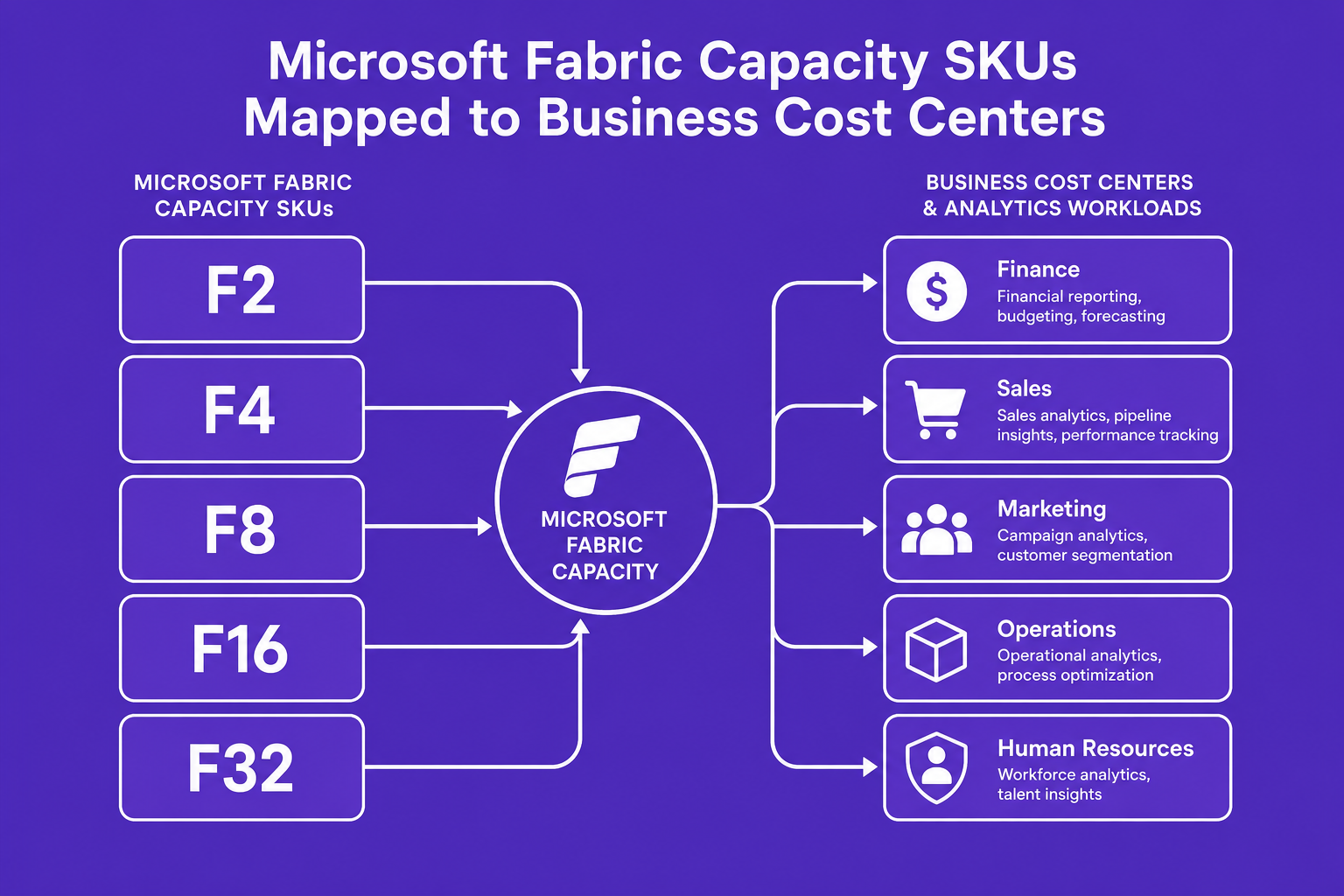
Microsoft Fabric’s pricing is built on a dense matrix of SKUs, each linked to different user types, workloads, and analytics consumption tiers. Decoding this matrix is foundational for anyone responsible for budget governance.
Key Takeaway: SKUs directly map to cost centers. Proper SKU mapping is a major driver of SaaS optimization, it enables transparency in who uses what, and when, across business lines.
Fabric’s billing is not just about the sticker price. True cost governance relies on understanding the interplay between capacity commitments, workload spikes, and usage-based add-ons.
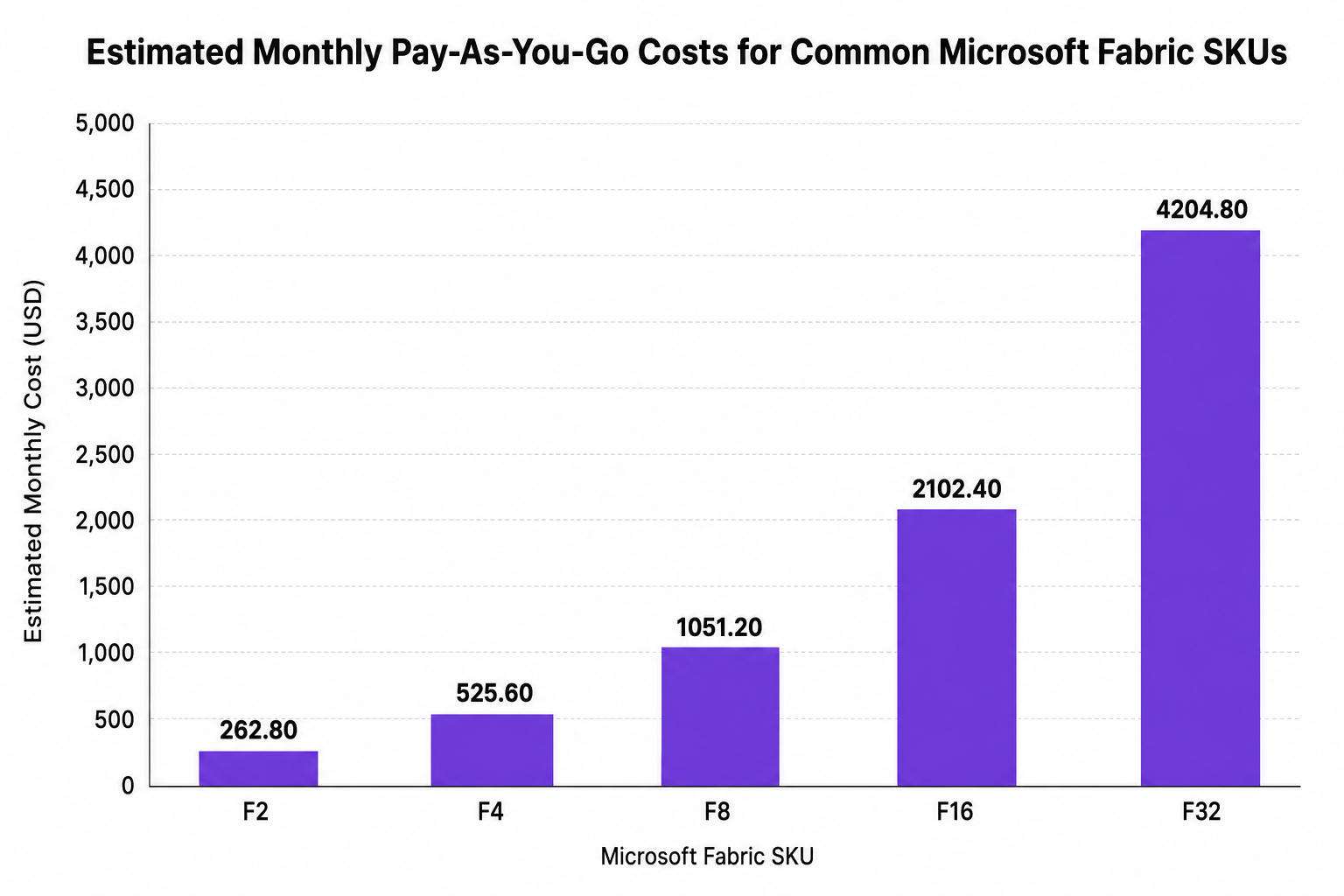
Best-in-class FinOps practice includes frequent SKU rightsizing, aligning capacity units exactly to changing project needs rather than set-it-and-forget-it overprovisioning.
Every mature Microsoft SaaS deployment brings gotchas that impact true TCO (total cost of ownership):
These hidden layers drive unpredictable cost surges and hinder long-term budget planning.
CFOs and IT procurement teams need sweeping control, continuous monitoring, and the ability to proactively model every SKU-and-capacity blend. CloudNuro closes these gaps by delivering deep, automated insights and actionable governance for Microsoft Fabric:
This entire process runs on governance-first, compliance-secure architecture, giving IT and finance confidence and clarity from SKU selection to day-to-day operations.
Proof is in the numbers when automation and governance get paired with Microsoft Fabric. CloudNuro’s clients routinely realize deep savings and stronger financial discipline:
Adopting a unified, automated approach to license and workload management is now a competitive FinOps differentiator.
Market adoption shows a strong trend toward continuous, automated cost optimization. moving past one-off "audit and clean" projects to always-on lifecycle management. Key developments include:
With global spending set to rise 28% this year to $7.2B for Fabric and analytics platforms, the need for enforceable controls and cross-functional analytics is only intensifying.
What are the different SKUs available in Microsoft Fabric pricing?
SKUs include capacity-based tiers (F2, F4, F8, F16, F32) and scale linearly with performance and price. Add-ons and advanced workloads are licensed separately and may incur additional fees.
How is Microsoft Fabric capacity pricing structured?
Pricing is hourly for each capacity unit (CU), with sizeable discounts for reserved (1-year) capacity contracts. The more CUs provisioned, the higher the baseline cost.
What add-ons and extra costs should CFOs watch for with Microsoft Fabric?
Key extras include analytics engine integrations, additional connectors, and Data Activator. Unmonitored add-on adoption can result in steep costs.
How do Microsoft Fabric price changes impact SaaS budgets?
Since prices for CUs and add-ons can change, budgets must be flexible and include provisions for scaling demand or changing capacity models as projects grow.
What are the hidden or unexpected costs when using Microsoft Fabric?
Orphaned and unused licenses, overage costs from unmonitored workloads, surprise add-ons, and a lack of unified reporting drive unpredictability. Automation and centralized management mitigate these risks.
CFOs and finance leaders cannot afford blind spots in Microsoft Fabric cost management. With continuous SKU rightsizing, automation, proactive overage controls, and unified cross-SaaS dashboards, you can transform Fabric from an unpredictable cloud expense into a governed, business-aligned FinOps asset.
CloudNuro’s unique approach. the convergence of AI-driven analytics, license optimization, and rigorous chargeback. delivers unmatched visibility and cost discipline for every Microsoft Fabric dollar spent. Empower your organization to benchmark, budget, and negotiate every contract with confidence.
Explore CloudNuro FinOps Services, discover how SaaS Management drives savings, or learn more about Microsoft License Optimization to take charge of every SaaS and cloud dollar.
Request a no cost, no obligation free assessment —just 15 minutes to savings!
Get StartedModern enterprise analytics run at scale, and Microsoft Fabric is at the core of countless organizations' digital estates. But as CFOs and procurement leaders know all too well, real cost transparency for Microsoft Fabric is elusive. Buried within a growing labyrinth of SKUs, add-ons, capacity entitlements, licensing tiers, and consumption pricing, the true financial impact can quickly snowball, unless you approach operations with governance-first discipline and absolute visibility.
This guide demystifies Microsoft Fabric pricing for finance and IT leaders. We’ll detail the SKU landscape, clarify core versus add-on charges, reveal critical capacity and consumption gotchas, and show how to avoid unexpected cost overruns. We’ll also demonstrate how CloudNuro’s FinOps Services deliver next-level control, using automation and analytics that empower you to make every Fabric dollar accountable, visible, and optimized.
Microsoft Fabric’s pricing is built on a dense matrix of SKUs, each linked to different user types, workloads, and analytics consumption tiers. Decoding this matrix is foundational for anyone responsible for budget governance.
Key Takeaway: SKUs directly map to cost centers. Proper SKU mapping is a major driver of SaaS optimization, it enables transparency in who uses what, and when, across business lines.
Fabric’s billing is not just about the sticker price. True cost governance relies on understanding the interplay between capacity commitments, workload spikes, and usage-based add-ons.
Best-in-class FinOps practice includes frequent SKU rightsizing, aligning capacity units exactly to changing project needs rather than set-it-and-forget-it overprovisioning.
Every mature Microsoft SaaS deployment brings gotchas that impact true TCO (total cost of ownership):
These hidden layers drive unpredictable cost surges and hinder long-term budget planning.
CFOs and IT procurement teams need sweeping control, continuous monitoring, and the ability to proactively model every SKU-and-capacity blend. CloudNuro closes these gaps by delivering deep, automated insights and actionable governance for Microsoft Fabric:
This entire process runs on governance-first, compliance-secure architecture, giving IT and finance confidence and clarity from SKU selection to day-to-day operations.
Proof is in the numbers when automation and governance get paired with Microsoft Fabric. CloudNuro’s clients routinely realize deep savings and stronger financial discipline:
Adopting a unified, automated approach to license and workload management is now a competitive FinOps differentiator.
Market adoption shows a strong trend toward continuous, automated cost optimization. moving past one-off "audit and clean" projects to always-on lifecycle management. Key developments include:
With global spending set to rise 28% this year to $7.2B for Fabric and analytics platforms, the need for enforceable controls and cross-functional analytics is only intensifying.
What are the different SKUs available in Microsoft Fabric pricing?
SKUs include capacity-based tiers (F2, F4, F8, F16, F32) and scale linearly with performance and price. Add-ons and advanced workloads are licensed separately and may incur additional fees.
How is Microsoft Fabric capacity pricing structured?
Pricing is hourly for each capacity unit (CU), with sizeable discounts for reserved (1-year) capacity contracts. The more CUs provisioned, the higher the baseline cost.
What add-ons and extra costs should CFOs watch for with Microsoft Fabric?
Key extras include analytics engine integrations, additional connectors, and Data Activator. Unmonitored add-on adoption can result in steep costs.
How do Microsoft Fabric price changes impact SaaS budgets?
Since prices for CUs and add-ons can change, budgets must be flexible and include provisions for scaling demand or changing capacity models as projects grow.
What are the hidden or unexpected costs when using Microsoft Fabric?
Orphaned and unused licenses, overage costs from unmonitored workloads, surprise add-ons, and a lack of unified reporting drive unpredictability. Automation and centralized management mitigate these risks.
CFOs and finance leaders cannot afford blind spots in Microsoft Fabric cost management. With continuous SKU rightsizing, automation, proactive overage controls, and unified cross-SaaS dashboards, you can transform Fabric from an unpredictable cloud expense into a governed, business-aligned FinOps asset.
CloudNuro’s unique approach. the convergence of AI-driven analytics, license optimization, and rigorous chargeback. delivers unmatched visibility and cost discipline for every Microsoft Fabric dollar spent. Empower your organization to benchmark, budget, and negotiate every contract with confidence.
Explore CloudNuro FinOps Services, discover how SaaS Management drives savings, or learn more about Microsoft License Optimization to take charge of every SaaS and cloud dollar.
Request a no cost, no obligation free assessment - just 15 minutes to savings!
Get StartedWe're offering complimentary ServiceNow license assessments to only 25 enterprises this quarter who want to unlock immediate savings without disrupting operations.
Get Free AssessmentGet Started




CloudNuro Corp
1755 Park St. Suite 207
Naperville, IL 60563
Phone : +1-630-277-9470
Email: info@cloudnuro.com





.webp)

Recognized Leader in SaaS Management Platforms by Info-Tech SoftwareReviews



.svg)