

Sign Up
Thank you for Submitting!
The rise of enterprise AI has undeniably redefined what it means to generate business value from technology investments. For CIOs, CTOs, and enterprise technology leaders, ensuring AI delivers a clear return on investment (ai roi) means much more than simply estimating licensing fees or hardware expenditure. It demands a rigorous approach to modeling the Total Cost of Ownership (TCO) for artificial intelligence across the full project lifecycle.
This comprehensive guide walks through the strategic considerations, pitfalls, and best practices for building a robust AI TCO model. With real-world insights and data points, we’ll explore cost components often overlooked, calculation frameworks that drive better AI ROI, and how leaders are using CloudNuro to align technology spend with business outcomes.

Total Cost of Ownership for enterprise AI extends far beyond the upfront costs of infrastructure or initial deployment. In fact, enterprise AI TCO is commonly 2x to 4x the initial platform licensing cost, averaging a 3.2x multiplier over the project’s lifecycle. The most significant investments arise from continuous operations, retraining, compliance, and change management, often incurred months or years after go-live.
At its core, a proficient AI TCO model factors in the entire expense landscape:
Direct costs: Infrastructure, compute, data storage, licensing, and integration.
Ongoing operations: Model retraining, monitoring, and support.
Change management: User training, process refinement, and policy updates.
Security and governance: Safeguards for sensitive data, compliance, audit readiness.
Hidden and variable costs: Costs from evolving model consumption, dynamic token pricing, or unmanaged workloads that drive budget overruns.
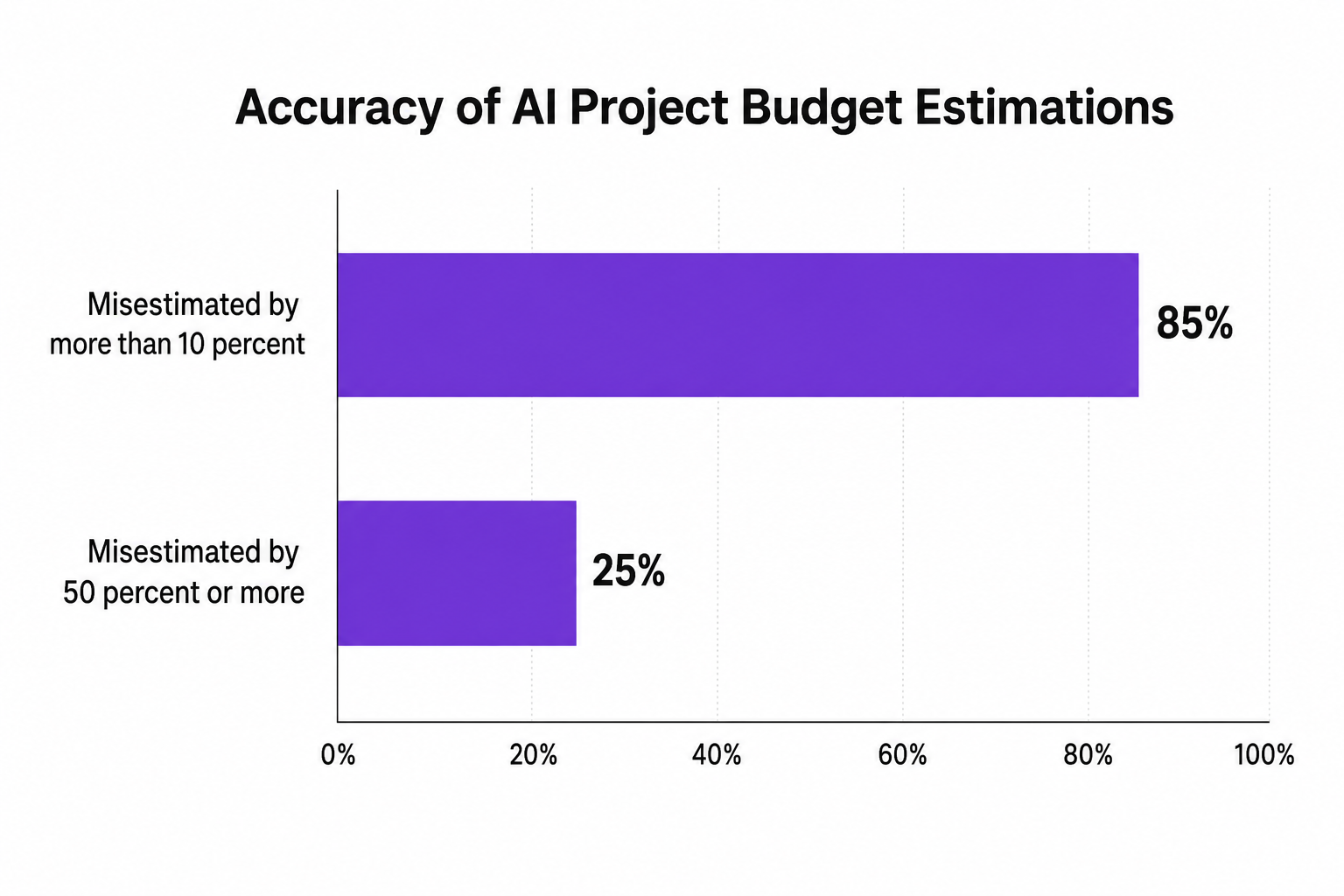
Statistics show that data engineering alone can consume 25% to 40% of total AI spend, while model maintenance adds an extra 15% to 30%. More telling, 68% of projects overshoot their initial budgets by 50% or more due to underestimated operational costs and unforeseen scale.
The pressure on technology leaders to demonstrate ai roi continues to escalate as generative AI and inference-heavy workloads become mission-critical. Yet the unique cost structure of enterprise AI is catching many off guard:
Unpredictable scaling: AI-driven applications can generate exponential compute consumption based on user interactions and prompt complexity.
Hidden SaaS costs: Embedded AI features are often licensed on a usage or token basis and buried within enterprise SaaS subscriptions, undermining traditional budgeting.
Compliance and security: Ongoing costs for regulatory adherence and incident response quickly mount but are rarely anticipated in project proposals.
A mature TCO model provides:
Realistic budgeting: By capturing all direct, indirect, and hidden expenses.
Accurate forecasting: Reducing the risk of misestimating costs, an issue experienced by more than 85% of organizations.
Governance insight: Supporting policy-driven guardrails and cost optimization before overruns occur.
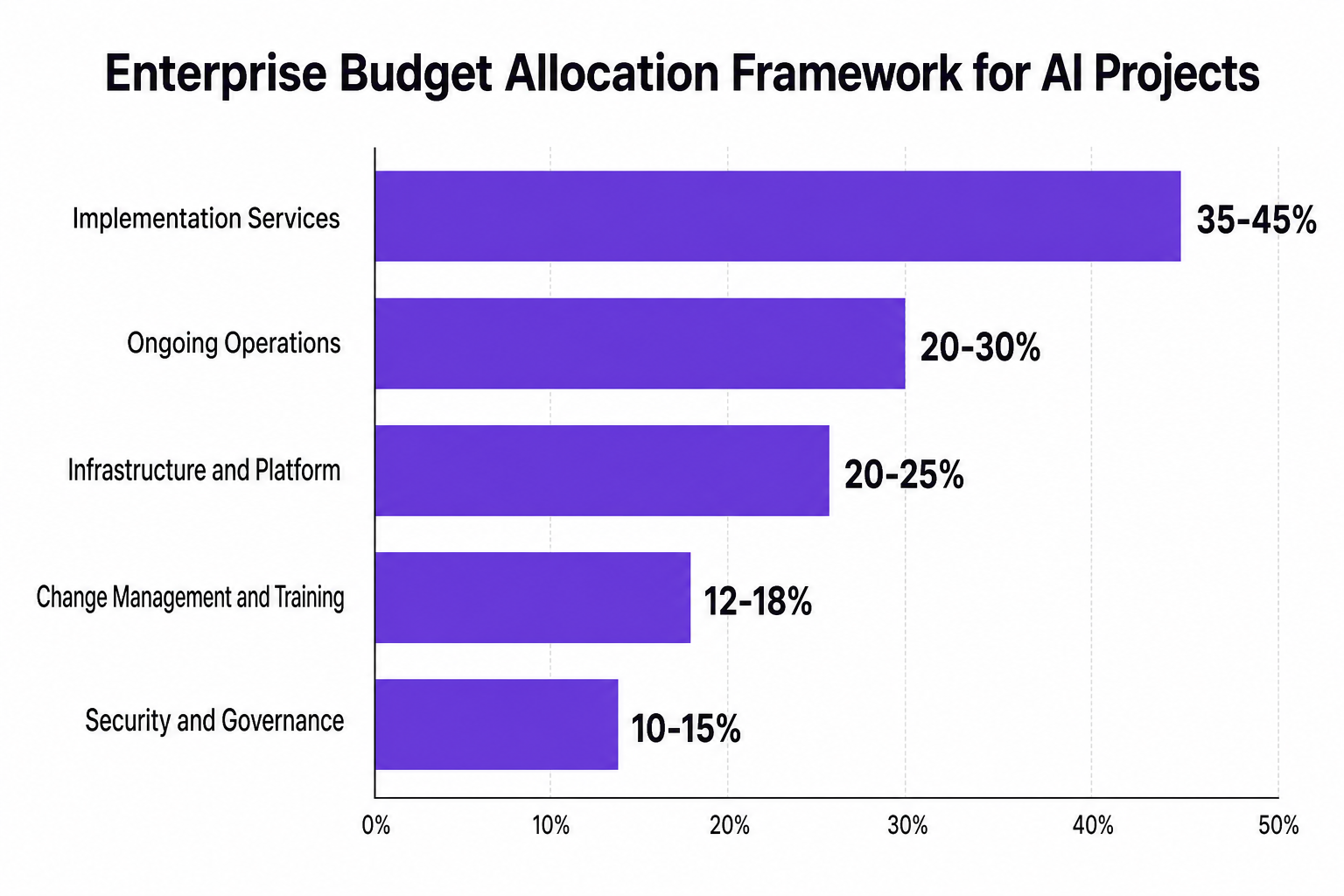
According to enterprise budget allocation data, a best-practice TCO model segments costs into:
Implementation Services (35-45%): Data engineering, integration, and initial setup.
Ongoing Operations (20-30%): Model monitoring, retraining, prompt engineering, and support.
Infrastructure and Platform (20-25%): Cloud services, compute, storage, and network resources.
Change Management & Training (12-18%): Upskilling teams, process changes, stakeholder onboarding.
Security & Governance (10-15%): Compliance management, audit preparedness, security controls, token-level attribution.
This TCO framework empowers organizations to consider the full life cycle; not just the deployment, but the long-term financial obligations as well.
A robust AI TCO model is the linchpin for calculating clear ai roi. Leaders must move beyond back-of-the-envelope estimates to holistic financial modeling, including:
Establishing baselines: Start with a granular inventory of all current and forecasted AI workloads, both obvious (dedicated models) and hidden (AI-augmented SaaS features).
Mapping direct and indirect costs: Use automated discovery and attribution across cloud and SaaS portfolios. Remember: 75% of AI-driven enterprises cite a lack of token attribution as their top chargeback challenge.
Projecting future costs: Incorporate scaling effects, retraining schedules, compliance needs, and evolving data privacy landscapes.
Attributing cost to outcomes: Use metric-driven frameworks to quantify savings, efficiency gains, or new revenue attributable to each AI-enabled use case.
Industry data reveals that organizations that deploy chargeback and showback methodologies linked to token-level usage can cut unit costs by over 40% and vastly improve compliance.
Failure to accurately model AI’s TCO leaves organizations exposed to sudden overruns and diminishing AI ROI:
Unmanaged infrastructure: Idle compute and orphaned training workloads can drive up cloud bills by 30% or more.
Shadow AI: Hidden adoption of AI features inside common business platforms leads to unmonitored spend.
Lack of real-time guardrails: Without automated policies to enforce budget thresholds and block non-approved models, scaling can spiral.
Ongoing model operations: Retraining, drift prevention, and fine-tuning often require sustained resource allocation rarely included in initial planning.
CloudNuro provides enterprise platforms tailored for maximum cost visibility, optimization, and AI cost governance:
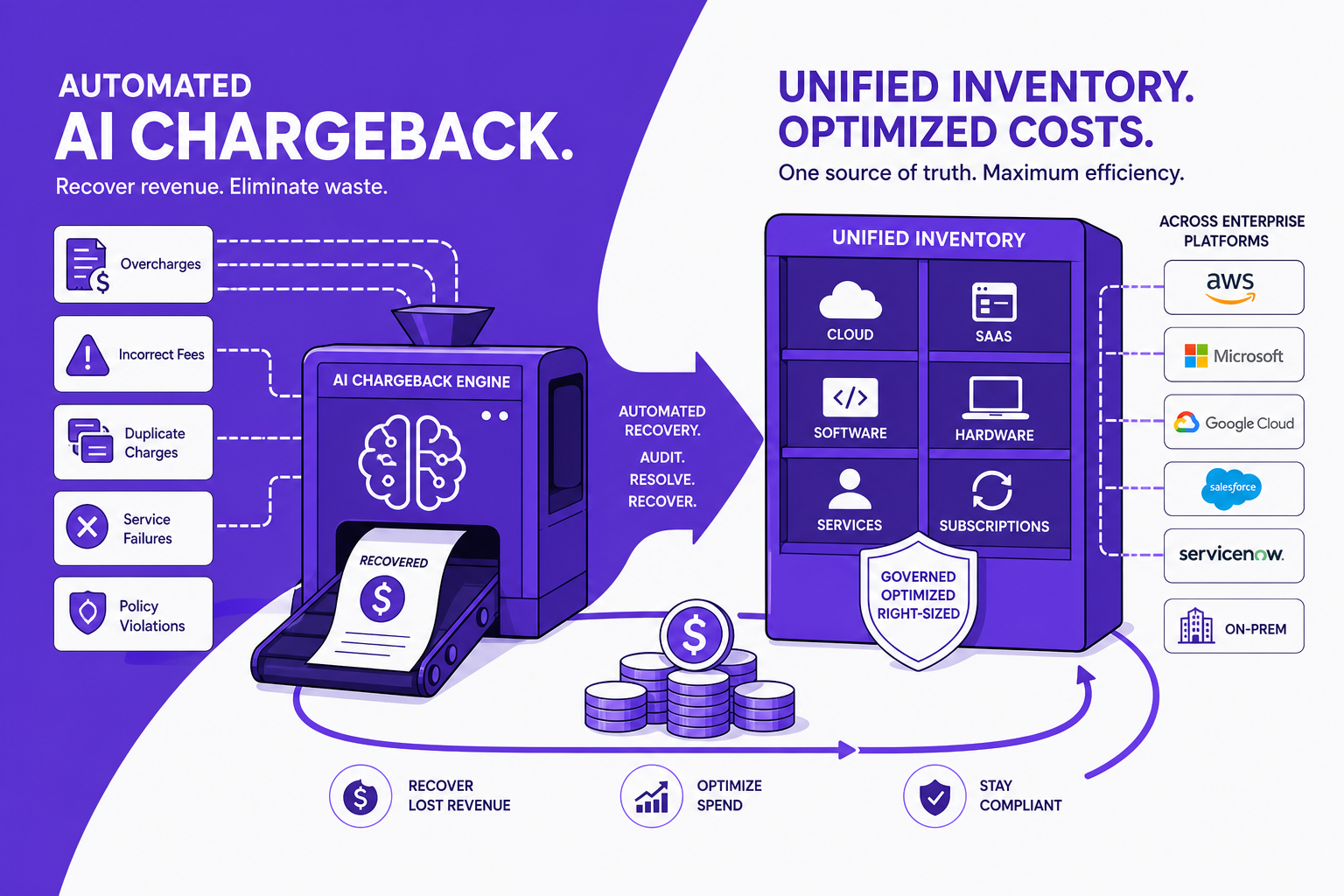
AI Custodian: Delivers token-level discovery and attribution, mapping AI features across the entire SaaS and multi-cloud estate. IT and Finance can now track exact AI usage per business outcome, down to the individual prompt.
Automated Guardrails: Applies policy-driven logic to pause idle training jobs, block unapproved models in production, and enforce per-team thresholding, protecting enterprises from budget blowouts.
Unified Inventory: Integrates with over 400 applications to surface embedded AI spend and optimize per-app budget allocation.
Chargeback and Showback: Normalizes AI spend by team, model, or feature, enabling precise allocation and strengthening financial discipline.
Anomaly Detection: Early warnings on usage surges with recommended optimizations ensure costs are kept under control long before invoices arrive.
Real-world impact:
A healthcare enterprise cut generative AI token spend by 38% in six months with automated prompt governance.
A financial firm achieved a 44% decrease in unit costs with dynamic chargeback reporting.
Enterprises are holding AI-driven cloud expenses flat, despite rapid feature expansion, through proactive discovery and policy controls.
Adopt continuous TCO modeling: Routinely update cost assumptions to reflect evolving workloads and new features.
Crush shadow AI and SaaS sprawl: Leverage automated discovery to find and manage hidden consumption, especially in AI-embedded SaaS.
Normalize costs with token-level attribution: Link spend directly to business outcomes for accuracy and accountability.
Enforce governance: Use automated policies to block unauthorized or expensive usage before it impacts the bottom line.
Integrate AI into FinOps: Real-time insights and automation drive proactive, not reactive, cost management.
Prioritize cost visibility: Make TCO data actionable for all stakeholders, from procurement and finance to engineering leads.
What is the total cost of ownership for enterprise AI?
Total cost of ownership (TCO) for enterprise AI encompasses not just licensing or hardware but the entire spectrum of costs required to deploy, operate, secure, and evolve AI across its lifecycle. This includes infrastructure, model retraining, compliance, change management, and all hidden costs from dynamic consumption.
How do you calculate AI ROI?
Calculate AI ROI by first building a detailed TCO model, then measuring business value delivered (efficiency gains, new revenue, or cost avoidance). ROI is typically (Business Benefit – Total Cost) / Total Cost, but the key lies in precise attribution of both costs and benefits for each AI use case.
Why is TCO important for AI projects?
TCO is critical because AI project costs are highly dynamic, variable, and extend long after initial deployment. Realistic TCO models enable accurate forecasting, better budget discipline, and faster course corrections, all of which are essential for demonstrating and maximizing ai roi.
What is included in an AI TCO model?
A comprehensive AI TCO model includes implementation services, ongoing operations, infrastructure and platform costs, change management and training, as well as security and governance. Each must be continuously monitored, updated, and attributed to business outcomes.
How can organizations optimize AI total cost of ownership?
Organizations optimize TCO by deploying automated cost discovery, policy-driven guardrails, chargeback models, and integrated anomaly detection, all of which ensure spending stays aligned with value delivered. Platforms like CloudNuro enable cost governance at every level of the stack for sustainable AI ROI.
Maximizing the value of enterprise AI investments isn’t just about curbing spending, but about making every dollar accountable and traceable to strategic business results. A robust TCO model is vital for modern IT and finance leaders to unlock deep AI insights, maintain governance, and foster a culture of cost-conscious innovation.
CloudNuro empowers technology leaders to build AI-aware TCO frameworks, enforce best-practice governance, and optimize cost at scale. The outcome: higher ai roi, greater compliance, and a future-ready operating model for the AI-powered enterprise.
About CloudNuro
CloudNuro is a leader in Enterprise AI Adoption Management, providing enterprises with unmatched visibility, governance, and cost optimization. Recognized twice in a row in the SaaS Management Platforms category and named a Leader in the SoftwareReviews Data Quadrant, CloudNuro is trusted by global enterprises and government agencies to bring financial discipline to SaaS, cloud, and AI. Trusted by enterprises, CloudNuro provides centralized SaaS inventory, license optimization, and renewal management along with advanced cost allocation and chargeback, giving IT and Finance leaders the visibility, control, and cost-conscious culture needed to drive financial discipline.
Request a no cost, no obligation free assessment —just 15 minutes to savings!
Get StartedThe rise of enterprise AI has undeniably redefined what it means to generate business value from technology investments. For CIOs, CTOs, and enterprise technology leaders, ensuring AI delivers a clear return on investment (ai roi) means much more than simply estimating licensing fees or hardware expenditure. It demands a rigorous approach to modeling the Total Cost of Ownership (TCO) for artificial intelligence across the full project lifecycle.
This comprehensive guide walks through the strategic considerations, pitfalls, and best practices for building a robust AI TCO model. With real-world insights and data points, we’ll explore cost components often overlooked, calculation frameworks that drive better AI ROI, and how leaders are using CloudNuro to align technology spend with business outcomes.
Total Cost of Ownership for enterprise AI extends far beyond the upfront costs of infrastructure or initial deployment. In fact, enterprise AI TCO is commonly 2x to 4x the initial platform licensing cost, averaging a 3.2x multiplier over the project’s lifecycle. The most significant investments arise from continuous operations, retraining, compliance, and change management, often incurred months or years after go-live.
At its core, a proficient AI TCO model factors in the entire expense landscape:
Direct costs: Infrastructure, compute, data storage, licensing, and integration.
Ongoing operations: Model retraining, monitoring, and support.
Change management: User training, process refinement, and policy updates.
Security and governance: Safeguards for sensitive data, compliance, audit readiness.
Hidden and variable costs: Costs from evolving model consumption, dynamic token pricing, or unmanaged workloads that drive budget overruns.
Statistics show that data engineering alone can consume 25% to 40% of total AI spend, while model maintenance adds an extra 15% to 30%. More telling, 68% of projects overshoot their initial budgets by 50% or more due to underestimated operational costs and unforeseen scale.
The pressure on technology leaders to demonstrate ai roi continues to escalate as generative AI and inference-heavy workloads become mission-critical. Yet the unique cost structure of enterprise AI is catching many off guard:
Unpredictable scaling: AI-driven applications can generate exponential compute consumption based on user interactions and prompt complexity.
Hidden SaaS costs: Embedded AI features are often licensed on a usage or token basis and buried within enterprise SaaS subscriptions, undermining traditional budgeting.
Compliance and security: Ongoing costs for regulatory adherence and incident response quickly mount but are rarely anticipated in project proposals.
A mature TCO model provides:
Realistic budgeting: By capturing all direct, indirect, and hidden expenses.
Accurate forecasting: Reducing the risk of misestimating costs, an issue experienced by more than 85% of organizations.
Governance insight: Supporting policy-driven guardrails and cost optimization before overruns occur.
According to enterprise budget allocation data, a best-practice TCO model segments costs into:
Implementation Services (35-45%): Data engineering, integration, and initial setup.
Ongoing Operations (20-30%): Model monitoring, retraining, prompt engineering, and support.
Infrastructure and Platform (20-25%): Cloud services, compute, storage, and network resources.
Change Management & Training (12-18%): Upskilling teams, process changes, stakeholder onboarding.
Security & Governance (10-15%): Compliance management, audit preparedness, security controls, token-level attribution.
This TCO framework empowers organizations to consider the full life cycle; not just the deployment, but the long-term financial obligations as well.
A robust AI TCO model is the linchpin for calculating clear ai roi. Leaders must move beyond back-of-the-envelope estimates to holistic financial modeling, including:
Establishing baselines: Start with a granular inventory of all current and forecasted AI workloads, both obvious (dedicated models) and hidden (AI-augmented SaaS features).
Mapping direct and indirect costs: Use automated discovery and attribution across cloud and SaaS portfolios. Remember: 75% of AI-driven enterprises cite a lack of token attribution as their top chargeback challenge.
Projecting future costs: Incorporate scaling effects, retraining schedules, compliance needs, and evolving data privacy landscapes.
Attributing cost to outcomes: Use metric-driven frameworks to quantify savings, efficiency gains, or new revenue attributable to each AI-enabled use case.
Industry data reveals that organizations that deploy chargeback and showback methodologies linked to token-level usage can cut unit costs by over 40% and vastly improve compliance.
Failure to accurately model AI’s TCO leaves organizations exposed to sudden overruns and diminishing AI ROI:
Unmanaged infrastructure: Idle compute and orphaned training workloads can drive up cloud bills by 30% or more.
Shadow AI: Hidden adoption of AI features inside common business platforms leads to unmonitored spend.
Lack of real-time guardrails: Without automated policies to enforce budget thresholds and block non-approved models, scaling can spiral.
Ongoing model operations: Retraining, drift prevention, and fine-tuning often require sustained resource allocation rarely included in initial planning.
CloudNuro provides enterprise platforms tailored for maximum cost visibility, optimization, and AI cost governance:
AI Custodian: Delivers token-level discovery and attribution, mapping AI features across the entire SaaS and multi-cloud estate. IT and Finance can now track exact AI usage per business outcome, down to the individual prompt.
Automated Guardrails: Applies policy-driven logic to pause idle training jobs, block unapproved models in production, and enforce per-team thresholding, protecting enterprises from budget blowouts.
Unified Inventory: Integrates with over 400 applications to surface embedded AI spend and optimize per-app budget allocation.
Chargeback and Showback: Normalizes AI spend by team, model, or feature, enabling precise allocation and strengthening financial discipline.
Anomaly Detection: Early warnings on usage surges with recommended optimizations ensure costs are kept under control long before invoices arrive.
Real-world impact:
A healthcare enterprise cut generative AI token spend by 38% in six months with automated prompt governance.
A financial firm achieved a 44% decrease in unit costs with dynamic chargeback reporting.
Enterprises are holding AI-driven cloud expenses flat, despite rapid feature expansion, through proactive discovery and policy controls.
Adopt continuous TCO modeling: Routinely update cost assumptions to reflect evolving workloads and new features.
Crush shadow AI and SaaS sprawl: Leverage automated discovery to find and manage hidden consumption, especially in AI-embedded SaaS.
Normalize costs with token-level attribution: Link spend directly to business outcomes for accuracy and accountability.
Enforce governance: Use automated policies to block unauthorized or expensive usage before it impacts the bottom line.
Integrate AI into FinOps: Real-time insights and automation drive proactive, not reactive, cost management.
Prioritize cost visibility: Make TCO data actionable for all stakeholders, from procurement and finance to engineering leads.
What is the total cost of ownership for enterprise AI?
Total cost of ownership (TCO) for enterprise AI encompasses not just licensing or hardware but the entire spectrum of costs required to deploy, operate, secure, and evolve AI across its lifecycle. This includes infrastructure, model retraining, compliance, change management, and all hidden costs from dynamic consumption.
How do you calculate AI ROI?
Calculate AI ROI by first building a detailed TCO model, then measuring business value delivered (efficiency gains, new revenue, or cost avoidance). ROI is typically (Business Benefit – Total Cost) / Total Cost, but the key lies in precise attribution of both costs and benefits for each AI use case.
Why is TCO important for AI projects?
TCO is critical because AI project costs are highly dynamic, variable, and extend long after initial deployment. Realistic TCO models enable accurate forecasting, better budget discipline, and faster course corrections, all of which are essential for demonstrating and maximizing ai roi.
What is included in an AI TCO model?
A comprehensive AI TCO model includes implementation services, ongoing operations, infrastructure and platform costs, change management and training, as well as security and governance. Each must be continuously monitored, updated, and attributed to business outcomes.
How can organizations optimize AI total cost of ownership?
Organizations optimize TCO by deploying automated cost discovery, policy-driven guardrails, chargeback models, and integrated anomaly detection, all of which ensure spending stays aligned with value delivered. Platforms like CloudNuro enable cost governance at every level of the stack for sustainable AI ROI.
Maximizing the value of enterprise AI investments isn’t just about curbing spending, but about making every dollar accountable and traceable to strategic business results. A robust TCO model is vital for modern IT and finance leaders to unlock deep AI insights, maintain governance, and foster a culture of cost-conscious innovation.
CloudNuro empowers technology leaders to build AI-aware TCO frameworks, enforce best-practice governance, and optimize cost at scale. The outcome: higher ai roi, greater compliance, and a future-ready operating model for the AI-powered enterprise.
About CloudNuro
CloudNuro is a leader in Enterprise AI Adoption Management, providing enterprises with unmatched visibility, governance, and cost optimization. Recognized twice in a row in the SaaS Management Platforms category and named a Leader in the SoftwareReviews Data Quadrant, CloudNuro is trusted by global enterprises and government agencies to bring financial discipline to SaaS, cloud, and AI. Trusted by enterprises, CloudNuro provides centralized SaaS inventory, license optimization, and renewal management along with advanced cost allocation and chargeback, giving IT and Finance leaders the visibility, control, and cost-conscious culture needed to drive financial discipline.
Request a no cost, no obligation free assessment - just 15 minutes to savings!
Get StartedWe're offering complimentary ServiceNow license assessments to only 25 enterprises this quarter who want to unlock immediate savings without disrupting operations.
Get Free AssessmentGet Started




CloudNuro Corp
1755 Park St. Suite 207
Naperville, IL 60563
Phone : +1-630-277-9470
Email: info@cloudnuro.com





.webp)

Recognized Leader in SaaS Management Platforms by Info-Tech SoftwareReviews


.svg)