

Sign Up
Thank you for Submitting!

Artificial intelligence adoption is no longer an isolated pilot project, as generative tools have firmly rooted themselves in corporate environments globally. The rapid deployment of these transformative capabilities brings a substantial financial reality directly to the forefront for executives. Accurately tracking and controlling the microsoft copilot cost is now a critical board-level priority for major corporations. IT and finance leaders are realizing that scaling artificial intelligence capabilities requires rigorous governance to prevent millions of dollars in budget bleeding.
When organizations deploy these advanced capabilities across their entire workforce, they often underestimate the downstream financial impact. The transition to broad corporate licensing models exposes enterprises to massive ungoverned software spending. Establishing preventative controls before this category spirals out of control remains the fundamental challenge of modern software administration.
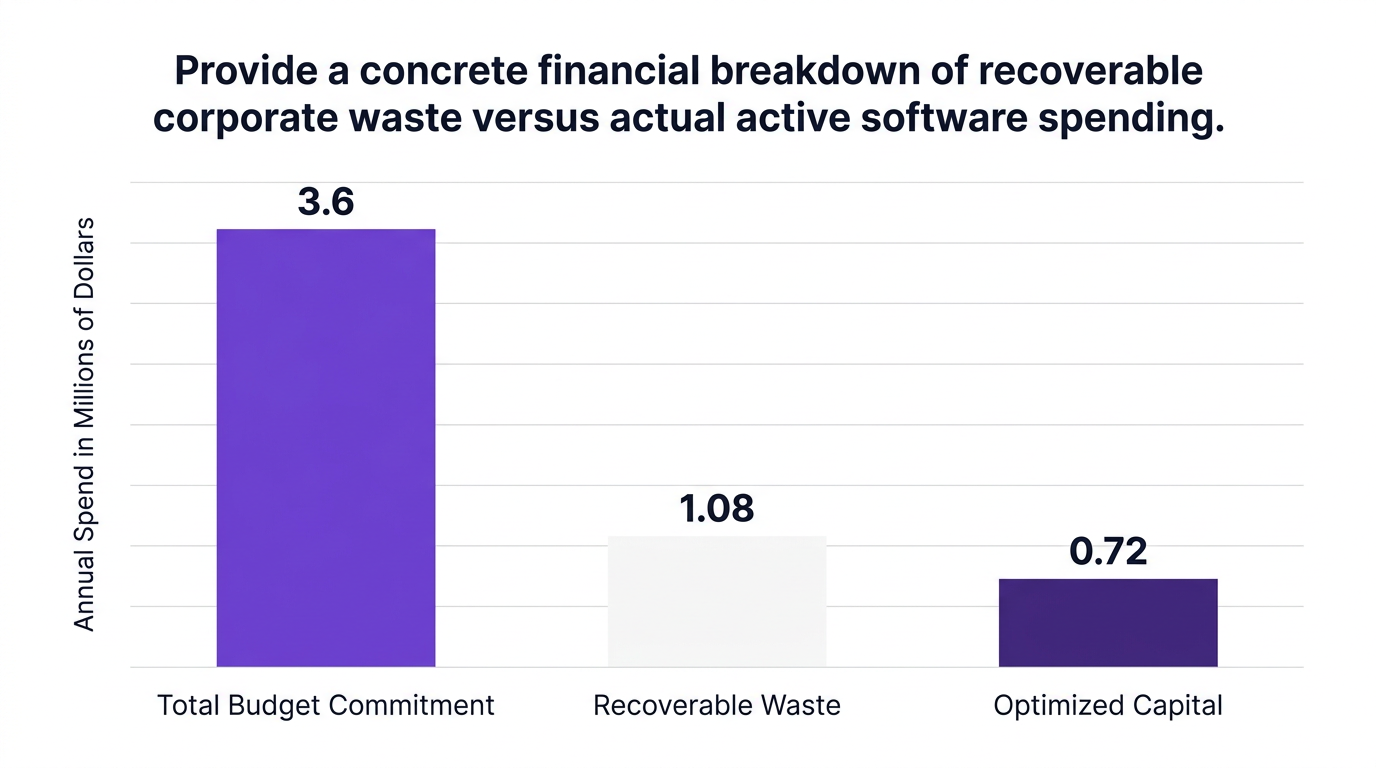
The financial threshold for bringing generative capabilities to the workforce is rising considerably. The microsoft 365 copilot enterprise pricing $30 per user establishes a significant baseline for organizational spend. Because these models require a mandatory annual commitment for commercial customers starting in 2026, the specific budget impact multiplies incredibly fast. For a standard corporate deployment of 10,000 seats, list price commitments amount to a $3.6 million annual line item.
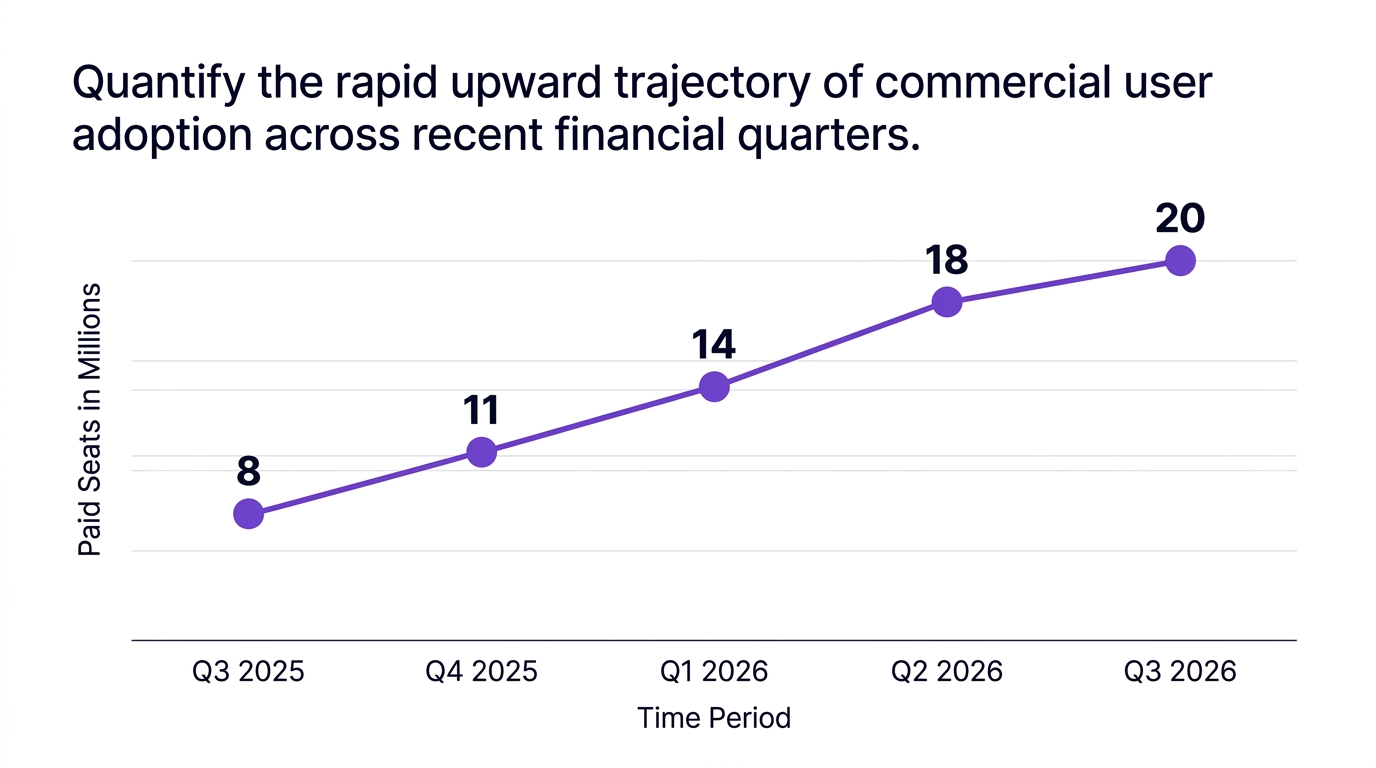
Growth metrics show incredible adoption speeds across all verticals. Recent industry earnings reports indicate that these productivity tools are now utilized by over 20 million paid commercial seats globally. Forecasters estimate annualized commercial revenue for these specific features will reach 5 billion to 8 billion dollars by 2026. This exponential growth turns any m365 copilot budget impact 2026 forecasts into urgent executive conversations that demand immediate strategic planning.
The problem compounds when organizations compare distinct organizational tiers. Evaluating microsoft copilot business pricing $21 per user against higher enterprise licensing tiers creates complex procurement scenarios. Navigating the underlying discrepancies in copilot business vs enterprise license cost forces IT procurement teams to actively manage their m365 copilot enterprise spend analysis. Without deep visibility into exact usage statistics, organizations will continue to pay a premium for features their workforce does not effectively utilize.
Launching an artificial intelligence capability to every single employee initially sounds like a strong productivity strategy, but it usually results in significant copilot license waste. Adoption studies from leading technology researchers show that 30 to 40 percent of licenses go unused in the first 90 days when organizations ignore phased rollout methodologies. Organizations are rushing to meet m365 copilot license requirements without verifying if internal teams are prepared to adopt the technology fully.
When calculating the microsoft 365 copilot total cost of ownership, unused seats act as a massive drag on actual financial returns. Each inactive seat represents $360 per year in pure waste based on standard enterprise estimates. In a large corporate environment, that 30 percent inactivity rate translates directly into a 1.08 million dollar financial leak. Performing a meticulous copilot shelfware analysis is the only proven method to expose and correct these hidden expenses.
An anonymized enterprise case study from leading IT management researchers showcases exactly what happens in the field without active supervision. A major financial services firm purchased advanced licensing for all 5,000 employees but quickly discovered a 38 percent inactivity rate. By implementing monthly usage reviews and reallocating resources, the firm eliminated $684,000 in annualized waste within six months. This data illustrates that true financial optimization requires continuous administrative tracking.
Correcting these massive budget leaks demands a critical operational shift from blanket rollouts to usage-based allocations. The most effective copilot license rationalization strategies gate software expansion based on strict internal adoption metrics. Companies must prioritize active copilot change management, dedicating internal resources to training users while actively removing licenses from individuals who fail to adopt the tools consistently.
Enterprise leaders require a strictly reliable copilot cost calculator for enterprises to predict true budgetary needs for upcoming fiscal quarters. Active copilot governance ensures that highly specialized functions retain their necessary licenses while casual users utilize standard communication tiers or browser-based alternatives. A global healthcare provider recently applied role-based assignments and monthly administrative reviews to cut their total shelfware by 18 percent, ultimately recovering 432,000 dollars annually.
Understanding the true copilot adoption cost involves evaluating both the software price tag and the internal resources required to drive utilization forward. Corporate leaders must recognize that purchasing the license is only the first step. When organizations embrace structured usage policies, they can secure a return on investment that exceeds the base licensing fee by five to eight times, according to current market analysis.
Beyond the base user licenses, enterprises must account for the infrastructure required to build specialized internal capabilities. Addressing the copilot studio pricing $200 per tenant pack introduces an entirely new layer of administrative difficulty. Custom corporate agents and localized applications drive unpredictable cloud usage that standard dashboards struggle to quantify accurately.
Managing these specific add-ons makes the overarching software budget incredibly opaque for IT directors. Without dedicated tooling to map distinct tenant packs back to specific business units, finance teams risk approving duplicate capabilities across disjointed departments. Centralizing this data ensures that customized developments remain financially viable and directly tied to measurable business outcomes rather than functioning as unmonitored experiments.
Managing complex software subscriptions manually via decentralized spreadsheets is completely impossible for modern technology leaders. Proper m365 copilot saas management requires enterprise-grade automation and continuous tracking. CloudNuro functions as the premier automated platform that transforms compliance, strategic control, and financial visibility into a unified dashboard.
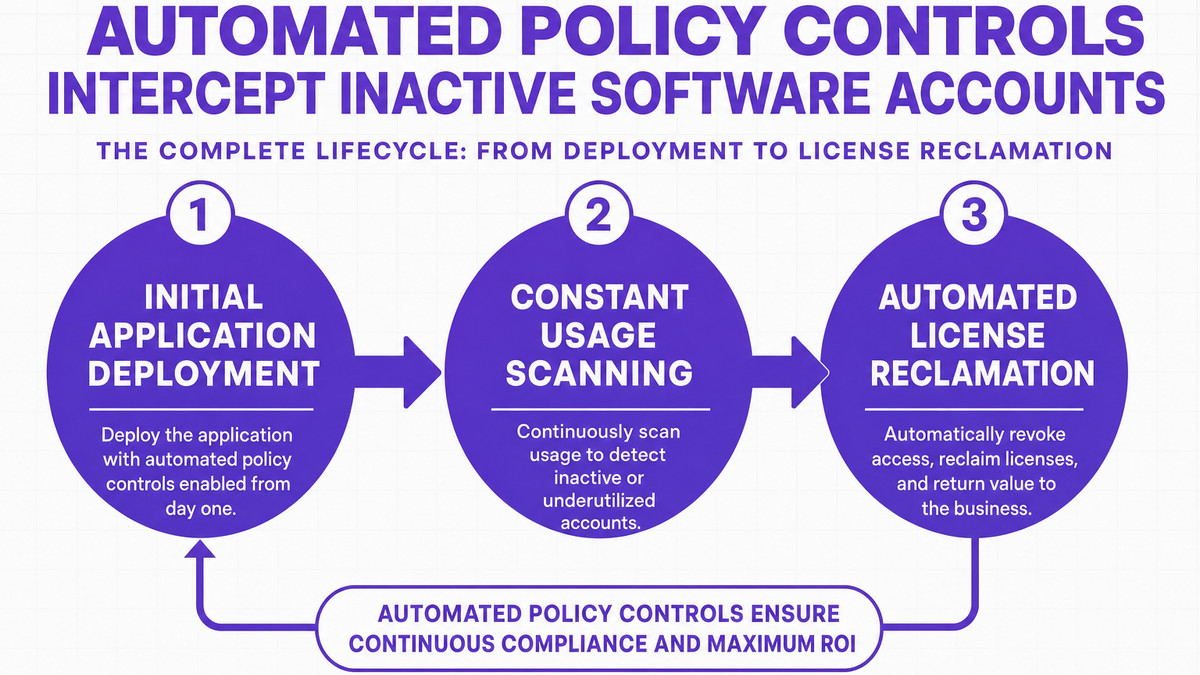
CloudNuro's Microsoft 365 Custodian provides strictly automated microsoft license optimization alongside robust real-time usage tracking. Through automated user access reviews, the platform instantly surfaces underused seats and reclaims them before the organization pays for inactive capabilities. IT teams can set explicit rules that guarantee only high-value roles retain broad artificial intelligence access. Deploying these solutions directly supports the core tenets of how cloudnuro helps cios regain control of microsoft 365 spend.
Furthermore, CloudNuro offers deep financial visibility through dedicated finops services and Cloud Commitment Optimization workflows. These specific features allow enterprises to forecast artificial intelligence spending accurately, model complex deployment scenarios, and prevent budget overruns tied to the upcoming m365 copilot price increase july 2026 events. Readers who reviewed the microsoft 365 pricing guide 2025 know that anticipating these specific financial shifts is absolutely essential for corporate survival.
For commercial enterprises, the baseline cost sits at an expected threshold of 30 dollars per user per month. This specific pricing tier requires an annual commitment, meaning companies must evaluate their budget capacities stringently before deploying the application organization-wide.
The primary cost factors include base monthly licensing, comprehensive internal training investments, active change management efforts, and the unseen financial drag of inactive shelfware. Unused administrative software routinely inflates overall corporate budgets by 20 to 40 percent if left completely unmonitored.
Deploying automated software tracking helps quickly single out inactive corporate accounts. By running precise monthly user access reviews, IT administrators can confidently unassign costly applications from disengaged users and strategically shift those licenses to individuals who desperately require them.
Utilizing a platform like the Unified Cloud Custodian provides continuous compliance monitoring and unparalleled structural security. Organizations should rigorously enforce role-segmented assignment policies that grant advanced analytical features strictly to professionally validated business profiles.
With commercial revenue expectations soaring dramatically, enterprises face incredible external pressure to justify their technology software line items. Ungoverned deployment scenarios easily result in massive amounts of annualized internal waste, making preventative optimization fundamentally mandatory for strong fiscal health.
The million dollar problem of completely unmanaged artificial intelligence spending is thoroughly preventable today. Implementing rigorous administrative controls and maintaining a disciplined microsoft copilot cost strategy ensures organizations derive genuine practical value from their corporate technology investments. IT and finance executives must securely shift away from default blanket software deployments and confidently transition toward highly active usage monitoring frameworks. By engaging CloudNuro's powerful cost optimization capabilities, your enterprise can completely eliminate redundant subscription expenditures and foster a deeply responsible culture of software utilization. Take dedicated control of your corporate software licensing right now to secure your modern financial future.
About CloudNuro
CloudNuro is a leader in Enterprise SaaS Management Platforms, providing enterprises with unmatched visibility, governance, and cost optimization. Recognized twice in a row in the SaaS Management Platforms category and named a Leader in the SoftwareReviews Data Quadrant, CloudNuro is trusted by global enterprises and government agencies to bring financial discipline to SaaS, cloud, and AI. Trusted by enterprises such as Konica Minolta and Federal Signal, CloudNuro provides centralized SaaS inventory, license optimization, and renewal management along with advanced cost allocation and chargeback, giving IT and Finance leaders the visibility, control, and cost-conscious culture needed to drive financial discipline.
Request a no cost, no obligation free assessment —just 15 minutes to savings!
Get StartedArtificial intelligence adoption is no longer an isolated pilot project, as generative tools have firmly rooted themselves in corporate environments globally. The rapid deployment of these transformative capabilities brings a substantial financial reality directly to the forefront for executives. Accurately tracking and controlling the microsoft copilot cost is now a critical board-level priority for major corporations. IT and finance leaders are realizing that scaling artificial intelligence capabilities requires rigorous governance to prevent millions of dollars in budget bleeding.
When organizations deploy these advanced capabilities across their entire workforce, they often underestimate the downstream financial impact. The transition to broad corporate licensing models exposes enterprises to massive ungoverned software spending. Establishing preventative controls before this category spirals out of control remains the fundamental challenge of modern software administration.
The financial threshold for bringing generative capabilities to the workforce is rising considerably. The microsoft 365 copilot enterprise pricing $30 per user establishes a significant baseline for organizational spend. Because these models require a mandatory annual commitment for commercial customers starting in 2026, the specific budget impact multiplies incredibly fast. For a standard corporate deployment of 10,000 seats, list price commitments amount to a $3.6 million annual line item.
Growth metrics show incredible adoption speeds across all verticals. Recent industry earnings reports indicate that these productivity tools are now utilized by over 20 million paid commercial seats globally. Forecasters estimate annualized commercial revenue for these specific features will reach 5 billion to 8 billion dollars by 2026. This exponential growth turns any m365 copilot budget impact 2026 forecasts into urgent executive conversations that demand immediate strategic planning.
The problem compounds when organizations compare distinct organizational tiers. Evaluating microsoft copilot business pricing $21 per user against higher enterprise licensing tiers creates complex procurement scenarios. Navigating the underlying discrepancies in copilot business vs enterprise license cost forces IT procurement teams to actively manage their m365 copilot enterprise spend analysis. Without deep visibility into exact usage statistics, organizations will continue to pay a premium for features their workforce does not effectively utilize.
Launching an artificial intelligence capability to every single employee initially sounds like a strong productivity strategy, but it usually results in significant copilot license waste. Adoption studies from leading technology researchers show that 30 to 40 percent of licenses go unused in the first 90 days when organizations ignore phased rollout methodologies. Organizations are rushing to meet m365 copilot license requirements without verifying if internal teams are prepared to adopt the technology fully.
When calculating the microsoft 365 copilot total cost of ownership, unused seats act as a massive drag on actual financial returns. Each inactive seat represents $360 per year in pure waste based on standard enterprise estimates. In a large corporate environment, that 30 percent inactivity rate translates directly into a 1.08 million dollar financial leak. Performing a meticulous copilot shelfware analysis is the only proven method to expose and correct these hidden expenses.
An anonymized enterprise case study from leading IT management researchers showcases exactly what happens in the field without active supervision. A major financial services firm purchased advanced licensing for all 5,000 employees but quickly discovered a 38 percent inactivity rate. By implementing monthly usage reviews and reallocating resources, the firm eliminated $684,000 in annualized waste within six months. This data illustrates that true financial optimization requires continuous administrative tracking.
Correcting these massive budget leaks demands a critical operational shift from blanket rollouts to usage-based allocations. The most effective copilot license rationalization strategies gate software expansion based on strict internal adoption metrics. Companies must prioritize active copilot change management, dedicating internal resources to training users while actively removing licenses from individuals who fail to adopt the tools consistently.
Enterprise leaders require a strictly reliable copilot cost calculator for enterprises to predict true budgetary needs for upcoming fiscal quarters. Active copilot governance ensures that highly specialized functions retain their necessary licenses while casual users utilize standard communication tiers or browser-based alternatives. A global healthcare provider recently applied role-based assignments and monthly administrative reviews to cut their total shelfware by 18 percent, ultimately recovering 432,000 dollars annually.
Understanding the true copilot adoption cost involves evaluating both the software price tag and the internal resources required to drive utilization forward. Corporate leaders must recognize that purchasing the license is only the first step. When organizations embrace structured usage policies, they can secure a return on investment that exceeds the base licensing fee by five to eight times, according to current market analysis.
Beyond the base user licenses, enterprises must account for the infrastructure required to build specialized internal capabilities. Addressing the copilot studio pricing $200 per tenant pack introduces an entirely new layer of administrative difficulty. Custom corporate agents and localized applications drive unpredictable cloud usage that standard dashboards struggle to quantify accurately.
Managing these specific add-ons makes the overarching software budget incredibly opaque for IT directors. Without dedicated tooling to map distinct tenant packs back to specific business units, finance teams risk approving duplicate capabilities across disjointed departments. Centralizing this data ensures that customized developments remain financially viable and directly tied to measurable business outcomes rather than functioning as unmonitored experiments.
Managing complex software subscriptions manually via decentralized spreadsheets is completely impossible for modern technology leaders. Proper m365 copilot saas management requires enterprise-grade automation and continuous tracking. CloudNuro functions as the premier automated platform that transforms compliance, strategic control, and financial visibility into a unified dashboard.
CloudNuro's Microsoft 365 Custodian provides strictly automated microsoft license optimization alongside robust real-time usage tracking. Through automated user access reviews, the platform instantly surfaces underused seats and reclaims them before the organization pays for inactive capabilities. IT teams can set explicit rules that guarantee only high-value roles retain broad artificial intelligence access. Deploying these solutions directly supports the core tenets of how cloudnuro helps cios regain control of microsoft 365 spend.
Furthermore, CloudNuro offers deep financial visibility through dedicated finops services and Cloud Commitment Optimization workflows. These specific features allow enterprises to forecast artificial intelligence spending accurately, model complex deployment scenarios, and prevent budget overruns tied to the upcoming m365 copilot price increase july 2026 events. Readers who reviewed the microsoft 365 pricing guide 2025 know that anticipating these specific financial shifts is absolutely essential for corporate survival.
For commercial enterprises, the baseline cost sits at an expected threshold of 30 dollars per user per month. This specific pricing tier requires an annual commitment, meaning companies must evaluate their budget capacities stringently before deploying the application organization-wide.
The primary cost factors include base monthly licensing, comprehensive internal training investments, active change management efforts, and the unseen financial drag of inactive shelfware. Unused administrative software routinely inflates overall corporate budgets by 20 to 40 percent if left completely unmonitored.
Deploying automated software tracking helps quickly single out inactive corporate accounts. By running precise monthly user access reviews, IT administrators can confidently unassign costly applications from disengaged users and strategically shift those licenses to individuals who desperately require them.
Utilizing a platform like the Unified Cloud Custodian provides continuous compliance monitoring and unparalleled structural security. Organizations should rigorously enforce role-segmented assignment policies that grant advanced analytical features strictly to professionally validated business profiles.
With commercial revenue expectations soaring dramatically, enterprises face incredible external pressure to justify their technology software line items. Ungoverned deployment scenarios easily result in massive amounts of annualized internal waste, making preventative optimization fundamentally mandatory for strong fiscal health.
The million dollar problem of completely unmanaged artificial intelligence spending is thoroughly preventable today. Implementing rigorous administrative controls and maintaining a disciplined microsoft copilot cost strategy ensures organizations derive genuine practical value from their corporate technology investments. IT and finance executives must securely shift away from default blanket software deployments and confidently transition toward highly active usage monitoring frameworks. By engaging CloudNuro's powerful cost optimization capabilities, your enterprise can completely eliminate redundant subscription expenditures and foster a deeply responsible culture of software utilization. Take dedicated control of your corporate software licensing right now to secure your modern financial future.
About CloudNuro
CloudNuro is a leader in Enterprise SaaS Management Platforms, providing enterprises with unmatched visibility, governance, and cost optimization. Recognized twice in a row in the SaaS Management Platforms category and named a Leader in the SoftwareReviews Data Quadrant, CloudNuro is trusted by global enterprises and government agencies to bring financial discipline to SaaS, cloud, and AI. Trusted by enterprises such as Konica Minolta and Federal Signal, CloudNuro provides centralized SaaS inventory, license optimization, and renewal management along with advanced cost allocation and chargeback, giving IT and Finance leaders the visibility, control, and cost-conscious culture needed to drive financial discipline.
Request a no cost, no obligation free assessment - just 15 minutes to savings!
Get StartedWe're offering complimentary ServiceNow license assessments to only 25 enterprises this quarter who want to unlock immediate savings without disrupting operations.
Get Free AssessmentGet Started




CloudNuro Corp
1755 Park St. Suite 207
Naperville, IL 60563
Phone : +1-630-277-9470
Email: info@cloudnuro.com





.webp)

Recognized Leader in SaaS Management Platforms by Info-Tech SoftwareReviews


.svg)