

Sign Up
Thank you for Submitting!
Enterprises that have embraced large language model (LLM) powered AI for SaaS, cloud, and internal productivity are waking up to a new reality: every prompt is a spend event. For CIOs, CTOs, and IT leaders driving financial discipline, prompt optimization is now a strategic imperative, not just a tech tweak. In this deep dive, we unravel 12 tactical prompt engineering patterns that can carve out substantial cost savings through token reduction, all while strengthening your enterprise’s AI cost governance, compliance, and control.
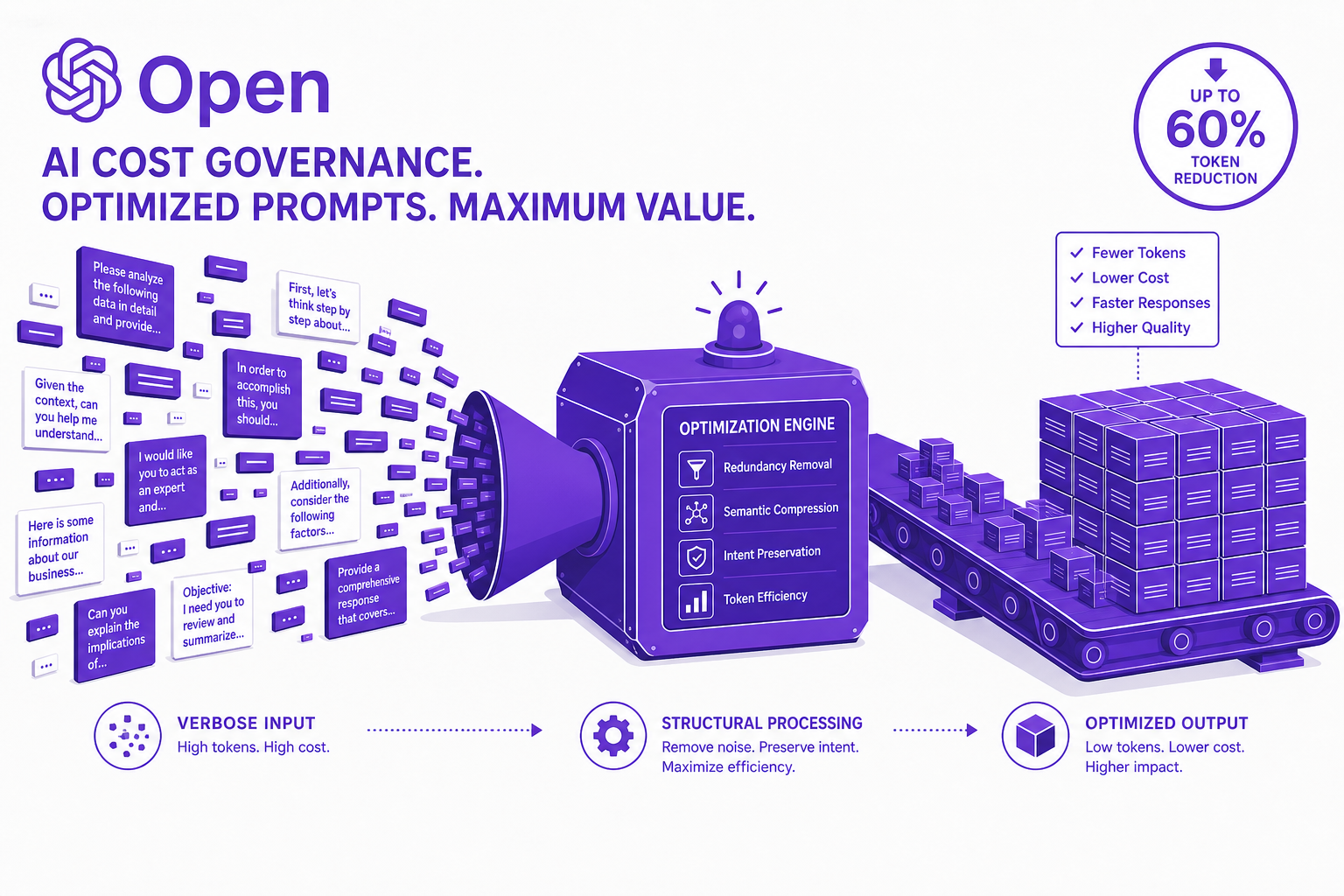
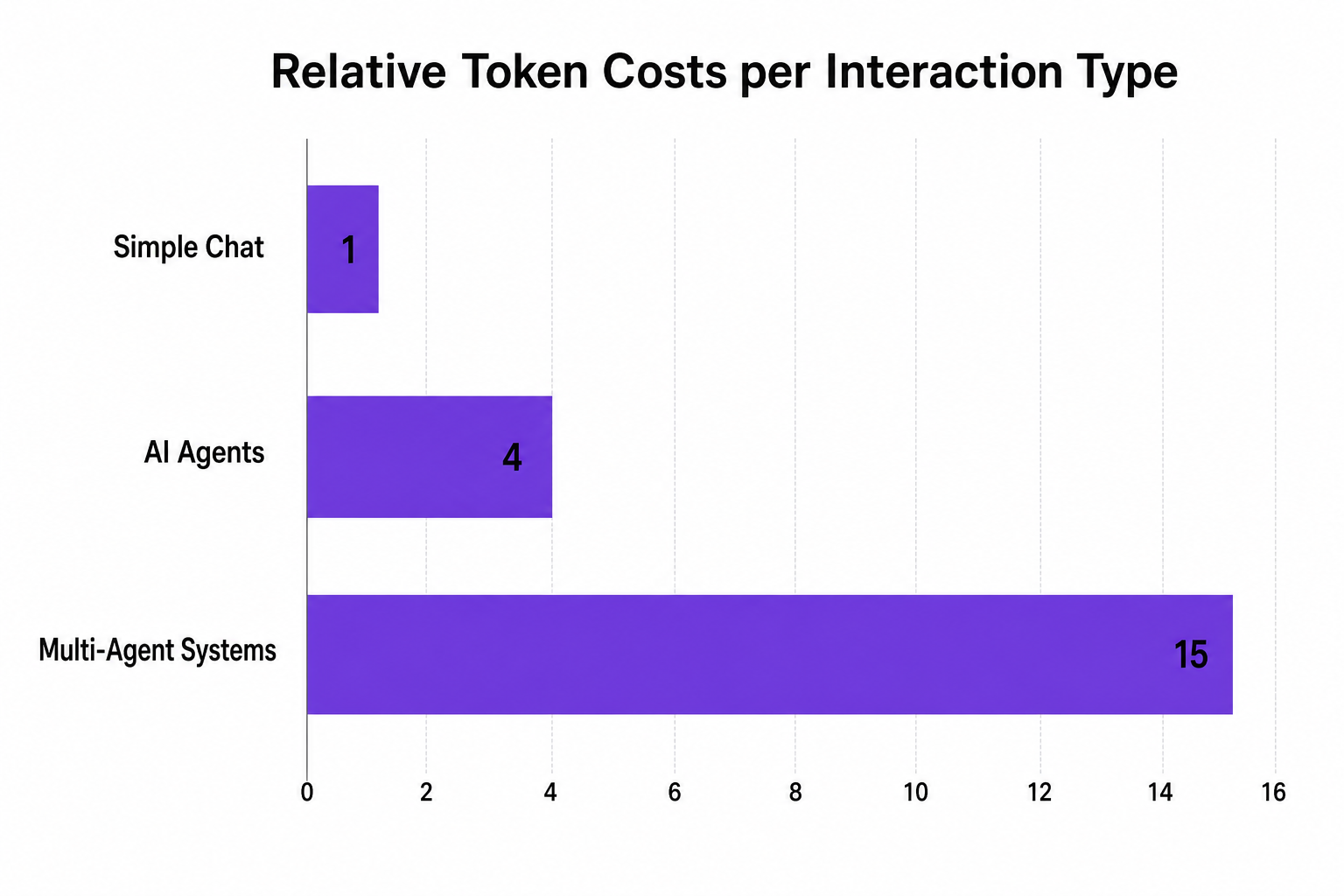
When every token processed by an LLM has a direct price tag, small inefficiencies quickly compound into runaway costs. Prompt waste not only drains budgets but also muddles usage analytics, making governance harder. Recent studies highlight that AI agents can require up to 15x more tokens than standard chat, while verbose output and unnecessary tool calls silently tax your operational efficiency.
The good news: cost-efficient prompt engineering delivers more than savings. It also strengthens compliance, governance, and transparency for every AI touchpoint across SaaS and cloud environments, perfectly aligned with CloudNuro’s mission of disciplined, value-focused AI adoption.
Prompt cost engineering is emerging as a specialized practice, treating cost on par with quality and latency. Leading organizations are systematizing optimization to:
Measure baseline usage before applying compression and routing
Route requests dynamically across providers and models to exploit real-time token pricing
Automate budget enforcement, prompt audits, and hierarchical spending limits
With the exponential adoption of LLMs like Microsoft Copilot at scale, visibility and governance controls are essential. CloudNuro’s extensive application-level analytics, frequency tracking, and chargeback automation deliver that critical foundation.
System instructions are the largest fixed cost in any AI request. Merging duplicate rules and trimming irrelevant instructions can save between 30 and 80 tokens per prompt without impacting quality.
Overly verbose role definitions add invisible bloat. Structured, shorthand task roles often save 20, 30 tokens per invocation while keeping model behavior consistent.
Polite phrases like “please” or “could you” generate up to 30% token savings simply by omitting indirect, non-instructional text. This is pure cost efficiency.
Every additional word multiplies the cost: reducing average output by 40% can yield 20, 30% overall savings. Clarify expectations for bullet points, code comments, or concise formats.
Instead of bulk data dumps, retrieve only minimally relevant, curated data. This sharply limits unnecessary tool use and suppresses excess token burn.
Enforce strict instructions around desired output length (word/character limits). Premium-priced output tokens are routinely wasted on verbose, unstructured responses otherwise.
Amalgamate multiple related queries into a single call. This dilutes the fixed cost of prompt setup across multiple outputs, maximizing efficiency.
Send simple or repetitive tasks to smaller models. Studies show 95% of frontier model quality can be achieved while only 26% of calls need to hit the most expensive LLM tier.
Monitor bots and service accounts for inefficient usage, as they often generate outsized token consumption compared to real users. CloudNuro’s Non-Human Identity tracking is built for this.
Cache responses for recurring requests so identical prompts are not reprocessed (and re-billed) repeatedly. This is especially powerful for reference lookups and decision trees.
Integrate chargeback by synchronizing LLM usage to departments, cost centers, and GL codes. CloudNuro’s automation eliminates spreadsheet-plagued workflows and prevents “shadow spend.”
Treat prompt libraries as living code: automate regular audits, version history, and deprecation to prevent prompt bloat and accidental creep in output verbosity.
With SaaS, cloud, and AI costs increasingly blended and opaque, CloudNuro enables CIOs, IT, and Finance leaders to:
Monitor prompt frequency, usage categorization, and output analytics for tools like Microsoft Copilot
Replace manual chargeback spreadsheets with precise, automated allocation mapped to department owners
Detect and manage both human users and bots with Non-Human Identity tracking
Enforce cost discipline with secure, API-driven governance that flags risky usage instantly
A typical Proof of Value implementation delivers actionable insights in 3 to 4 weeks, unlocking real optimization with minimal lift and seamless integrations across your enterprise stack.
Focus on trimming unnecessary language, compressing system prompts, controlling output length, batching requests, routing to the appropriate model, and rigorously auditing prompt libraries. Automated analytics and chargeback systems, like CloudNuro’s platform, magnify the benefit.
Every token increases the price of usage; AI agents can be 4, 15x more expensive than standard chat tasks. Reducing token count directly limits budget drain, keeps compliance tight, and eliminates silent sources of waste.
Rely on tactical compression patterns: remove pleasantries, tighten role definitions, specify output constraints, use caching, and enforce regular audits. These tactics can compound savings from 20% to over 80% across workflows.
The proven move is to combine compression (manual and structural), strict output constraints, smart routing, and context minimization. Regular governance automation ensures cost savings persist.
Prompt engineering is the key lever for balancing cost, output quality, and compliance in enterprise AI. Without disciplined design and monitoring, AI investments quickly devolve into uncontrollable spend and shadow IT.
Prompt engineering has taken center stage as the fastest win for AI cost efficiency, governance, and operational quality. By embedding tactical token-reduction patterns into your enterprise FinOps playbook, and leveraging CloudNuro’s automation for analytics, chargeback, and security, you drive maximum SaaS and AI value with full compliance and control.
Looking to optimize, govern, and future-proof your enterprise’s AI investments? Take control of your LLM token economy with CloudNuro.
About CloudNuro
CloudNuro is a leader in Enterprise AI Adoption Management, providing enterprises with unmatched visibility, governance, and cost optimization. Recognized twice in a row in the SaaS Management Platforms category and named a Leader in the SoftwareReviews Data Quadrant, CloudNuro is trusted by global enterprises and government agencies to bring financial discipline to SaaS, cloud, and AI. Trusted by enterprises, CloudNuro provides centralized SaaS inventory, license optimization, and renewal management along with advanced cost allocation and chargeback, giving IT and Finance leaders the visibility, control, and cost-conscious culture needed to drive financial discipline.
Request a no cost, no obligation free assessment —just 15 minutes to savings!
Get StartedEnterprises that have embraced large language model (LLM) powered AI for SaaS, cloud, and internal productivity are waking up to a new reality: every prompt is a spend event. For CIOs, CTOs, and IT leaders driving financial discipline, prompt optimization is now a strategic imperative, not just a tech tweak. In this deep dive, we unravel 12 tactical prompt engineering patterns that can carve out substantial cost savings through token reduction, all while strengthening your enterprise’s AI cost governance, compliance, and control.
When every token processed by an LLM has a direct price tag, small inefficiencies quickly compound into runaway costs. Prompt waste not only drains budgets but also muddles usage analytics, making governance harder. Recent studies highlight that AI agents can require up to 15x more tokens than standard chat, while verbose output and unnecessary tool calls silently tax your operational efficiency.
The good news: cost-efficient prompt engineering delivers more than savings. It also strengthens compliance, governance, and transparency for every AI touchpoint across SaaS and cloud environments, perfectly aligned with CloudNuro’s mission of disciplined, value-focused AI adoption.
Prompt cost engineering is emerging as a specialized practice, treating cost on par with quality and latency. Leading organizations are systematizing optimization to:
Measure baseline usage before applying compression and routing
Route requests dynamically across providers and models to exploit real-time token pricing
Automate budget enforcement, prompt audits, and hierarchical spending limits
With the exponential adoption of LLMs like Microsoft Copilot at scale, visibility and governance controls are essential. CloudNuro’s extensive application-level analytics, frequency tracking, and chargeback automation deliver that critical foundation.
System instructions are the largest fixed cost in any AI request. Merging duplicate rules and trimming irrelevant instructions can save between 30 and 80 tokens per prompt without impacting quality.
Overly verbose role definitions add invisible bloat. Structured, shorthand task roles often save 20, 30 tokens per invocation while keeping model behavior consistent.
Polite phrases like “please” or “could you” generate up to 30% token savings simply by omitting indirect, non-instructional text. This is pure cost efficiency.
Every additional word multiplies the cost: reducing average output by 40% can yield 20, 30% overall savings. Clarify expectations for bullet points, code comments, or concise formats.
Instead of bulk data dumps, retrieve only minimally relevant, curated data. This sharply limits unnecessary tool use and suppresses excess token burn.
Enforce strict instructions around desired output length (word/character limits). Premium-priced output tokens are routinely wasted on verbose, unstructured responses otherwise.
Amalgamate multiple related queries into a single call. This dilutes the fixed cost of prompt setup across multiple outputs, maximizing efficiency.
Send simple or repetitive tasks to smaller models. Studies show 95% of frontier model quality can be achieved while only 26% of calls need to hit the most expensive LLM tier.
Monitor bots and service accounts for inefficient usage, as they often generate outsized token consumption compared to real users. CloudNuro’s Non-Human Identity tracking is built for this.
Cache responses for recurring requests so identical prompts are not reprocessed (and re-billed) repeatedly. This is especially powerful for reference lookups and decision trees.
Integrate chargeback by synchronizing LLM usage to departments, cost centers, and GL codes. CloudNuro’s automation eliminates spreadsheet-plagued workflows and prevents “shadow spend.”
Treat prompt libraries as living code: automate regular audits, version history, and deprecation to prevent prompt bloat and accidental creep in output verbosity.
With SaaS, cloud, and AI costs increasingly blended and opaque, CloudNuro enables CIOs, IT, and Finance leaders to:
Monitor prompt frequency, usage categorization, and output analytics for tools like Microsoft Copilot
Replace manual chargeback spreadsheets with precise, automated allocation mapped to department owners
Detect and manage both human users and bots with Non-Human Identity tracking
Enforce cost discipline with secure, API-driven governance that flags risky usage instantly
A typical Proof of Value implementation delivers actionable insights in 3 to 4 weeks, unlocking real optimization with minimal lift and seamless integrations across your enterprise stack.
Focus on trimming unnecessary language, compressing system prompts, controlling output length, batching requests, routing to the appropriate model, and rigorously auditing prompt libraries. Automated analytics and chargeback systems, like CloudNuro’s platform, magnify the benefit.
Every token increases the price of usage; AI agents can be 4, 15x more expensive than standard chat tasks. Reducing token count directly limits budget drain, keeps compliance tight, and eliminates silent sources of waste.
Rely on tactical compression patterns: remove pleasantries, tighten role definitions, specify output constraints, use caching, and enforce regular audits. These tactics can compound savings from 20% to over 80% across workflows.
The proven move is to combine compression (manual and structural), strict output constraints, smart routing, and context minimization. Regular governance automation ensures cost savings persist.
Prompt engineering is the key lever for balancing cost, output quality, and compliance in enterprise AI. Without disciplined design and monitoring, AI investments quickly devolve into uncontrollable spend and shadow IT.
Prompt engineering has taken center stage as the fastest win for AI cost efficiency, governance, and operational quality. By embedding tactical token-reduction patterns into your enterprise FinOps playbook, and leveraging CloudNuro’s automation for analytics, chargeback, and security, you drive maximum SaaS and AI value with full compliance and control.
Looking to optimize, govern, and future-proof your enterprise’s AI investments? Take control of your LLM token economy with CloudNuro.
About CloudNuro
CloudNuro is a leader in Enterprise AI Adoption Management, providing enterprises with unmatched visibility, governance, and cost optimization. Recognized twice in a row in the SaaS Management Platforms category and named a Leader in the SoftwareReviews Data Quadrant, CloudNuro is trusted by global enterprises and government agencies to bring financial discipline to SaaS, cloud, and AI. Trusted by enterprises, CloudNuro provides centralized SaaS inventory, license optimization, and renewal management along with advanced cost allocation and chargeback, giving IT and Finance leaders the visibility, control, and cost-conscious culture needed to drive financial discipline.
Request a no cost, no obligation free assessment - just 15 minutes to savings!
Get StartedWe're offering complimentary ServiceNow license assessments to only 25 enterprises this quarter who want to unlock immediate savings without disrupting operations.
Get Free AssessmentGet Started




CloudNuro Corp
1755 Park St. Suite 207
Naperville, IL 60563
Phone : +1-630-277-9470
Email: info@cloudnuro.com





.webp)

Recognized Leader in SaaS Management Platforms by Info-Tech SoftwareReviews
.png)


%20Governance%20Tools%20for%20IT%20Leaders%20in%202025.png)
.svg)