

Sign Up
Thank you for Submitting!
Microsoft 365 software asset management is no longer just a back-office audit task. In 2026, with Copilot and AI woven into every workload, Microsoft 365 has become one of the most dynamic and expensive SaaS estates in the enterprise.
Price hikes of roughly 9, 20% on select enterprise plans in 2025, plus further increases scheduled for July 2026, have turned Microsoft 365 into a primary focus area for SAM and FinOps teams (MedhaCloud, 2026; USU, 2026). At the same time, AI features and Copilot usage are reshaping what “active use” and “optimized licensing” actually mean.
This post breaks down how Microsoft 365 software asset management has changed in the Copilot era, the new practices smart teams are adopting, and how CloudNuro helps automate this across complex environments.
Traditional SAM for Microsoft 365 focused on counting licenses, tracking assignments, and preparing for occasional audits. In 2026, that model fails because it ignores AI utilization, overlapping apps, and rapid SKU evolution.
Analysts describe 2026 as a period of “great SaaS consolidation,” where Microsoft 365 is frequently used as the anchor suite while overlapping tools are retired to cut costs (Insentra, 2026). At the same time, SaaS license management, including Microsoft 365, is now a primary use case for automation and AI in ITAM tools (Zylo, 2025; AppDirect, 2026).
Several major shifts define the Copilot era of m365 SAM:
AI usage is the new utilization signal. Copilot adoption and AI-backed workloads influence whether premium SKUs, like E5 with advanced security and analytics, are actually justified.
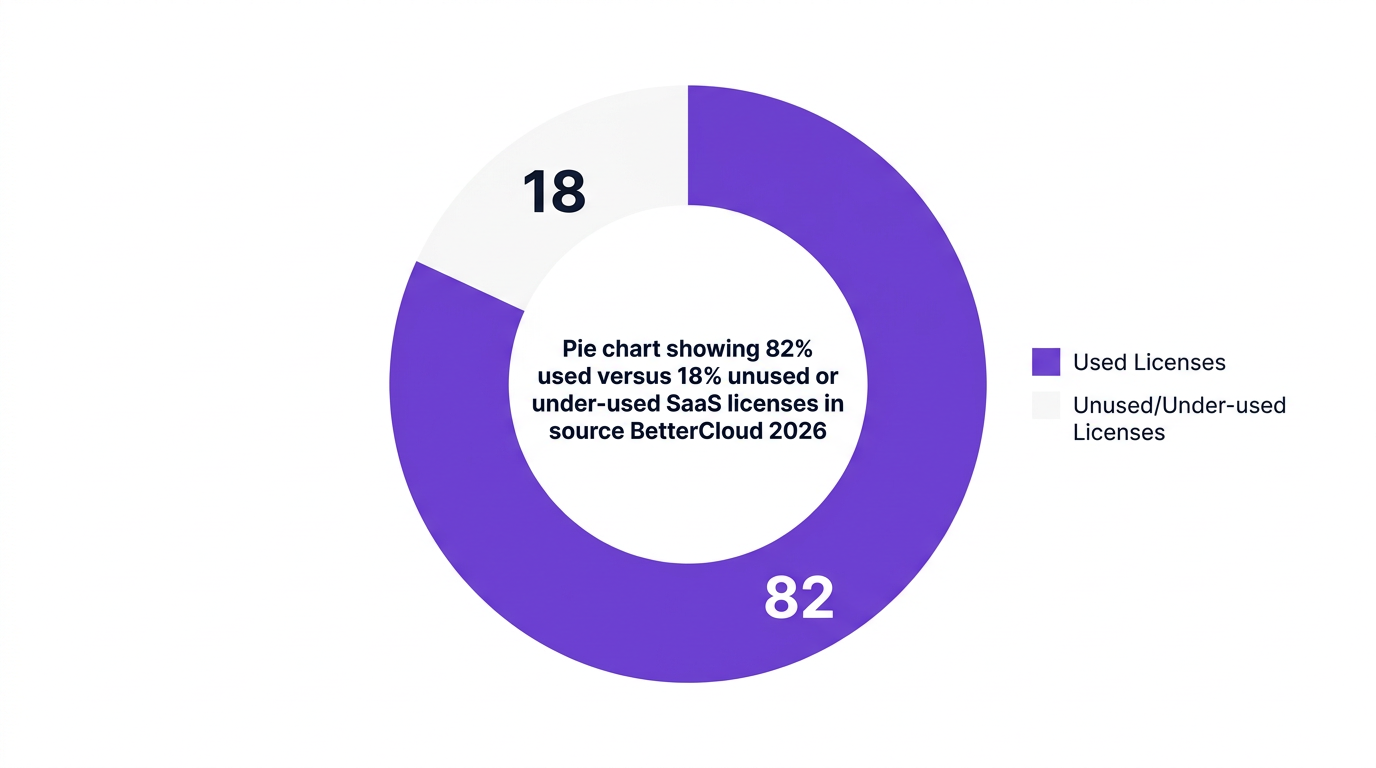
License waste is larger and more hidden. Research in 2026 shows that organizations waste a double-digit percentage of their SaaS spend on unused or under-used licenses, with Microsoft 365 as a top optimization target (BetterCloud, 2026).
Renewals are heavier cost events. Enterprise SaaS contracts often see 10, 20% price increases at renewal, which absolutely applies to Microsoft 365 (MedhaCloud, 2026).
Put simply, m365 software asset management has moved from static inventory tracking to continuous, AI-informed optimization.

Modern m365 SAM is shaped by three forces: price pressure, AI adoption, and consolidation.
A 2026 guide notes that usage-based license reclaim and SKU rightsizing, for instance E5 to E3 plus selected add-ons, is now a top use case for Microsoft 365 SAM tools (USU, 2026). At the same time, analysts stress that Microsoft 365 license optimization, backup, and compliance are key levers to control risk and spend, not just productivity (DCIG, 2026).
Microsoft raised Microsoft 365 prices by roughly 9, 20% on select enterprise plans during 2025 (MedhaCloud, 2026), and further increases are scheduled for July 2026 (USU, 2026). Many enterprises are also seeing 10, 20% uplifts tied to broader SaaS renewal cycles.
This means that microsoft 365 subscription management is now directly tied to cloud cost optimization and budget governance.
Key implications:
Finance expects clear plans to reduce Microsoft 365 license costs before renewals.
IT needs data to defend premium SKUs for AI and security.
Procurement needs cross-tenant visibility to avoid fragmented contracts.
Copilot capabilities have expanded into Teams, Outlook, SharePoint, and more. That expansion introduced new license combinations, add-ons, and usage tiers.
For SAM teams, Copilot introduces questions:
Who is actively using Copilot features, and how often?
Are E5 or premium add-ons necessary for specific roles, or could E3 plus Copilot suffice?
How do we track microsoft 365 license usage reporting that includes AI workloads, not just sign-ins?
Without AI usage awareness, copilot sam policies risk over-licensing high-cost SKUs.
Microsoft 365 is often the anchor suite for productivity and collaboration. However, redundant spend arises from overlapping tools for chat, storage, document sharing, and whiteboarding.
Analysts describe 2026 as the “great SaaS consolidation,” where enterprises eliminate overlapping apps and standardize on core suites like Microsoft 365 (Insentra, 2026). This makes saas management for microsoft 365 inseparable from broader SaaS strategy.
Counterargument: Some IT leaders argue that best-of-breed tools still deliver higher user satisfaction than Microsoft 365 equivalents. In some cases that is true, but it requires deliberate, data-backed exceptions rather than default overlap.
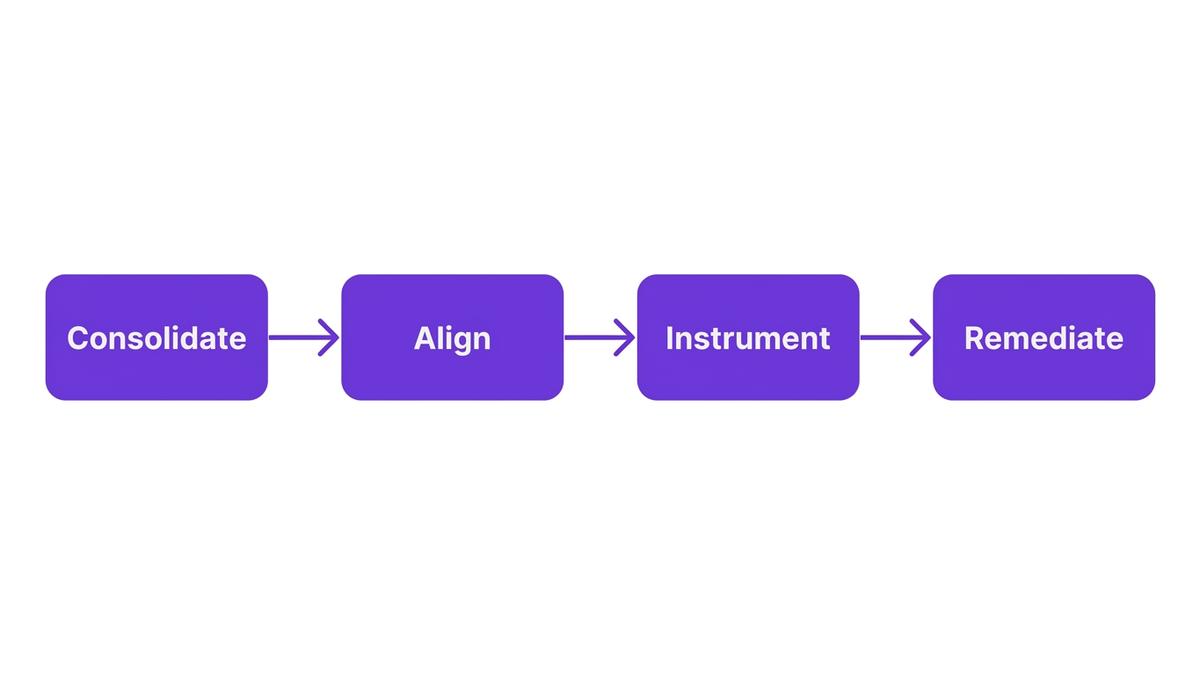
To bring structure to all of this, use the C.A.I.R. Framework for Microsoft 365 SAM in the Copilot era:
C: Consolidate
A: Align
I: Instrument
R: Remediate
Think of it like an air traffic control tower for Microsoft 365. You need to see every plane, understand its route, monitor real-time conditions, and intervene when risk or cost drifts.
Start with visibility. You cannot manage what you cannot see.
Core actions:
Build a single, authoritative inventory of all Microsoft 365 tenants, SKUs, and subscriptions.
Map microsoft 365 subscription management data to business units, cost centers, and geographies.
Use app discovery to identify third-party tools that overlap with Exchange, OneDrive, SharePoint, Teams, and Planner.
This is where shadow IT and microsoft 365 apps often surface, such as niche collaboration tools or storage platforms that duplicate core Microsoft 365 capabilities.
Next, align entitlements with user profiles instead of one-size-fits-all bundles.
Recommended steps:
Segment users by role and usage: frontline, knowledge worker, developer, executive, contractor.
Define a baseline SKU per segment, for example F3, E3, or E5.
Add Copilot and security add-ons only where justified by risk and usage.
This is rightsizing in practice, connecting entitlement management to real-world work patterns and risk exposure.
Instrumentation means continuous telemetry, not quarterly exports.
Key dimensions to monitor:
Workload usage: Exchange, OneDrive, Teams, SharePoint, Power Platform.
AI usage: Copilot interactions, AI-heavy workloads, and feature adoption.
Security and compliance: DLP policies, e-discovery, and retention configurations.
This instrumentation feeds microsoft 365 license monitoring and microsoft 365 compliance and asset management, as well as ongoing compliance auditing and audit defense.
Finally, move from insights to action.
Examples of automated workflows:
Reclaim unused licenses after 60, 90 days of inactivity, with manager approval.
Downgrade from E5 to E3 when security features are never used, while keeping critical add-ons.
Trigger automated workflows for onboarding and offboarding, ensuring timely assignment and removal of licenses.
Over time, this closes the loop from data to SaaS spend reduction and continuous cloud cost optimization.
Real-world results illustrate how modern office 365 software asset management can change the cost and risk profile of Microsoft 365.
A global enterprise analyzed sign-in and workload activity across a 12,000-seat Microsoft 365 tenant using advanced SAM tooling. They identified over 1,100 inactive E5 licenses and rightsized another 2,000 users to E3 with targeted security add-ons.
The outcome was a 19% reduction in Microsoft 365 spend and avoidance of upcoming 2026 renewal price hikes (MedhaCloud, 2026; USU, 2026). This is the kind of result that modern microsoft 365 license optimization makes possible when powered by consolidated data and AI analytics.
A healthcare organization migrated users from multiple third-party file storage and chat tools into OneDrive, SharePoint, and Teams. This eliminated redundant subscriptions and simplified governance.
They achieved a 16% reduction in third-party app spend and improved audit readiness under new 2026 backup and e-discovery expectations (Insentra, 2026; DCIG, 2026). Stronger microsoft 365 compliance and asset management was a direct byproduct of this consolidation.
Counterargument: Some teams feared productivity would drop after consolidating into Microsoft 365. In practice, with change management and training, user satisfaction held steady, while IT gained consistent governance.

Effective cloud software asset management for microsoft 365 requires more than native admin tools. Enterprises need unified visibility, AI-driven analytics, and automated workflows that span SaaS, cloud, and AI.
CloudNuro delivers exactly that through its Microsoft 365 Custodian and AI-first SaaS management platform.
CloudNuro connects directly into Microsoft 365 to perform continuous license discovery, entitlement mapping, and usage analysis. This drives accurate microsoft 365 license management in complex environments.
Key capabilities:
Real-time view of all tenants, SKUs, and license assignments.
Usage analytics by user, role, and workload, including Copilot activity.
Identification of unused or under-used E3/E5 licenses for reclaim and downgrade.
This directly addresses the double-digit waste many organizations experience on Microsoft 365 licenses (BetterCloud, 2026). For more detail on this optimization approach, see CloudNuro's Microsoft License Optimization overview.
CloudNuro uses AI to recommend license changes and simulate financial impact across renewal cycles.
Examples of license rightsizing actions:
Flag E5 users with low security and analytics usage as downgrade candidates.
Recommend Copilot add-ons for user segments that show high AI interaction using other tools.
Model different microsoft 365 sam scenarios to reduce Microsoft 365 license costs before negotiating enterprise agreements.
Organizations using CloudNuro typically see measurable microsoft 365 saas spend management improvements, often in the 15, 30% range for wastage reduction across large estates.
CloudNuro was designed with governance at the core, not as an afterthought. Its Microsoft 365 Custodian supports:
Centralized policies for license assignment, renewal, and deprovisioning.
Automated onboarding and offboarding workflows to avoid orphaned accounts.
App engagement scores and data-driven optimization for overlapping tools.
This governance-first design mirrors the C.A.I.R. framework, ensuring it asset management for saas and microsoft 365 is consistent, auditable, and policy-driven.
You can see how this fits into a broader SaaS program in CloudNuro's SaaS management overview.
CloudNuro provides rich microsoft 365 audit support and compliance automation, including:
Configurable reports mapped to SOX, GDPR, and internal policies.
Evidence collection for license entitlement, assignment, and usage.
Integration of Microsoft 365 data into broader compliance auditing workflows.
This reduces the scramble when an audit or regulatory review arrives and supports ongoing audit defense.
CloudNuro also complements FinOps teams through dedicated services. For organizations building a formal Microsoft-focused FinOps practice, CloudNuro's FinOps Services provide additional governance and cost-optimization expertise.
Many organizations start with Microsoft 365 and then expand to other critical SaaS platforms. CloudNuro integrates with over 400 apps, providing a single system of record for SaaS.
With CloudNuro, office 365 license management software becomes part of a broader strategy that covers Salesforce, security tools, collaboration platforms, and custom applications.
This unified scope supports better microsoft sam strategy and helps avoid solving Microsoft 365 in isolation while leaving other SaaS categories unmanaged.
For a deeper tactical look at Microsoft 365 savings, CloudNuro offers a focused guide on how to reduce Microsoft 365 costs and a free Microsoft Office 365 assessment.

For teams that want practical next steps, here is a concise implementation path you can start this quarter.
Bring together IT, security, procurement, and finance stakeholders.
Define ownership for microsoft 365 software asset management, set KPIs such as target savings percentage and compliance scores, and align on tolerance for risk versus savings.
Within your SAM platform, or with CloudNuro, create a baseline report that includes:
License counts by SKU and tenant.
Assignment status and inactivity windows.
Workload and AI usage metrics per user segment.
This baseline is your benchmark for future optimization and microsoft 365 subscription management decisions.
Using usage data, target:
Inactive users for license reclaim.
Users with limited workload usage for downgrade.
Segments where Copilot or premium features are over- or under-assigned.
Quantify savings and risk impacts. This is where AI-driven analytics, such as CloudNuro's Microsoft 365 Custodian, accelerate decision-making.
Codify your rules and let automation handle the repetitive work:
Auto-reclaim after defined inactivity plus approval workflow.
Auto-assign baseline SKUs based on HR role attributes.
Auto-alert before renewals with forecasted spend and optimization scenarios.
This turns microsoft 365 license management into a continuous process rather than a periodic clean-up.
Finally, connect Microsoft 365 SAM to your broader it asset management for saas and microsoft 365 program.
Align naming conventions, cost allocation, and governance controls across cloud, SaaS, and on-premise assets. This is where CloudNuro's unified saas management for microsoft 365 and other apps provides a single source of truth.
Microsoft 365 SAM has shifted from license counting to dynamic, AI-informed optimization. Copilot usage and AI workloads are now key signals in deciding which users need premium SKUs and add-ons.
SAM tools increasingly provide automated discovery, rightsizing recommendations, and continuous microsoft 365 license monitoring to manage these AI-driven patterns.
Best practices include consolidating overlapping tools around Microsoft 365, instrumenting workload and AI usage, and automating license reclamation and rightsizing.
Teams should adopt frameworks like C.A.I.R., integrate SAM data with FinOps, and treat microsoft 365 compliance and asset management as a single, ongoing discipline.
Start by baselining current licenses and usage, then identify under-used E5/E3 licenses and inactive accounts. Use policies to reclaim unused licenses after defined inactivity windows and downgrade users who do not need premium features.
AI-enabled platforms such as CloudNuro can simulate savings from different scenarios and guide microsoft 365 software asset management decisions that align with budget constraints.
Enterprises should maintain a single source of truth for entitlements, assignments, and usage, and generate regular compliance and evidence reports. Automated workflows for onboarding, offboarding, and role changes reduce human error.
SAM platforms like CloudNuro provide built-in microsoft 365 audit support, mapping Microsoft 365 data to regulatory frameworks and simplifying evidence collection for auditors.
Integrating a SaaS management platform with Microsoft 365 provides unified visibility, policy-driven automation, and cross-application consolidation opportunities.
It enables organizations to treat Microsoft 365 as part of a wider SaaS ecosystem, improving microsoft 365 saas spend management and reducing risk from shadow IT and overlapping tools.
AI-driven automation analyzes large volumes of usage data, identifies patterns human analysts might miss, and recommends precise rightsizing actions.
This enhances microsoft sam strategy, accelerates optimization cycles, and ensures that governance rules are consistently applied at scale.
By 2026, Microsoft 365 software asset management has become a strategic discipline that blends AI analytics, financial rigor, and compliance. Price increases, Copilot adoption, and SaaS consolidation pressure IT leaders to move from reactive license clean-ups to continuous, automated governance.
Enterprises that standardize on frameworks like C.A.I.R., instrument real usage, and use platforms such as CloudNuro to automate optimization will be best positioned to control spend and risk.
To see how CloudNuro can help you transform Microsoft 365 SAM across your organization, request a tailored walkthrough today.
CloudNuro is a leader in Enterprise SaaS Management Platforms, providing enterprises with unmatched visibility, governance, and cost optimization. Recognized twice in a row in the SaaS Management Platforms category and named a Leader in the SoftwareReviews Data Quadrant, CloudNuro is trusted by global enterprises and government agencies to bring financial discipline to SaaS, cloud, and AI.
Trusted by enterprises such as Konica Minolta and Federal Signal, CloudNuro provides centralized SaaS inventory, license optimization, and renewal management along with advanced cost allocation and chargeback, giving IT and Finance leaders the visibility, control, and cost-conscious culture needed to drive financial discipline.
Request a no cost, no obligation free assessment —just 15 minutes to savings!
Get StartedMicrosoft 365 software asset management is no longer just a back-office audit task. In 2026, with Copilot and AI woven into every workload, Microsoft 365 has become one of the most dynamic and expensive SaaS estates in the enterprise.
Price hikes of roughly 9, 20% on select enterprise plans in 2025, plus further increases scheduled for July 2026, have turned Microsoft 365 into a primary focus area for SAM and FinOps teams (MedhaCloud, 2026; USU, 2026). At the same time, AI features and Copilot usage are reshaping what “active use” and “optimized licensing” actually mean.
This post breaks down how Microsoft 365 software asset management has changed in the Copilot era, the new practices smart teams are adopting, and how CloudNuro helps automate this across complex environments.
Traditional SAM for Microsoft 365 focused on counting licenses, tracking assignments, and preparing for occasional audits. In 2026, that model fails because it ignores AI utilization, overlapping apps, and rapid SKU evolution.
Analysts describe 2026 as a period of “great SaaS consolidation,” where Microsoft 365 is frequently used as the anchor suite while overlapping tools are retired to cut costs (Insentra, 2026). At the same time, SaaS license management, including Microsoft 365, is now a primary use case for automation and AI in ITAM tools (Zylo, 2025; AppDirect, 2026).
Several major shifts define the Copilot era of m365 SAM:
AI usage is the new utilization signal. Copilot adoption and AI-backed workloads influence whether premium SKUs, like E5 with advanced security and analytics, are actually justified.
License waste is larger and more hidden. Research in 2026 shows that organizations waste a double-digit percentage of their SaaS spend on unused or under-used licenses, with Microsoft 365 as a top optimization target (BetterCloud, 2026).
Renewals are heavier cost events. Enterprise SaaS contracts often see 10, 20% price increases at renewal, which absolutely applies to Microsoft 365 (MedhaCloud, 2026).
Put simply, m365 software asset management has moved from static inventory tracking to continuous, AI-informed optimization.
Modern m365 SAM is shaped by three forces: price pressure, AI adoption, and consolidation.
A 2026 guide notes that usage-based license reclaim and SKU rightsizing, for instance E5 to E3 plus selected add-ons, is now a top use case for Microsoft 365 SAM tools (USU, 2026). At the same time, analysts stress that Microsoft 365 license optimization, backup, and compliance are key levers to control risk and spend, not just productivity (DCIG, 2026).
Microsoft raised Microsoft 365 prices by roughly 9, 20% on select enterprise plans during 2025 (MedhaCloud, 2026), and further increases are scheduled for July 2026 (USU, 2026). Many enterprises are also seeing 10, 20% uplifts tied to broader SaaS renewal cycles.
This means that microsoft 365 subscription management is now directly tied to cloud cost optimization and budget governance.
Key implications:
Finance expects clear plans to reduce Microsoft 365 license costs before renewals.
IT needs data to defend premium SKUs for AI and security.
Procurement needs cross-tenant visibility to avoid fragmented contracts.
Copilot capabilities have expanded into Teams, Outlook, SharePoint, and more. That expansion introduced new license combinations, add-ons, and usage tiers.
For SAM teams, Copilot introduces questions:
Who is actively using Copilot features, and how often?
Are E5 or premium add-ons necessary for specific roles, or could E3 plus Copilot suffice?
How do we track microsoft 365 license usage reporting that includes AI workloads, not just sign-ins?
Without AI usage awareness, copilot sam policies risk over-licensing high-cost SKUs.
Microsoft 365 is often the anchor suite for productivity and collaboration. However, redundant spend arises from overlapping tools for chat, storage, document sharing, and whiteboarding.
Analysts describe 2026 as the “great SaaS consolidation,” where enterprises eliminate overlapping apps and standardize on core suites like Microsoft 365 (Insentra, 2026). This makes saas management for microsoft 365 inseparable from broader SaaS strategy.
Counterargument: Some IT leaders argue that best-of-breed tools still deliver higher user satisfaction than Microsoft 365 equivalents. In some cases that is true, but it requires deliberate, data-backed exceptions rather than default overlap.
To bring structure to all of this, use the C.A.I.R. Framework for Microsoft 365 SAM in the Copilot era:
C: Consolidate
A: Align
I: Instrument
R: Remediate
Think of it like an air traffic control tower for Microsoft 365. You need to see every plane, understand its route, monitor real-time conditions, and intervene when risk or cost drifts.
Start with visibility. You cannot manage what you cannot see.
Core actions:
Build a single, authoritative inventory of all Microsoft 365 tenants, SKUs, and subscriptions.
Map microsoft 365 subscription management data to business units, cost centers, and geographies.
Use app discovery to identify third-party tools that overlap with Exchange, OneDrive, SharePoint, Teams, and Planner.
This is where shadow IT and microsoft 365 apps often surface, such as niche collaboration tools or storage platforms that duplicate core Microsoft 365 capabilities.
Next, align entitlements with user profiles instead of one-size-fits-all bundles.
Recommended steps:
Segment users by role and usage: frontline, knowledge worker, developer, executive, contractor.
Define a baseline SKU per segment, for example F3, E3, or E5.
Add Copilot and security add-ons only where justified by risk and usage.
This is rightsizing in practice, connecting entitlement management to real-world work patterns and risk exposure.
Instrumentation means continuous telemetry, not quarterly exports.
Key dimensions to monitor:
Workload usage: Exchange, OneDrive, Teams, SharePoint, Power Platform.
AI usage: Copilot interactions, AI-heavy workloads, and feature adoption.
Security and compliance: DLP policies, e-discovery, and retention configurations.
This instrumentation feeds microsoft 365 license monitoring and microsoft 365 compliance and asset management, as well as ongoing compliance auditing and audit defense.
Finally, move from insights to action.
Examples of automated workflows:
Reclaim unused licenses after 60, 90 days of inactivity, with manager approval.
Downgrade from E5 to E3 when security features are never used, while keeping critical add-ons.
Trigger automated workflows for onboarding and offboarding, ensuring timely assignment and removal of licenses.
Over time, this closes the loop from data to SaaS spend reduction and continuous cloud cost optimization.
Real-world results illustrate how modern office 365 software asset management can change the cost and risk profile of Microsoft 365.
A global enterprise analyzed sign-in and workload activity across a 12,000-seat Microsoft 365 tenant using advanced SAM tooling. They identified over 1,100 inactive E5 licenses and rightsized another 2,000 users to E3 with targeted security add-ons.
The outcome was a 19% reduction in Microsoft 365 spend and avoidance of upcoming 2026 renewal price hikes (MedhaCloud, 2026; USU, 2026). This is the kind of result that modern microsoft 365 license optimization makes possible when powered by consolidated data and AI analytics.
A healthcare organization migrated users from multiple third-party file storage and chat tools into OneDrive, SharePoint, and Teams. This eliminated redundant subscriptions and simplified governance.
They achieved a 16% reduction in third-party app spend and improved audit readiness under new 2026 backup and e-discovery expectations (Insentra, 2026; DCIG, 2026). Stronger microsoft 365 compliance and asset management was a direct byproduct of this consolidation.
Counterargument: Some teams feared productivity would drop after consolidating into Microsoft 365. In practice, with change management and training, user satisfaction held steady, while IT gained consistent governance.
Effective cloud software asset management for microsoft 365 requires more than native admin tools. Enterprises need unified visibility, AI-driven analytics, and automated workflows that span SaaS, cloud, and AI.
CloudNuro delivers exactly that through its Microsoft 365 Custodian and AI-first SaaS management platform.
CloudNuro connects directly into Microsoft 365 to perform continuous license discovery, entitlement mapping, and usage analysis. This drives accurate microsoft 365 license management in complex environments.
Key capabilities:
Real-time view of all tenants, SKUs, and license assignments.
Usage analytics by user, role, and workload, including Copilot activity.
Identification of unused or under-used E3/E5 licenses for reclaim and downgrade.
This directly addresses the double-digit waste many organizations experience on Microsoft 365 licenses (BetterCloud, 2026). For more detail on this optimization approach, see CloudNuro's Microsoft License Optimization overview.
CloudNuro uses AI to recommend license changes and simulate financial impact across renewal cycles.
Examples of license rightsizing actions:
Flag E5 users with low security and analytics usage as downgrade candidates.
Recommend Copilot add-ons for user segments that show high AI interaction using other tools.
Model different microsoft 365 sam scenarios to reduce Microsoft 365 license costs before negotiating enterprise agreements.
Organizations using CloudNuro typically see measurable microsoft 365 saas spend management improvements, often in the 15, 30% range for wastage reduction across large estates.
CloudNuro was designed with governance at the core, not as an afterthought. Its Microsoft 365 Custodian supports:
Centralized policies for license assignment, renewal, and deprovisioning.
Automated onboarding and offboarding workflows to avoid orphaned accounts.
App engagement scores and data-driven optimization for overlapping tools.
This governance-first design mirrors the C.A.I.R. framework, ensuring it asset management for saas and microsoft 365 is consistent, auditable, and policy-driven.
You can see how this fits into a broader SaaS program in CloudNuro's SaaS management overview.
CloudNuro provides rich microsoft 365 audit support and compliance automation, including:
Configurable reports mapped to SOX, GDPR, and internal policies.
Evidence collection for license entitlement, assignment, and usage.
Integration of Microsoft 365 data into broader compliance auditing workflows.
This reduces the scramble when an audit or regulatory review arrives and supports ongoing audit defense.
CloudNuro also complements FinOps teams through dedicated services. For organizations building a formal Microsoft-focused FinOps practice, CloudNuro's FinOps Services provide additional governance and cost-optimization expertise.
Many organizations start with Microsoft 365 and then expand to other critical SaaS platforms. CloudNuro integrates with over 400 apps, providing a single system of record for SaaS.
With CloudNuro, office 365 license management software becomes part of a broader strategy that covers Salesforce, security tools, collaboration platforms, and custom applications.
This unified scope supports better microsoft sam strategy and helps avoid solving Microsoft 365 in isolation while leaving other SaaS categories unmanaged.
For a deeper tactical look at Microsoft 365 savings, CloudNuro offers a focused guide on how to reduce Microsoft 365 costs and a free Microsoft Office 365 assessment.
For teams that want practical next steps, here is a concise implementation path you can start this quarter.
Bring together IT, security, procurement, and finance stakeholders.
Define ownership for microsoft 365 software asset management, set KPIs such as target savings percentage and compliance scores, and align on tolerance for risk versus savings.
Within your SAM platform, or with CloudNuro, create a baseline report that includes:
License counts by SKU and tenant.
Assignment status and inactivity windows.
Workload and AI usage metrics per user segment.
This baseline is your benchmark for future optimization and microsoft 365 subscription management decisions.
Using usage data, target:
Inactive users for license reclaim.
Users with limited workload usage for downgrade.
Segments where Copilot or premium features are over- or under-assigned.
Quantify savings and risk impacts. This is where AI-driven analytics, such as CloudNuro's Microsoft 365 Custodian, accelerate decision-making.
Codify your rules and let automation handle the repetitive work:
Auto-reclaim after defined inactivity plus approval workflow.
Auto-assign baseline SKUs based on HR role attributes.
Auto-alert before renewals with forecasted spend and optimization scenarios.
This turns microsoft 365 license management into a continuous process rather than a periodic clean-up.
Finally, connect Microsoft 365 SAM to your broader it asset management for saas and microsoft 365 program.
Align naming conventions, cost allocation, and governance controls across cloud, SaaS, and on-premise assets. This is where CloudNuro's unified saas management for microsoft 365 and other apps provides a single source of truth.
Microsoft 365 SAM has shifted from license counting to dynamic, AI-informed optimization. Copilot usage and AI workloads are now key signals in deciding which users need premium SKUs and add-ons.
SAM tools increasingly provide automated discovery, rightsizing recommendations, and continuous microsoft 365 license monitoring to manage these AI-driven patterns.
Best practices include consolidating overlapping tools around Microsoft 365, instrumenting workload and AI usage, and automating license reclamation and rightsizing.
Teams should adopt frameworks like C.A.I.R., integrate SAM data with FinOps, and treat microsoft 365 compliance and asset management as a single, ongoing discipline.
Start by baselining current licenses and usage, then identify under-used E5/E3 licenses and inactive accounts. Use policies to reclaim unused licenses after defined inactivity windows and downgrade users who do not need premium features.
AI-enabled platforms such as CloudNuro can simulate savings from different scenarios and guide microsoft 365 software asset management decisions that align with budget constraints.
Enterprises should maintain a single source of truth for entitlements, assignments, and usage, and generate regular compliance and evidence reports. Automated workflows for onboarding, offboarding, and role changes reduce human error.
SAM platforms like CloudNuro provide built-in microsoft 365 audit support, mapping Microsoft 365 data to regulatory frameworks and simplifying evidence collection for auditors.
Integrating a SaaS management platform with Microsoft 365 provides unified visibility, policy-driven automation, and cross-application consolidation opportunities.
It enables organizations to treat Microsoft 365 as part of a wider SaaS ecosystem, improving microsoft 365 saas spend management and reducing risk from shadow IT and overlapping tools.
AI-driven automation analyzes large volumes of usage data, identifies patterns human analysts might miss, and recommends precise rightsizing actions.
This enhances microsoft sam strategy, accelerates optimization cycles, and ensures that governance rules are consistently applied at scale.
By 2026, Microsoft 365 software asset management has become a strategic discipline that blends AI analytics, financial rigor, and compliance. Price increases, Copilot adoption, and SaaS consolidation pressure IT leaders to move from reactive license clean-ups to continuous, automated governance.
Enterprises that standardize on frameworks like C.A.I.R., instrument real usage, and use platforms such as CloudNuro to automate optimization will be best positioned to control spend and risk.
To see how CloudNuro can help you transform Microsoft 365 SAM across your organization, request a tailored walkthrough today.
CloudNuro is a leader in Enterprise SaaS Management Platforms, providing enterprises with unmatched visibility, governance, and cost optimization. Recognized twice in a row in the SaaS Management Platforms category and named a Leader in the SoftwareReviews Data Quadrant, CloudNuro is trusted by global enterprises and government agencies to bring financial discipline to SaaS, cloud, and AI.
Trusted by enterprises such as Konica Minolta and Federal Signal, CloudNuro provides centralized SaaS inventory, license optimization, and renewal management along with advanced cost allocation and chargeback, giving IT and Finance leaders the visibility, control, and cost-conscious culture needed to drive financial discipline.
Request a no cost, no obligation free assessment - just 15 minutes to savings!
Get StartedWe're offering complimentary ServiceNow license assessments to only 25 enterprises this quarter who want to unlock immediate savings without disrupting operations.
Get Free AssessmentGet Started




CloudNuro Corp
1755 Park St. Suite 207
Naperville, IL 60563
Phone : +1-630-277-9470
Email: info@cloudnuro.com





.webp)

Recognized Leader in SaaS Management Platforms by Info-Tech SoftwareReviews


.png)

.svg)